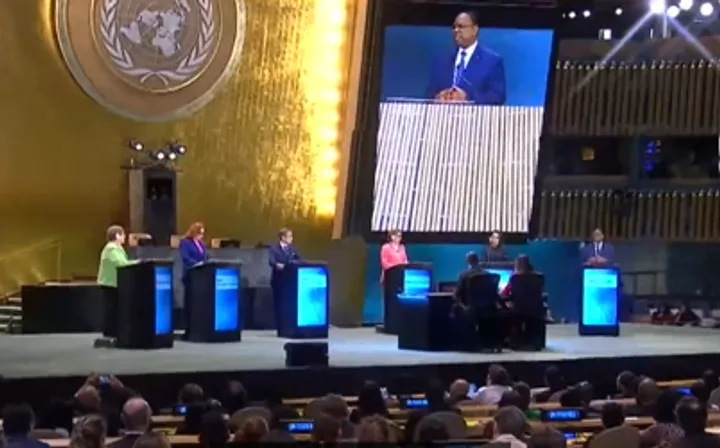
United Nations Secretary-General Antonio Guterres talk last week say serious geopolitical split don paralysed work of the Security Council.
E point out say when superpowers dey use warwey wey break international law, dem dey create atmosphere of impunity and e dey increase risk say other states fit begin see force as acceptable tool for foreign policy.
Wetin e no talk directly be say this wahala don affect foundation of the international system wey dem form after World War II.
When dem create UN, main task na to prevent any big global war make e no happen again.
The post-war order build around idea say major powers get special responsibility to maintain international security.
Na why United States, the then-Soviet Union, Britain, France and China get permanent seats for the Security Council plus right of veto.
That design reflect balance of power for 1945. But as years dey pass, the international system don change well.
Plenty new independent states show, new economic and political centres open, and international politics no longer depend only on small number of big powers.
But the institutional framework of the Security Council still dey mostly the same. The capabilities of the permanent members sef don change.
After Soviet Union collapse, Moscow lose plenty of im former international influence. The US still remain leader but e don dey share global costs and responsibilities more with allies and partners.
For some cases, Washington prefer to act outside UN mechanisms if e feel say dem dey limit im freedom to move.
China on the other hand don increase im economic and political weight well, even though for many international crises e still dey move with caution.
Britain and France still get permanent membership for Security Council, but their current capabilities no dey match the global influence wey dem get for mid-20th century.
So the problem no just dey for how Security Council take be.
The environment wey the Council dey work for don change: distribution of economic, military and political power don turn more complex.
One of the important changes na the growing independence of regional powers.
The old model wey big powers decision dey almost automatically determine how other states go behave no dey explain international politics like before.
Big centres of power still get strong influence, but regional states don get more space to manoeuvre on their own.
Dem dey join for conflict resolution, form regional balances and build relations with several major powers at the same time.
So you no fit look the present world order only as rivalry between US, China and Russia. You must also consider states wey get enough political, economic and military potential to affect international matters on their own.
But even as regional powers dey grow, their position for international institutions no too change like that.
States fit play important role for conflict prevention and regional security, but dem no get permanent representation for bodies wey dey make binding decisions.
Na inside this context that Türkiye's approach to UN reform get special importance.
‘The world is bigger than five’ — this Turkish President Recep Tayyip Erdogan formula dey usually see as demand to reform Security Council. But the meaning reach further.
E reflect Ankara position say power to influence international decisions no suppose remain exclusive privilege of the five states wey get special status because of 1945 political reality.
The Turkish approach dey call for review of Security Council representation and decision-making system.
Ankara dey push for fairer geographical representation and dey criticise the veto mechanism wey allow one permanent member block decisions even if most others no support am.
E no just be about increase number of states for Security Council. If membership grow but decision-making system no change, international security fit still dey depend on political will of small number of powers.
So reform question touch both representation and distribution of powers.
E no too be about representation of Türkiye alone, but about how international institutions form and how power dey divide among states.
How far global institutions today dey reflect the real distribution of responsibility for international security? And fit states wey dey directly involved for crisis management avoid making key decisions?
Türkiye foreign policy for the last 10–15 years dey give us concrete examples to consider these issues.
Ankara don become active participant for diplomatic processes for many regions at once.

Dem take part for settling crises for Syria and Libya, dem do diplomatic efforts inside Russian-Ukrainian conflict, and dem pioneer for launching the Black Sea Grain Initiative.
Türkiye still join processes around Karabakh and Armenian-Azerbaijani dialogue, and dem do diplomatic steps to try stop further escalation for Middle East.
The importance of these efforts no just dey the widening of Turkish diplomatic reach. Ankara fit at the same time keep working relations with different centres of power and use those ties to solve regional problems.
The Black Sea Grain Initiative na example of how a regional power fit help solve international problem while still dey keep channels of interaction with parties wey dey fight.
At the same time, the grain initiative show both wetin this kind diplomacy fit do and wetin e no fit do.
Türkiye, together with the UN, help arrange mechanism to export Ukrainian grain through the Black Sea, but whether the agreement go continue depend on consent of the parties for the conflict.
For Syria matter, Turkish foreign policy show another side. Ankara dey interact at the same time with Russia, the US and regional parties, protecting im regional security interests.
Türkiye dey act both as mediator and as independent actor for events wey dey affect im national security directly.
For these situations, regional powers no just dey follow orders from the biggest centres of power; dem dey help shape the conditions wey make those orders fit work, even though their abilities limited by other participants interests and differences.
Also, being NATO member no mean Turkish foreign policy must limit to the transatlantic alliance framework.
Black Sea region, Eastern Europe, the Caucasus, the Middle East, the Balkans and Turkistan (Central Asia) still be areas where Ankara dey build different forms of political, economic and military-diplomatic interaction.
Through the Organization of Turkic States, Türkiye also dey take part for creating separate space for cooperation among Turkic countries.
So, Türkiye na example of state wey dey keep allied relations with one big centre of power, but at the same time dey build im own network of regional ties and foreign policy priorities.
A new geography of power and responsibility
The growing independence of regional powers no mean the great powers don lose importance.
The US, China, Russia and other major centres still dey determine key parameters of world politics. But modern international system no reduce again only to their rivalry.
At the same time, another process dey happen — redistribution of responsibility for regional security.
States wey dey inside conflict zone dey more and more forced to join independently for containment and settlement. But their real role no always match their ability to influence global decisions.
Na here contradiction dey between current geopolitical reality and the UN institutional architecture.
Security Council still hold structure wey few major powers shape for mid-twentieth century, while international security dey depend more on interaction of many more states.
So UN reform no fit reduce only to changing number of seats for Security Council. E touch deeper question: how far the existing decision-making system reflect real distribution of power, responsibility and political influence.
But na here main obstacle to reform dey. To change UN Charter you need wide support from member states and ratification of amendments by all five permanent Security Council members.
That one mean states wey get special powers for the current system must agree to change the rules wey give dem that power.
This one turn Security Council reform from institutional question into problem of international balance of power.
Even if majority of states support more representation and change for decision-making, putting those demands into practice depend on how the big powers feel, and dem fit no want to reduce their own advantages.
For this kind situation, importance of the Turkish initiative no end for only the chance to change Security Council composition.
The ‘world is bigger than five’ motto allow Ankara push discussion on principles of international order, find support from states wey no get permanent seat for Security Council, and strengthen im own role for talk about global governance reform.
For Türkiye, this mean change for how states represent themselves inside UN system and recognition of new role for regional powers inside international politics.
At the same time, make regional powers stronger no mean say the biggest centres of power go become weak.
On the opposite, more state participation for decision-making fit help share responsibility for international security and open more ways for diplomatic crisis management.
The key question be whether international institutions fit adapt to these changes before gap widen between their formal powers and realpolitik.
For Türkiye, the answer dey both for future of the UN and for wetin place im go get inside the emerging world order.
(Dis article first publish for TRT Russian)