Ghana will scrap long-term mining investment stability agreements and double royalties under sweeping reforms, the regulator in Africa's top gold producer told Reuters, as it seeks to capture more benefits from surging bullion prices.
The changes are part of a broad overhaul aimed at balancing investor confidence with the government's push to reap greater rewards from mining, Isaac Tandoh, acting CEO of the Minerals Commission, said in an interview in Accra.
African governments are tightening mining rules to cash in on high prices, often raising royalties and local‑content demands – shifts that have periodically triggered clashes with global miners over costs and contract certainty.
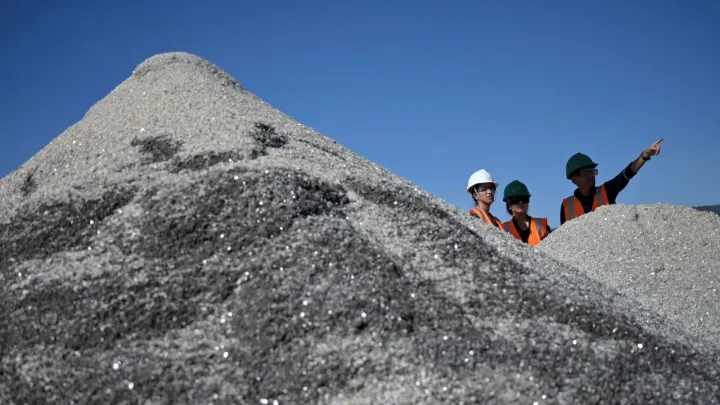
In Ghana, the world's sixth-biggest gold producing country, stability and development agreements typically lock in tax and royalty terms for five to 15 years in exchange for investments of about $300 million to $500 million for mine builds and expansions.
Draft bill
Companies must also extend mine life by at least three years and lift output by more than 10%, among other conditions, to qualify for renewal.
Newmont, AngloGold Ashanti and Gold Fields currently operate under stability agreements. They did not immediately respond to requests for comment.
Tandoh said the changes, to be written into law, mean Newmont's stability agreement – which expired in December – will not be renewed. Similar arrangements held by AngloGold Ashanti and Gold Fields will be phased out when they lapse in 2027.
A draft bill expected to go to Parliament by March proposes royalties starting at 9% and rising to 12% if gold hits $4,500 per ounce or higher, roughly double the current 3%–5% range. Spot gold is currently trading around $4,590 per ounce.
Tougher rules
The reforms also include tougher local-content rules for in-country procurement and support for Ghanaian firms.




"Renewal of (investment stability agreements) is not going to happen," Tandoh said during the interview last week. "Renewal is conditional, not automatic."
Development agreements will be scrapped entirely as they have been abused, he said.
"We've seen companies use revenue from Ghana to buy mines elsewhere while refusing to pay even basic obligations like contributions to district assemblies. That cannot continue."
Pioneer of stability agreements
Ghana pioneered stability agreements in the early 2000s, helping unlock billions of dollars of foreign investment that helped it overtake South Africa as Africa's top gold producer.
Newmont's Ahafo pact, for example, set a 32.5% corporate tax rate and a sliding royalty of 3%–5% (rising to 3.6%–5.6% in forest reserve areas), with duty and VAT relief on qualifying inputs. The extension was tied to a minimum $300 million investment and targets on output, mine life and Ghanaian employment, a revised 2015 agreement seen by Reuters showed.
Tandoh said Newmont had sought an extension, but the government aimed to phase out the regime in favour of broader rules that "indigenise" more value at home and enforce stricter compliance.
He said authorities were "listening" to concerns from smaller and new projects about the proposed royalty increase and would aim for a formula that preserves investment while lifting revenue when prices are high.
'Mining is about numbers'
Tandoh rejected suggestions the tougher terms would scare off capital. "They operate under harsher conditions elsewhere and still make profits. Mining is about numbers," he said.
The Ghana Chamber of Mines was yet to react to the development.