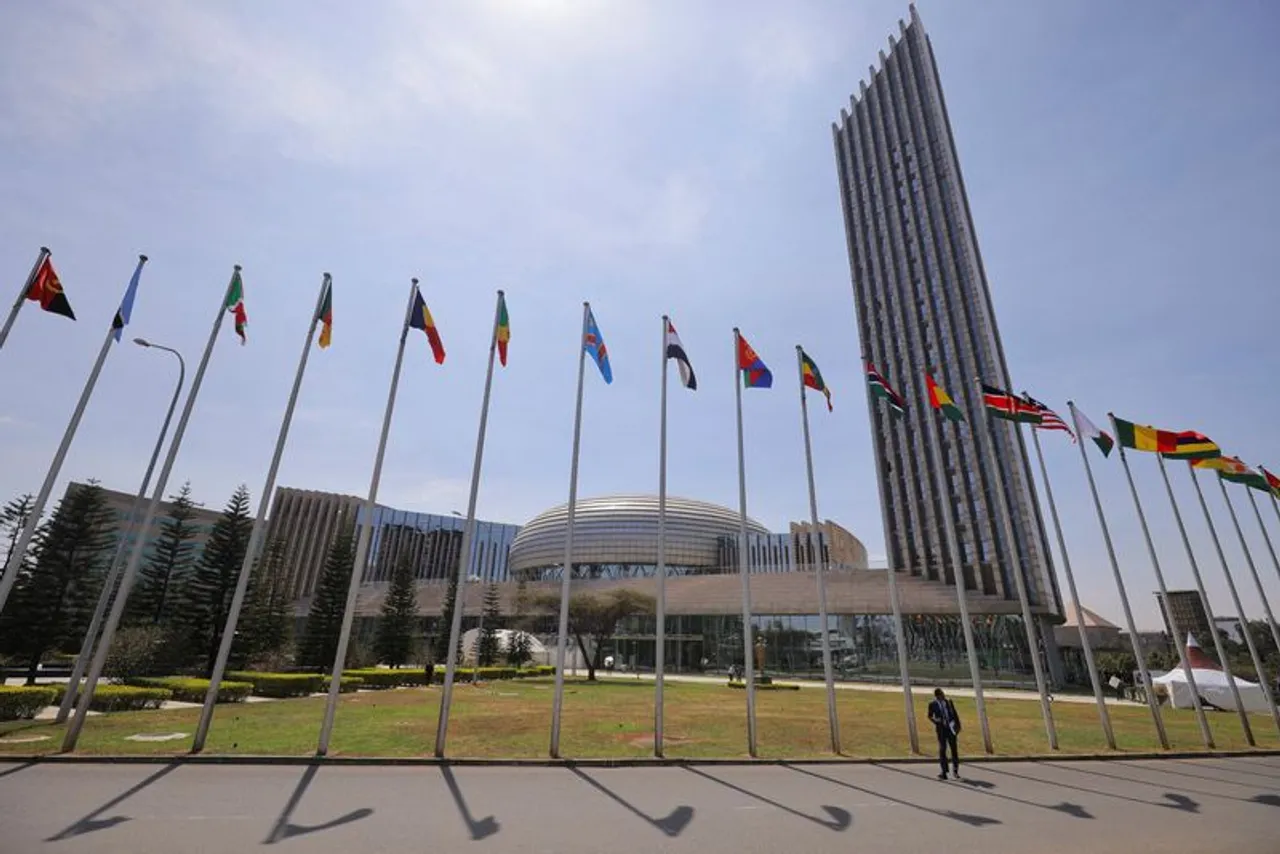
As heads of state and government gathered in Addis Ababa for the 39th Ordinary Session of the African Union Assembly last week, a powerful recognition of Africa's centrality to global affairs emerged from an unexpected source. Italian Prime Minister Giorgia Meloni, addressing the AU Summit, declared that "Africa is not a marginal chapter of the future of the world."
Her words, delivered at the AU headquarters, signal something profound: the world is finally awakening to what Africans have always known, our continent is not merely a geographical space to be acted upon, but a decisive force shaping the 21st century.
This acknowledgment, coming from the leader of a G7 nation during the first Italia-Africa Summit ever held on African soil, represents more than diplomatic courtesy. It reflects a tectonic shift in global perceptions. Yet as we absorb this recognition, we must ask ourselves a harder question: Are we, as Africans, ready to seize this moment?
The numbers tell a story that cannot be ignored. By 2050, one in four human beings on Earth will be African. Today, our continent's median age is 19, staggeringly young compared to 28 in India and 38 in the West. Every month, one million young Africans enter the labour market. This youth bulge is not a problem to be managed; it is the engine of future global growth, innovation, and dynamism.
Continental free trade
Yet as Pulitzer Prize-winning journalist Declan Walsh recently observed, less than a quarter of these young people find formal employment.
The gap between aspiration and opportunity fuels migration, instability, and the democratic backsliding we have witnessed in parts of West Africa. The question before African leaders is whether we can transform this demographic dividend from a source of restlessness into a foundation for prosperity.
The African Continental Free Trade Area (AfCFTA) represents our most ambitious vehicle for this transformation. President William Ruto, chairing the inaugural AfCFTA Committee meeting at this summit, is championing the deepening of regional integration and the expansion of trade among ourselves. The logic is unassailable: when we trade more with each other, we build industries, create jobs, and generate the resources needed for education, health, and infrastructure.
Yet intra-African trade remains stubbornly low compared to other regions. We export raw materials to the world and import finished goods, perpetuating a colonial economic model that enriches others while leaving our people in poverty.

President John Mahama of Ghana has articulated a vision of "resource sovereignty and value addition," pointing to his country's Goldbod initiative as evidence that we can process our minerals and agricultural products ourselves. This is the path we must collectively pursue.
Visa waivers
The recent Ghana-Zambia visa waiver agreement, driven by President Hichilema and President Mahama, exemplifies the practical steps we need.
When citizens can move freely between African countries, trade follows. Students, businesspeople, professionals, and tourists create connections that no government decree can manufacture.





We need more such agreements; ultimately, we need a continent where an African travelling to another African country faces fewer barriers than one travelling to Europe.
But economic integration cannot proceed without security. The continent faces unprecedented challenges. The International Crisis Group, in its report released just before this summit, warned that the African Union is at its "weakest point since its inception, suffering from a deep malaise." This assessment should shock us into action.
Conflicts in Sudan, the Democratic Republic of Congo, and the Sahel are not merely local tragedies; they are vectors for external intervention that often bypass and undermine continental frameworks. As global strategic competition intensifies, African nations increasingly find their sovereignty tested by a complex web of bilateral deals and foreign military presences pursued without AU coordination.
This fragmentation of partnerships, while offering short-term gains for some, ultimately weakens the collective bargaining power of the continent and allows external actors to exploit our divisions.
‘Peace fund’
President Hakainde Hichilema has rightly called for stronger early warning and response systems within the AU, emphasising that "peace and security remain central to Africa's stability." But early warning must be accompanied by timely action.
We cannot continue to rely on external powers to secure our peace while they pursue their own strategic interests. When security arrangements are made outside AU structures, the continent's ability to mediate and enforce lasting solutions is undermined.
The proposal by President Ruto for member states to contribute $1 billion to an AU peace fund is a bold step toward financial independence. Critics may say "good luck with that" given stretched budgets, but the alternative, continued dependence on outside money that comes with outside conditions, is unacceptable.
The conflicts tearing at our continent demand African-led solutions. UN Secretary-General António Guterres used this summit to renew his call for permanent African seats on the UN Security Council, declaring that "the absence of permanent African seats in the Security Council is indefensible." He is right. It is 2026, not 1946. Decisions about Africa cannot continue to be made without Africa at the table.
Yet we must also look inward. The International Crisis Group warns of a "high risk" of interstate conflict between Burundi and Rwanda, even as Burundian President Évariste Ndayishimiye assumes the AU chairmanship. This irony is not lost on observers. We cannot mediate crises effectively when tensions simmer among ourselves.
President Mahama, speaking at the World Governments Summit in Dubai, called for "new global alliances built on solidarity and shared progress." But such alliances must begin at home. The African Union's institutional reforms, championed by Rwanda's Paul Kagame and now carried forward by Kenya's Ruto, are essential to building a continental body capable of mediating our conflicts and enforcing our decisions.
Beyond economics
The Ghana-Zambia visa waiver represents a model we must replicate across the continent. When Presidents Mahama and Hichilema instructed their Foreign Ministers to make it happen, they demonstrated the political will required. We need similar leadership from every AU member state.
The benefits extend beyond economics. When Ghanaians and Zambians can travel freely, they discover shared identities, common challenges, and collective aspirations. The online mockery of traditional attire during Mahama's visit, which led Zambia to learn what the fugu is and potentially consider it for their attire, shows how cultural exchange deepens connections. These are the bonds that make conflict unthinkable and cooperation natural.
Agenda 2063 envisions a continent with free movement of people, goods, and services. We are halfway to that target year. The progress is uneven, but the Ghana-Zambia agreement shows what is possible when leaders prioritise integration over bureaucratic convenience.
Prime Minister Meloni's presence at the AU Summit, and her government's Mattei Plan for Africa, represents an opportunity, but also a test. Italy has offered African countries the chance to suspend debt repayments when hit by extreme climate events. This innovative approach acknowledges the injustice facing Africa, which contributes least to global emissions but suffers most from climate impacts.
Yet we must approach all partnerships with clear eyes. Meloni spoke of "cooperation between equals, far from any predatory temptations and from the paternalistic approach which, for a long time, distorted relations between Africa and Europe." We have heard such language before. The difference will be in the outcomes.
The Mattei Plan's focus on energy, food security, infrastructure, healthcare, and education aligns with our priorities. But as Meloni herself acknowledged, "the success of this initiative also depends on our ability to keep listening." We must ensure that listening translates into action that serves African peoples, not external interests.
The 39th AU Summit occurs at an inflection point. Global powers compete for influence on our soil while our young people demand opportunities their parents never had. The old narratives, Africa as hopeless continent or rising star, miss the point. We are simply restless, ambitious, and determined to shape our own destiny.
Prime Minister Meloni is correct: Africa is not a marginal chapter in the world's future. We are the story. But whether that story is one of prosperity or continued exploitation depends on choices we make now.
We must strengthen intra-African trade until the AfCFTA delivers on its promise. We must secure our continent against aggression by building peacekeeping capacity that answers to us. We must end wars through African mediation that commands African respect. We must remove visa requirements until an African travelling anywhere on this continent feels like a citizen, not a visitor.
President Hichilema captured it succinctly: "Accountability and responsibility within the AU would improve the organisation's effectiveness." The same applies to every member state, every leader, every citizen. The world is ready to deal with Africa as an equal partner. The question is whether we are ready to deal with ourselves.
Kennedy Chileshe is Executive Director of the Jubilee Leaders Network, a pan-African organisation promoting leadership, good governance and economic integration.
The author, Kennedy Chileshe, is the Executive Director of Jubilee Leaders Network.
Disclaimer: The views expressed by the author do not necessarily reflect the opinions, viewpoints and editorial policies of TRT Afrika.