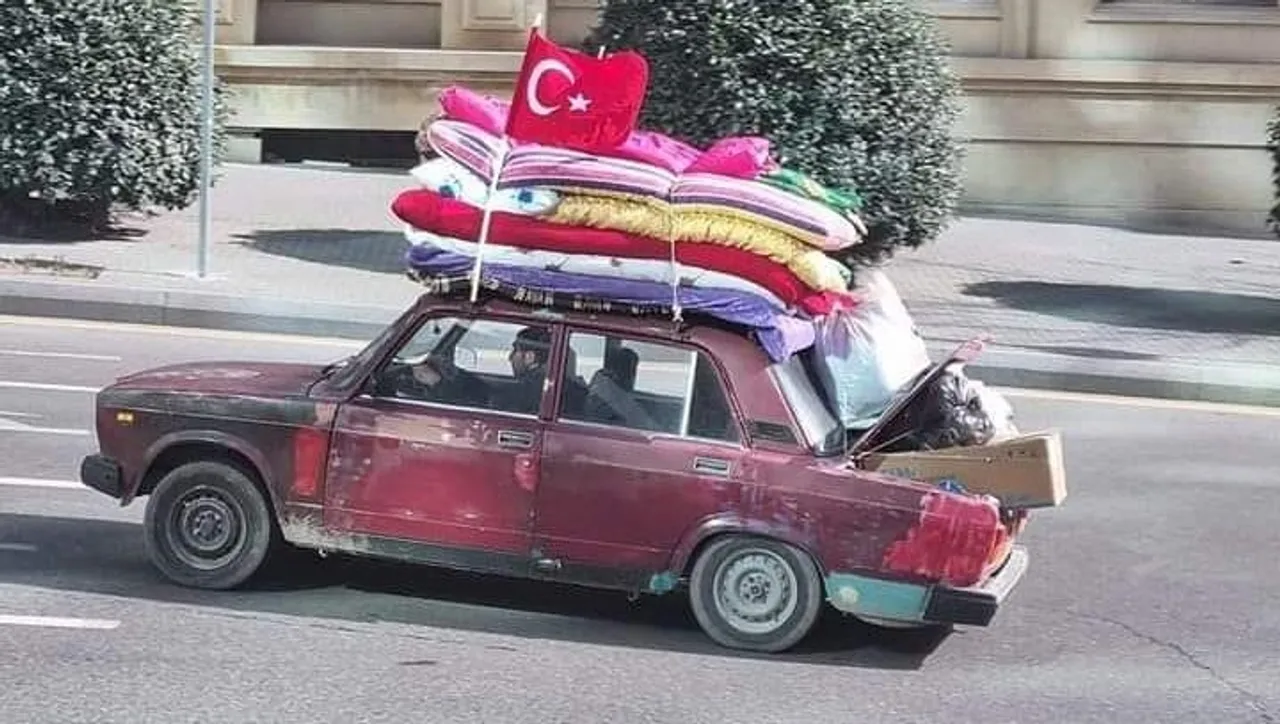
In the days following the February 6, 2023 earthquakes, Server Besirli tied a few mattresses and quilts to the roof of his rundown red car. After hoisting a Turkish flag to its side, he drove more than 1,600 km from his small village home of Ceyranbatan near Baku in Azerbaijan towards the city of Kahramanmaras in south central Türkiye, where a devastating 7.8-magnitude earthquake had struck.
There was no convoy waiting for him, no cameras, no official coordination. Carrying bedding taken from his own home, he hadn’t come for the fanfare or to play hero, but to help people he felt bound to.
But within days, an image of the car, its roof stacked high, its engine straining forward, would circulate across social media and television screens. In a disaster defined by collapsed buildings and overwhelming loss, with more than 50,000 people killed and 100,000 others injured, Besirli’s quiet act was sparked by the “intention of standing by our brother country,” and doing “whatever was within our power.”
Besirli, 35, a descendant of Karabakh war refugees from the Karabakh conflict, explained his motivation to TRT World: “We have lived through very hard times ourselves….I am from Karabakh. In 1992, we too were forcibly displaced in snow and winter, without proper clothing or shoes, we were left homeless. When this disaster struck our brother country on February 6, the first things that came to our minds were warm clothes and warm bedding. That was what we could do.”
For Besirli, this was not charity; it was memory.
“That is why, with the intention of standing by our brother country, we tried to do whatever was within our power,” he added.
At the time, he was unaware that anyone had noticed his journey. The photograph of his red car was taken along the road, shared on social media, and quickly went viral days later.
“I later heard and saw it on television,” Besirli recalled. “My red car became a symbol.”
The devastating earthquakes that struck Kahramanmaras on February 6, 2023, affected 11 provinces and left nearly 14 million lives shattered. They marked one of the darkest chapters in Türkiye’s recent history. But they also became a defining moment for the Turkic world, revealing how deeply shared history, cultural memory, and a deep sense of brotherhood could translate into action.
From the earliest hours of the disaster, Turkic states mobilised with remarkable speed and commitment. Azerbaijan, Kazakhstan, Uzbekistan, Kyrgyzstan, and Turkmenistan dispatched search-and-rescue teams, medical personnel, humanitarian convoys, and later, long-term reconstruction support.
Yet alongside official responses, it was the spontaneous actions of ordinary people like Besirli that resonated most powerfully.
Associate professor Basak Kuzakci from Marmara University in Istanbul told TRT World that the response went beyond conventional humanitarian aid: “From the very first hours, the Turkic World stood by Türkiye not merely through messages of condolence, but through boots on the ground, humanitarian aid, and long-term contributions to recovery and reconstruction.”
It marked “a historic turning point,” she added.
Unity under the rubble
Rescue operations unfolded under some of the harshest conditions imaginable. Heavy snowfall, freezing temperatures, and widespread destruction severely hampered access to collapsed buildings. Rescue teams, soldiers, police officers, volunteers, and civilians worked side by side, often at great personal risk.
Across Türkiye, mosques, schools, and homes were transformed into aid centres. International rescue teams arrived from across the world. But among them, Azerbaijan’s response stood out both in scale and symbolism.
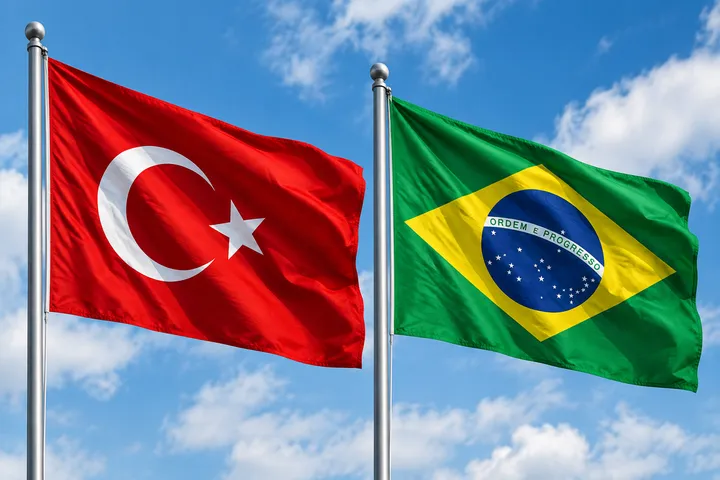
Within the first week, Azerbaijan delivered more than 1,500 tons of humanitarian aid, sent the largest foreign search-and-rescue contingent, and launched nationwide donation campaigns. The oft-repeated phrase “one nation, two states” moved beyond rhetoric and became visible in action.
According to Kuzakci, the Turkic world’s response cannot be understood as a simple donor–recipient relationship: “The support extended to Türkiye was shaped by cultural memory, historical ties, and a shared vision for the future. From Turkestan to the Caucasus, this vast geography perceived the earthquake not as Türkiye’s tragedy alone, but as a collective test for the entire Turkic World.”
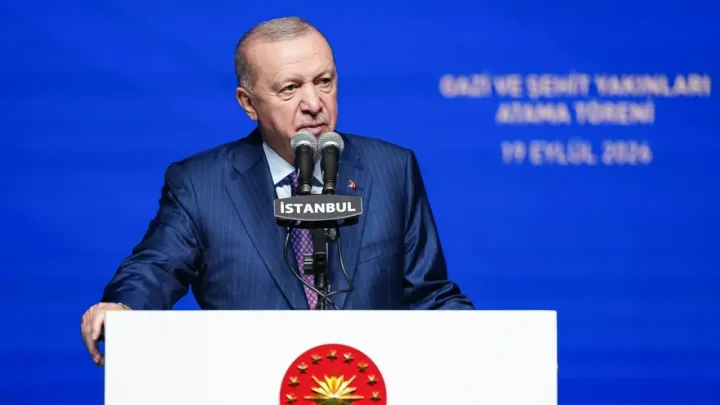
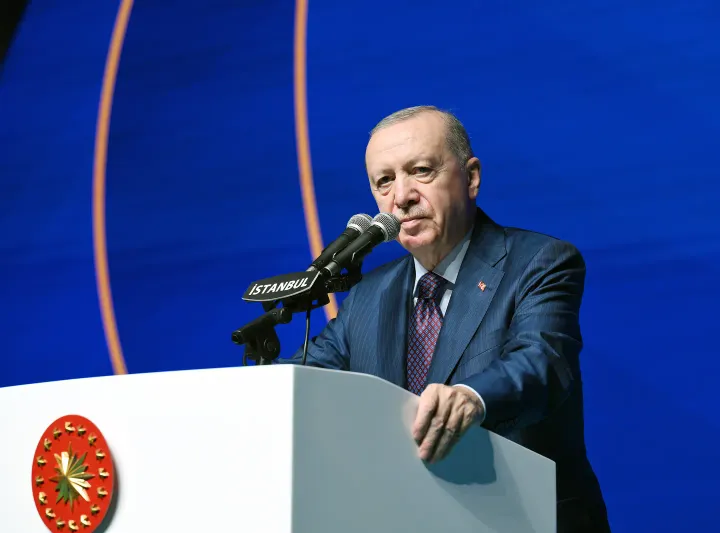
That understanding carried into the reconstruction phase. In Hatay, one of the 11 provinces affected by the disaster, more than 3,000 housing units were recently delivered to earthquake survivors. The handover took place during a ceremony attended jointly by Türkiye’s President Recep Tayyip Erdogan and Uzbekistan’s President Shavkat Mirziyoyev—an unmistakable sign that rebuilding, too, was seen as a shared responsibility.
Today, Besirli’s red car is still with him, and lives on in public memory as more than a vehicle. It represents sacrifice without excess, solidarity without expectation, and brotherhood proven through action. Many in Türkiye have suggested that it be preserved in a museum as a lasting tribute.
Although Besirli later received a new car and support to rebuild his humble home, the true value of his gesture lies elsewhere. As memories of the disaster gradually recede, the image of a red car, heavy with blankets and hope, endures.
Ultimately, the response of the Turkic world to the February 6 2023 earthquakes revealed that solidarity is not defined by geography or protocol, but by shared memory, empathy, and action.
What endured beyond the rubble was not only rebuilt cities, but a reaffirmed sense of brotherhood—one that transformed grief into unity and demonstrated that in the face of catastrophe, the Turkic world stands not as separate nations, but as one community bound by responsibility, compassion, and an unbreakable human bond.