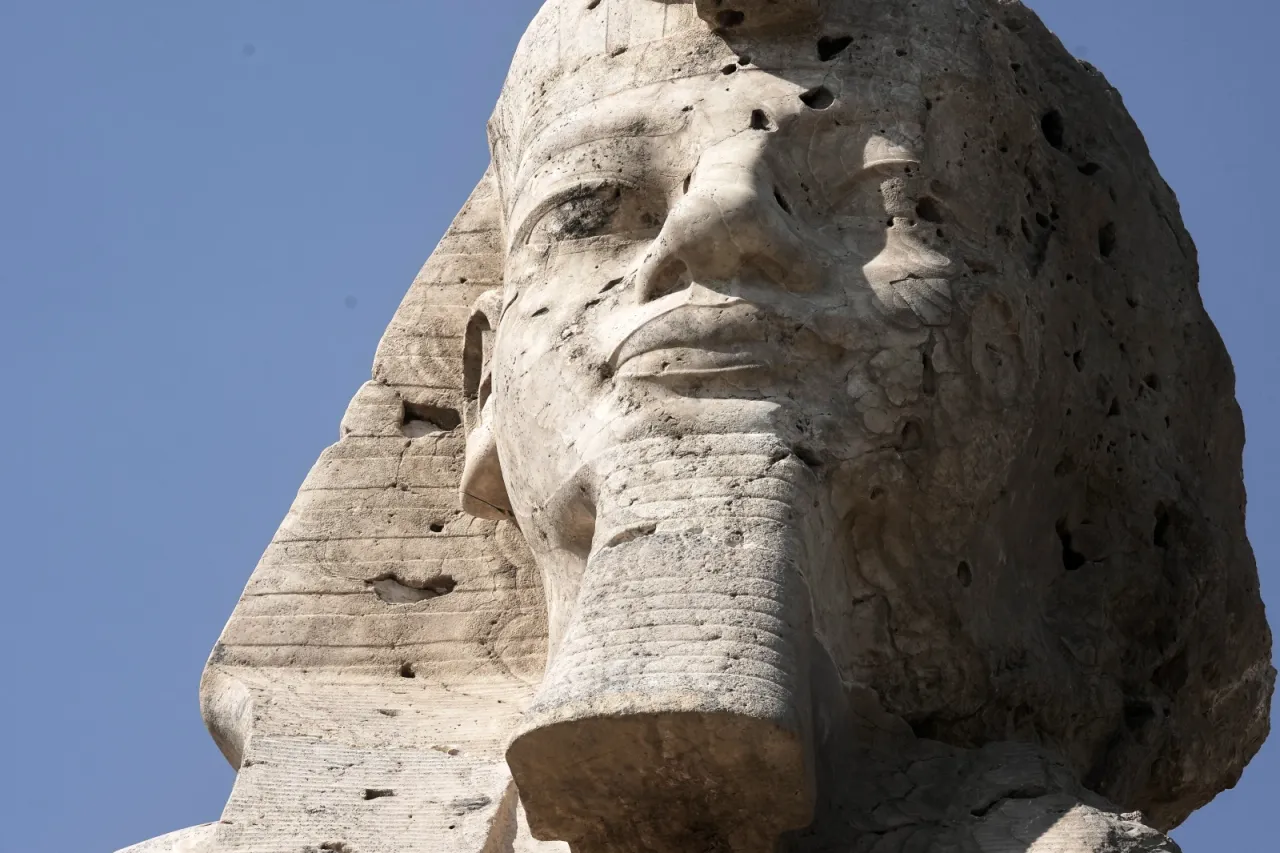
Egypt proudly unveiled the meticulously restored colossal statues of the prominent Pharaoh Amenhotep III in the southern city of Luxor over the weekend amid fanfare.
The event marks the completion of an extensive two-decade-long restoration project, part of Egypt's ongoing efforts to revitalise its tourism sector through showcasing the nation’s rich archaeological treasures.
During these years, archaeologists worked to reassemble the statues from fragments scattered across the site and neighbouring temples, including the nearby Karnak Temple, where some of the blocks were repurposed.
The statues are made of Egyptian alabaster and are part of the famous Colossi of Memnon, which originally stood at the entrance to Amenhotep III’s mortuary temple on the western bank of the Nile.
The king’s mortuary temple, once one of Egypt's largest and most elaborate, is now mostly in ruins, destroyed in a massive earthquake around 1200 BCE.







These majestic sculptures, each standing over 13 metres tall, depict the pharaoh seated with his hands resting on his thighs, gazing toward the east, symbolising his eternal connection with the rising sun.
Amenhotep III, who ruled from 1390 to 1353 BCE, was one of ancient Egypt's most influential pharaohs. His reign marked the peak of Egypt’s New Kingdom, a period known for unprecedented prosperity and monumental construction projects.
The statues present Amenhotep III in full regalia: wearing the nemes headdress, the double crowns of Upper and Lower Egypt, and a pleated royal kilt that signifies his divine authority. At his feet, two smaller statues depict his queen, Tiye, highlighting the importance of royal consorts in ancient Egyptian culture.
The restoration of these statues is a collaborative effort that began in the late 1990s under the leadership of Egyptologist Hourig Sourouzian, supported by the Egyptian-German mission.
With international tourism beginning to recover, Egypt hopes that restoring its cultural landmarks will continue to attract millions of visitors each year. In fact, 2024 saw a record 15.7 million tourists, Egypt’s Ministry of Tourism and Antiquities announced in January. Officials anticipate even greater numbers in the future, with 18 million visitors expected in 2025 and 30 million by 2032.