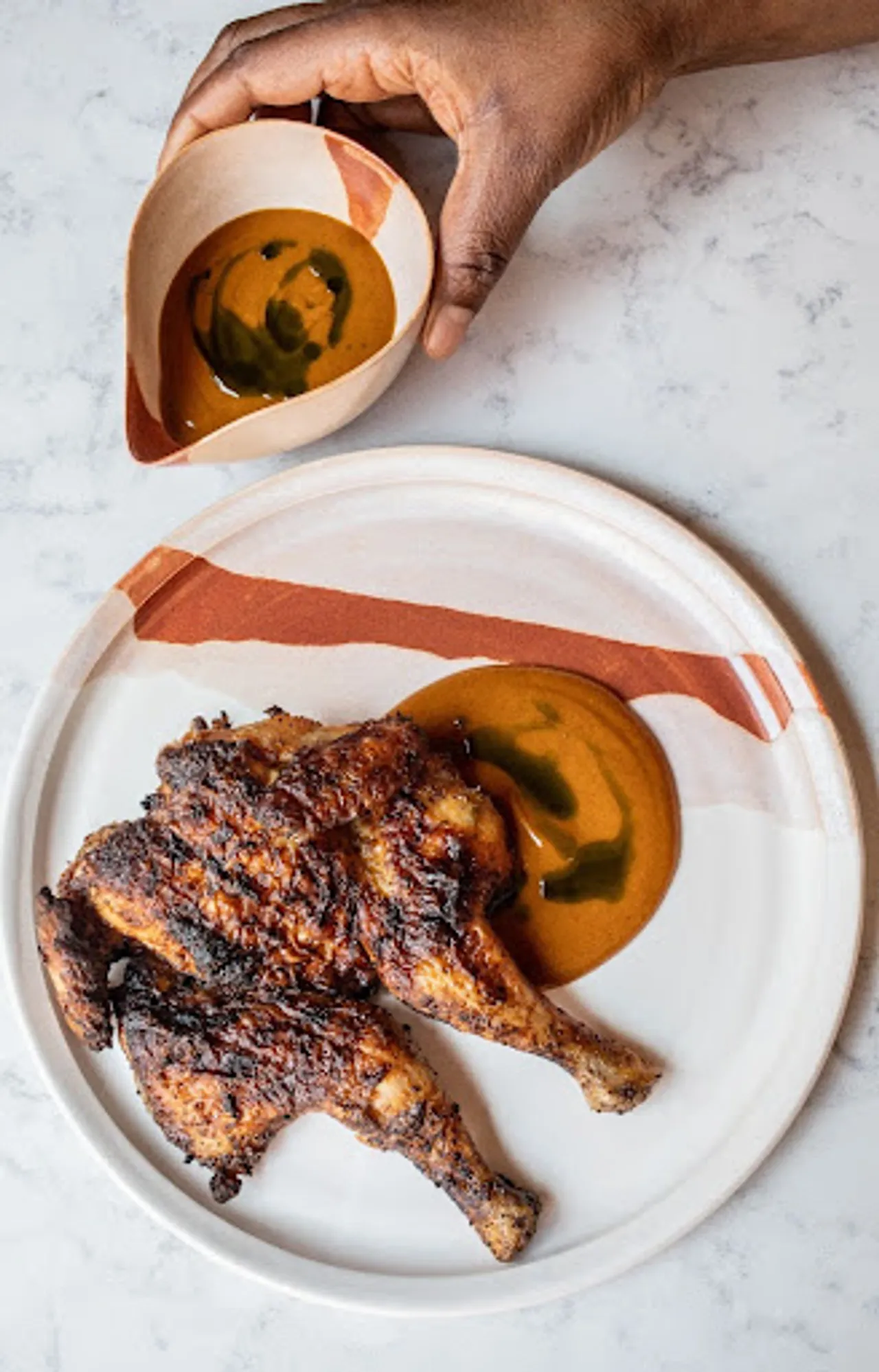
Maria Bradford's 2023 cookbook, titled Sweet Salone, is more than just a collection of recipes; it is a heartfelt tribute to her Sierra Leonean roots.
As a British-Sierra Leonean chef, Bradford aims to reshape the narrative surrounding her homeland's culinary traditions, which have often been overshadowed by negative stereotypes.
Her mission is to elevate Sierra Leonean cuisine, showcasing its unique flavors and cultural significance in the broader culinary landscape.
A Taste of Home in Kent
Bradford's culinary journey has led her to establish Shwen Shwen, a restaurant in Kent that translates to "fancy, fancy" in Creole.
Since its opening last summer, Shwen Shwen has garnered attention from prestigious culinary guides such as the Michelin Guide, The Observer, and The Good Food Guide.
This recognition marks a significant step in bringing Sierra Leonean cuisine into the fine dining conversation in Britain.
Originally from Freetown, the capital of Sierra Leone, Bradford emigrated to rural southwest England 25 years ago, a move that took her away from the traditional Sierra Leonean diaspora hubs like Peckham and Brixton in London.
Food has always been a central part of her life, serving as a connection to her homeland and the memories of loved ones left behind.
An Atmosphere of Authenticity
Shwen Shwen is designed to evoke the essence of Sierra Leone without relying on overt symbols. The restaurant's warm interior features a palette of maroon, orange, and yellow, creating an inviting atmosphere.
A standout element is the upholstery, crafted from traditional Sierra Leonean 'country cloth,' which is used for seating and decor. This fabric, woven from locally grown cotton, has historical significance, once worn by paramount chiefs as a symbol of wealth and prestige.
The restaurant's decor includes a cabinet displaying copies of Bradford's cookbook alongside traditional mask heads, while black-and-white photographs of rural Sierra Leone adorn the walls.
The courtyard, named after Freetown's iconic Cotton Tree, which was destroyed in a recent storm, adds to the cultural experience that guests encounter.

Reimagining Sierra Leonean Flavors
At Shwen Shwen, Bradford reinterprets traditional dishes with a modern twist. Her menu features items like pepper chicken and pepper fish, both wrapped in banana leaves and baked to perfection.
"Westerners are unfamiliar with eating from a banana leaf," she explains. "I didn't want to replace it with greaseproof paper because the banana leaf adds flavor and represents our culture."





Another highlight is the granat stew, a peanut-butter-based dish served with Funde, a millet staple in Mandinka culture. Bradford's culinary training in French cuisine blends seamlessly with her Sierra Leonean heritage, resulting in a unique dining experience.
Desserts at Shwen Shwen reflect the lack of a traditional dessert culture in Sierra Leone. Bradford has creatively adapted beloved snacks into new forms, such as her benni cake dessert, which transforms sweet sesame seed brittle into a granola base layered with pineapple and coconut ice cream.
This dish pays homage to her grandmother, who would bring grated coconut mixed with garri and sugar from Bo, Sierra Leone's second-largest city.
Addressing Palm Oil Politics
A significant ingredient in Bradford's menu is West African palm oil, which is essential for dishes like plasas and okra stew. However, the use of palm oil raises environmental concerns due to its association with deforestation in Southeast Asia.
Bradford is keen to address these issues, emphasizing that the oil palm tree is native to Africa and was only introduced to Southeast Asia in the last century.
"I wanted to put palm oil on the menu and give it the weight it deserves," she states. "To us West Africans, palm oil is what olive oil is to those living in the Mediterranean."
Bradford believes that the West often overlooks the importance of African gastronomic traditions, and she aims to spark conversations about the cultural significance of palm oil.
Redefining Fine Dining
As African fine dining gains traction in Britain, Bradford confronts the challenge of meeting Western expectations while staying true to her roots. Her philosophy centers on abundance and care, contrasting sharply with the minimalist presentations often found in Western fine dining.
"People talk a lot about our portion sizes, which comes from a Western perspective," she explains. "If you visit an African home, we feed you until your stomach is bursting. When people come to the restaurant, I want them to leave full, fed, and looked after. It's our responsibility to define what dining in a Sierra Leonean or African restaurant looks like."
When plating her dishes, such as short rib with granat soup, Bradford conveys a message of cultural authenticity. "This is a traditional Sierra Leonean dish," she asserts. "The sauce is how my mother, grandmother, and great-grandmother made it. I might change the meat or slow cook it, but I am still conveying the essence of our culinary heritage."

Some dishes, like cassava leaves stew, are sacrosanct to Bradford. She refuses to deconstruct Sierra Leone's national dish, likening it to dismantling a classic roast dinner. "That is me respecting the culture," she emphasizes. "I want people to enjoy the form in which it is."
A Culinary Legacy
For Bradford, Shwen Shwen is more than just a restaurant; it is a celebration of her culinary journey and a testament to her Sierra Leonean heritage.
"I went to culinary school and am French-classically trained, but the foundations I learned from my mother and grandmother are just as important," she shares. "The restaurant is an extension of that, meant to show that I was made in Sierra Leone. That is just who I am."
Through her innovative approach to Sierra Leonean cuisine, Bradford is not only redefining fine dining but also fostering a deeper appreciation for her culture and its culinary traditions.
As she continues to share her heritage through food, she invites diners to experience the rich flavors and stories that define Sierra Leonean cuisine.