When people talk about global innovation, Africa is too often left out of the narrative. But across millennia and into the modern era, African thinkers and inventors have shaped the world in profound ways.
Below are five innovations born in Africa that reverberated far beyond the continent’s borders—transforming technology, society, and culture.
1. Iron metallurgy and blacksmithing (Sub-Saharan Africa)
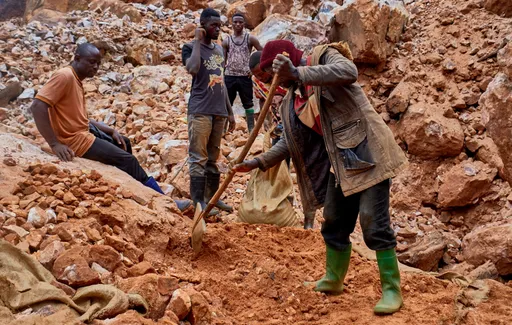
Long before European ironworking became dominant, parts of Africa developed sophisticated metallurgy independently.
Ironworking in West Africa, and more broadly across sub-Saharan regions, enabled stronger tools, weapons, and infrastructure—accelerating agricultural productivity, urbanisation, and state formation.
In effect, the mastery of iron laid much of the structural foundation for many African civilisations—and the ripple effects of iron technology (from plows to metallurgy) were felt globally.
2. M-Pesa (Kenya) – Mobile money revolution
Perhaps the most widely recognised recent African innovation, M-Pesa (launched in Kenya in 2007) turned a simple mobile-phone platform into a full-fledged financial system.
Over time it allowed users—even those without bank accounts—to send money, pay bills, save, and access credit using their phones.
Some of its impacts:
· Adoption of financial services in Kenya soared from about 26% of adults to over 80%.
· It is estimated that M-Pesa lifted 2% of Kenyan households out of poverty.
· In 2023, 59% of Kenya’s GDP flowed through M-Pesa’s transactions.
M-Pesa’s model inspired dozens of mobile money systems across Africa and the world, especially in places with weak traditional banking infrastructure.
3. Hippo water roller (South Africa)
Access to safe water remains a global challenge. In 1991, two South African engineers, Pettie Petzer and Johan Jonker, invented the Hippo Water Roller (originally called the “Aqua Roller”)—a barrel-shaped container that can be rolled rather than carried overhead.
Why it matters:
· It dramatically reduces the physical burden (and injury risk) associated with fetching water.
· The design is simple, durable, and easily spreadable to remote or low-resource settings worldwide.
· Tens of thousands have been distributed in water-stressed communities globally.
It exemplifies what’s sometimes called “appropriate technology”—a solution designed for the conditions and constraints of local communities, yet scalable globally.







4. Lumkani – Heat-rate fire detectors for informal settlements (South Africa)
Standard smoke detectors often fail in informal, dense housing communities (slums) because cooking and daily smoke trigger false alarms. Lumkani, originating from Cape Town, designed a heat-rate detector that senses rapid temperature rises (rather than smoke) and uses a mesh network to alert nearby homes to fire danger.
Some outcomes:
· Over 60,000 devices installed in South Africa, Kenya, and elsewhere.
· It reportedly helped limit the spread of 94% of fires in its deployment zones.
· The system is paired with micro-insurance to help vulnerable households recover after fire losses.
Lumkani shows how combining low-cost hardware and social finance can address life-and-death problems in challenging settings.
5. Lokole – Offline communication for remote areas (DR Congo)
In regions lacking reliable internet or mobile coverage, Lokole presents a creative workaround: a portable, offline email and communication server that allows people to send messages locally without continuous connectivity.
Its significance:
• Helps bridge the “last mile” digital divide, enabling communication in remote or infrastructure-poor zones.
• Shows that innovation in connectivity doesn’t always require high-end infrastructure—sometimes, the most powerful solutions work with constraints rather than against them.
• Lokole (and similar efforts) points toward a future of hybrid connectivity models—mixing offline, local networks with intermittent internet access.
Lessons for the future
These five innovations span ancient to modern times, and span physical infrastructure and digital technologies. But they share several themes:
• Context is a strength – These inventions emerged because of real constraints (lack of banking, weak infrastructure, dangerous fire risk). Rather than adopting external solutions, African innovators turned constraints into advantages.
• Simplicity + scalability – Many of these were not about flashy tech, but about robust, maintainable design that could be widely distributed.
• Global ripple effects – M-Pesa’s model is emulated globally; iron metallurgy influenced global history; the Hippo roller informs water devices in many regions.
• Integration of social and tech design – Lumkani and Lokole combine technology with social systems rather than treating hardware as a standalone fix.