Türkiye has started work on a spaceport in Somalia – a project that could give the country a credible presence in the growing global space launch market, officials and analysts say.
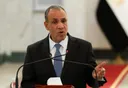
Industry and Technology Minister Mehmet Fatih Kacir confirmed at a press conference last week that feasibility and design work for the facility have been completed and that the first phase of construction is now underway on land allocated to Türkiye under a bilateral agreement with Somalia.
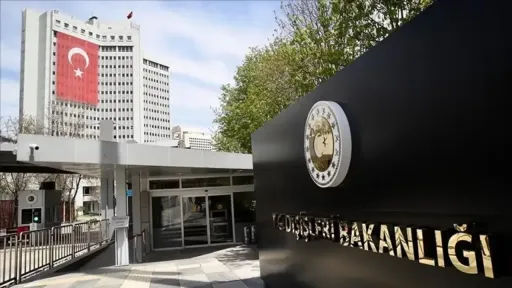
The effort is being coordinated by the Ministry of Industry and Technology, the Turkish Space Agency (TUA), and other national institutions.
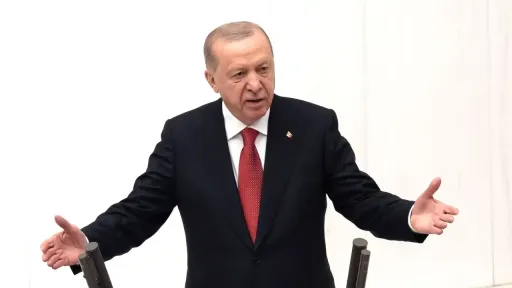
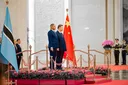
The project was first announced publicly on December 30, when President Recep Tayyip Erdogan spoke alongside Somali President Hassan Sheikh Mohamud in Istanbul, revealing that Ankara intends to establish a launch complex along the Horn of Africa coastline.
Global demand for space launchers has surged in recent years, reshaping the economics and logistics of access to orbit.
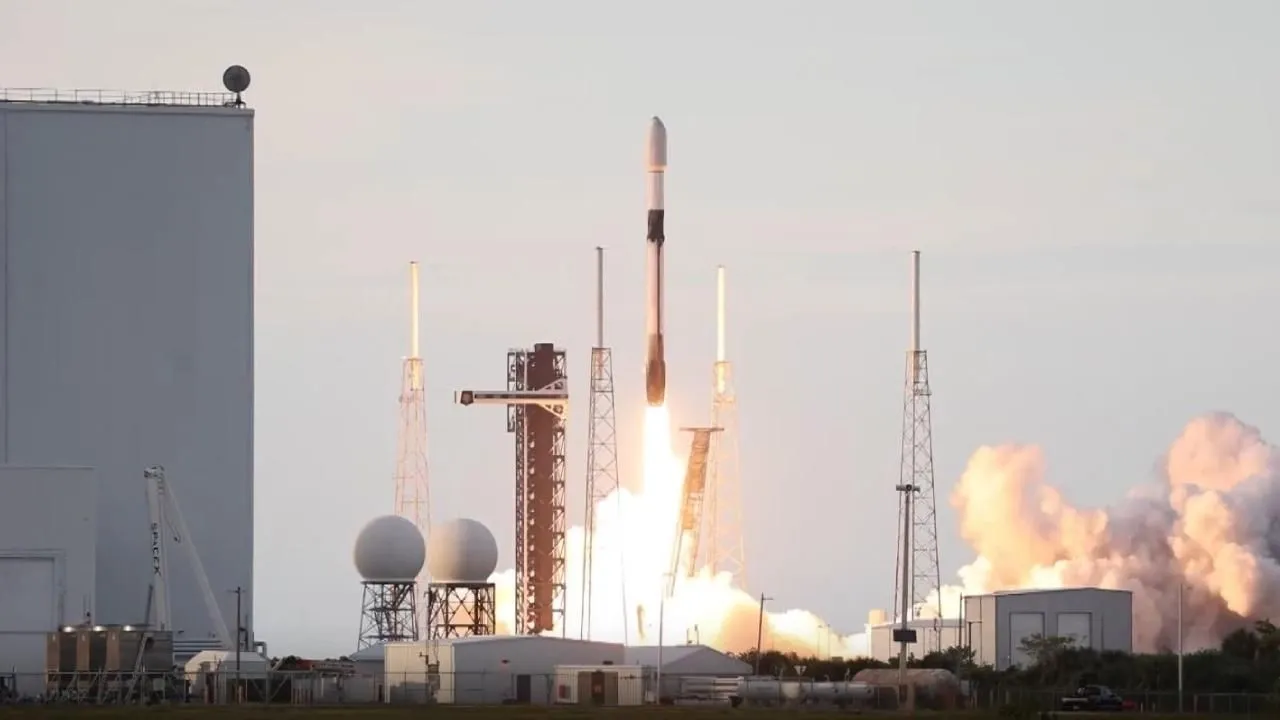
This growth has been driven largely by SpaceX, which now carries out nearly 200 launches a year, primarily from just two US locations: Cape Canaveral in Florida and Vandenberg Space Force Base in California.
At the same time, the global space economy itself has expanded rapidly, reaching an estimated $600 billion in 2024 and projected to approach $1.8 trillion by the mid-2030s.
Launch services are among the fastest-growing segments of this market, as governments and private companies race to deploy satellites for communications, navigation, defence and earth observations.
However, while demand and investment have accelerated, the physical infrastructure required to support this growth has lagged. The number of viable launch sites worldwide has remained limited, creating a structural bottleneck in the system.
Türkiye has been making rapid strides in the space sector as it bids to become a space-faring country. In 2024, Colonel Alper Gezeravci, a fighter pilot, made history by becoming Türkiye’s first astronaut. He spent several days at the International Space Station.
The same year, Türkiye's first homegrown communications satellite, Turksat 6A, was successfully launched from the US state of Florida through SpaceX's Falcon 9 rocket.
“Despite the rapid increase in launch demand and available vehicles, the world faces a severe shortage of suitable launch sites,” professor Arif Karabeyoglu, member of the Board of Directors of the Turkish Space Agency (TUA), tells TRT WORLD.
This imbalance has tangible consequences for the industry. With launches concentrated in a small number of locations, even leading operators face constraints on how frequently they can operate.
“If SpaceX had access to more launch locations, it might well conduct 300 launches annually.”
It is against this backdrop that Türkiye’s interest in developing launch capacity in Somalia has emerged.
“This project gives Türkiye a credible and sustainable position in the rapidly expanding global space launch market by aligning geography, technology and strategic autonomy,” space and defence policy expert Nazmelis Zengin tells TRT WORLD.
The current concentration of launch capacity in the hands of a few actors has produced bottlenecks and waiting lists for satellite operators worldwide, she adds.
Why Somalia matters
Launch facilities near the equator allow rockets to capitalise on the greater rotational speed, reducing fuel requirements and increasing payload efficiency.

Somalia lies just about two degrees north of the equator — even nearer than the European Space Agency’s launch site in Kourou, French Guiana.
Professor Karabeyoglu describes Somalia as “one of the best places in the world for space launches,” citing open-ocean flight paths, light maritime and air traffic, stable weather, and low disaster risk.
These elements, he says, minimise operating risk and cost.
Zengin stresses that these same conditions create a robust commercial proposition.
“Somalia’s proximity to the equator, direct access to open ocean, year-round favorable launch conditions and low air and maritime traffic density offer critical advantages for modern launch operations,” she says.
“These factors reduce fuel requirements, increase payload efficiency, and improve safety margins — making launches more cost-effective and attractive for commercial customers.”
Until now, Türkiye has relied largely on foreign launch providers, competing for scarce slots.
“For Türkiye, this marks a decisive shift from being primarily a space user to becoming a genuine launch actor,” Zengin says.
“With the Somalia spaceport, Türkiye will be able to place nationally developed satellites into orbit using nationally developed launchers, on its own schedule and under its own terms.”
That independence, she adds, strengthens national security and strategic resilience, while allowing Türkiye to position itself as a regional launch provider for Africa, the Middle East and beyond.
“In other words, Türkiye is no longer just buying tickets to space. It is beginning to operate the shuttles,” Zengin says.
Once completed, Türkiye’s Somalia spaceport would become part of the limited group of operational equatorial launch facilities worldwide.
For Somalia, the project offers more than rent from leased land or the prestige of hosting a launch site.
The benefits could anchor new technical education programs, create skilled employment, and integrate the country into one of the world’s highest-value industries.
Turkish investment brings not only capital, but also engineering expertise, training pathways, and the promise of longer-term industrial development linked to satellite services, communications, and data infrastructure.
“For Somalia, gaining a share in such a high-value sector represents a transformative opportunity,” Karabeyoglu says.
The ultimate goal of the project may hopefully turn the geopolitical strategic partnership with Türkiye into shared technological progress for the Horn of Africa.
Professor Karabeyoglu concludes, “This project is therefore not only an investment in Türkiye’s future, but also a contribution to Somalia’s development.”