US President Joe Biden has extended Executive Order 13894,claiming it was needed to deal with the instability in the Middle Eastern country that poses a threat to American national security.
First introduced on Oct 14, 2019, the order grants the president authority to impose sanctions and other measures in response to “unusual and extraordinary threats” to US national security or foreign policy, citing Syria’s ongoing instability as a particular concern.
The administration argues that the situation in Syria continues to endanger civilians, destabilise the region, and undermine efforts to defeat Daesh.
Türkiye's concerns
Türkiye, however, strongly disagrees. Sharing a nearly 1,000-kilometer border with Syria, Ankara considers the order a hindrance to its fight against the YPG, the Syrian branch of the PKK, which has killed tens of thousands in Türkiye since the 1980s.
In a statement, the Turkish foreign ministry called the extension “incompatible with the realities on the ground,” urging Washington to prioritise Syria’s territorial integrity and political unity instead. Ankara has consistently argued that US support for the YPG undermines regional stability.
"The decision by the US Government to extend Executive Order 13894 for a further year is incompatible with the realities on the ground,” the Turkish foreign ministry criticised the move in a statement released over the weekend.
“Instead of repeating such prejudiced steps, supporting Türkiye's policies prioritising Syria's territorial integrity and political unity would contribute to regional stability,” said the ministry.
Although both the US and Türkiye officially designate the PKK as a terrorist organisation, Washington’s support of the YPG remains a major source of friction between the two NATO allies.
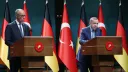



The extension of the executive order thus reflects a persistent divergence in US and Turkish policies on Syria—one that continues to strain relations, even as both countries pursue overlapping security objectives in the region.
What’s the Order about?
Executive Order 13894 was issued under the International Emergency Economic Powers Act (IEEPA), granting the US president authority to impose sanctions and other measures in response to the situation in Syria.
“The situation in and in relation to Syria undermines the campaign to defeat the Islamic State of Iraq and Syria (Daesh), or ISIS, endangers civilians, and further threatens to undermine the peace, security, and stability in the region, and continues to pose an unusual and extraordinary threat to the national security and foreign policy of the United States,” the White House statement said.
This extension allows the US to maintain its sanctions, responses, and other measures related to Syria’s instability and ongoing conflict, including its controversial cooperation with the PKK/YPG terrorist group and their affiliates in Syria—a policy that Türkiye has consistently and strongly opposed.
Ankara argues that using the YPG to fight Daesh is counterproductive, as it views the YPG and PKK as indistinguishable.
In August, Turkish Defence Minister Yasar Guler repeated Türkiye's long-standing stance that the PYD/YPG and PKK are the same, stating, "It's impossible not to recognise this."
Guler also said that he had directly confronted US officials on the matter, proposing that Turkish forces could combat Daesh, eliminating the need for the US to rely on the YPG.
For Türkiye, this US policy threatens regional stability by undermining Syria’s territorial integrity while complicating Ankara’s long-standing battle against the PKK.