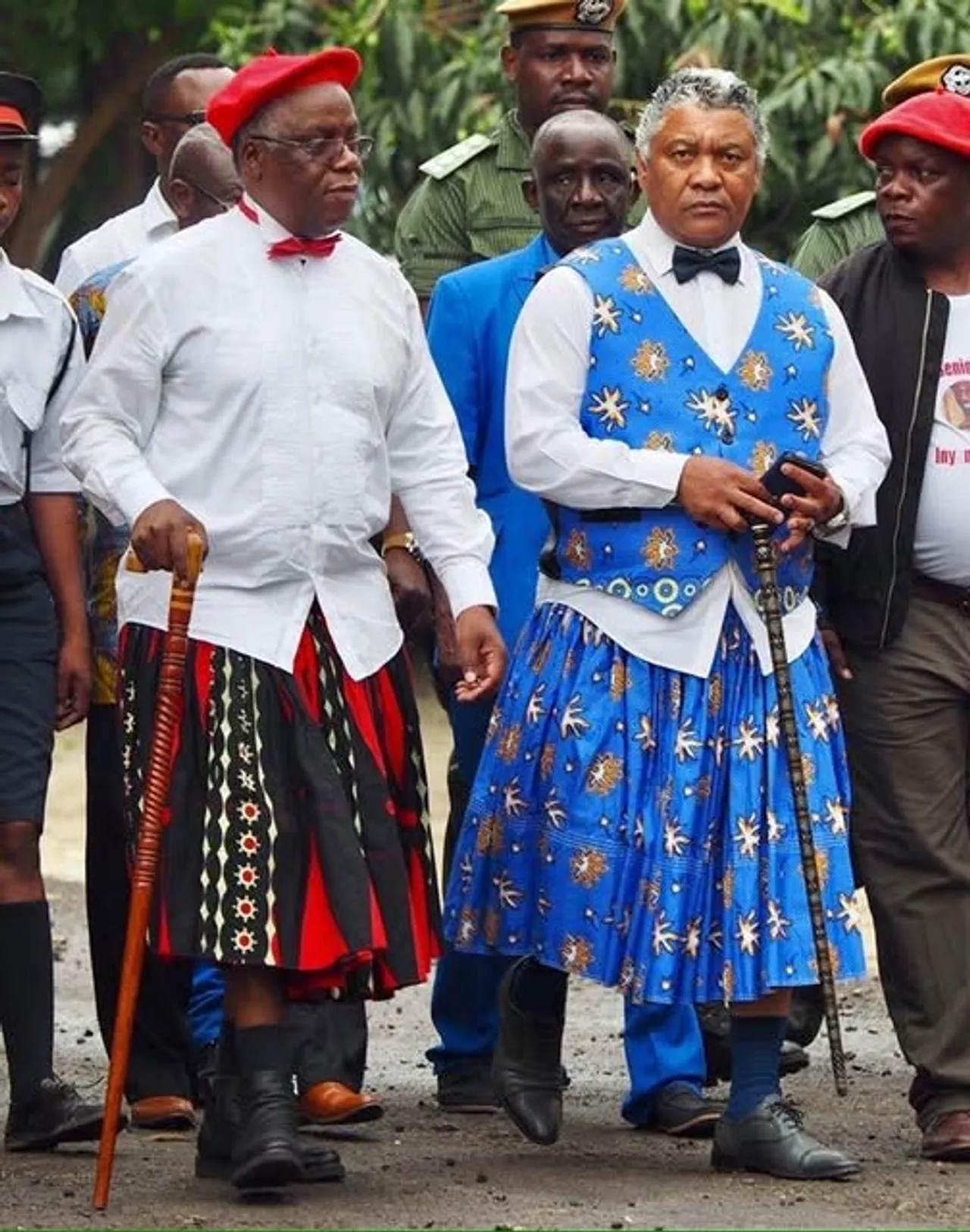
In the heart of Zambia, the Siziba and Musisi attires reign supreme. While men wear Siziba, women adorn themselves in the Musisi, paired with elegant headpieces.
These traditional garments, for men and women, are crafted from chitenge fabric, which is a versatile and durable material, typically made from cotton. The vibrant colours and intricate designs tell stories of strength, peace, and social status, with red symbolising power, blue tranquillity, and white peace.
The Siziba and Musisi are more than pieces of clothing; they are a testament to Zambia's rich culture and history, transcending fashion to speak to the heart of the people.
The Siziba is originally from the Lozi Kingdom in Western Zambia and traditionally worn by royals and dignitaries during important ceremonies like the annual Kuomboka festival, which marks the end of the rainy season.
However, the attire has now been embraced by Zambians across ethnic groups and regions, becoming a national identity and incorporated into modern fashion.
Cultural significance





Recently, the Siziba gained prominence on social media amid a banter between Ghanaians and Zambians.
The debate was sparked by Ghanaian President John Mahama's appearance in an iconic Ghanaian attire, known as the fugu, during his visit to Zambia from 4 to 6 February.
Some Zambians jokingly described the Ghanaian attire as a "blouse". This prompted Ghanaians, including MPs, to flood social media proudly showcasing their fugu, while Zambians featured wearing the Siziba.
The banter took an official turn with Zambian President Hakainde Hichilema announcing that his country would order the fugu from Ghana. Ghana's President Mahama also suggested exporting the smock in bulk to Zambia.
While highlighting fugu's cultural and political significance, Mahama said the attire was worn by Ghana's founding father and Pan-Africanist Kwame Nkrumah on the country's Independence Day in 1957, and that he too had proudly worn it to the United Nations recently.
As the debate continues, one thing is clear. The social media banter has made Ghana's fugu and Zambia's Siziba more prominent and highlighted growing interest in the rich diversity of African traditions, culture, and heritage.