 Sare Şanlı
A campaign by some white Zimbabwean farmers to secure billions in compensation, now finding a platform with the US president Donald Trump, has reopened one of Africa’s deepest wounds.
But to frame this as a simple property dispute ignores the deeper historical truth. This is the latest chapter in a darker story, one that begins with colonial theft, proceeds through broken promises, and ends in a stalemate in which justice seems impossible.
International headlines often focus on the farmers’ “property rights” and quest for “justice.” Yet this narrow lens reduces a major historical and moral dilemma to a legal footnote. The real ledger we must examine dates back not to 2000, but to the very foundations of the colonial project.
How “legal” ownership was forged
The property deeds held by white farmers are rooted in a legal system designed to legitimise seizure.
The 1930 Land Apportionment Act was the masterstroke of this policy, reserving over half of the prime farmland for the white minority, who made up barely 5% of the population. The Black majority was pushed into arid and infertile lands that offered little more than survival.
This radical redistribution was justified by the fiction of terra nullius (nobody's land). The sophisticated communal tenure systems of the people of Shona and Ndebele were simply erased from the record.
Their ancestral lands were declared “vacant,” converting an entire population into labourers on the soil they had long regarded as their own. The “legal ownership” debated today is the direct legacy of this state-sanctioned racialised takeovers.
Independence in 1980 brought hope, but the Lancaster House Agreement contained a poison pill. Its “willing seller, willing buyer” clause effectively froze the colonial land distribution in place, protecting stolen property under a new flag.
Britain promised to help fund a fair redistribution, but in 1997, the Blair government reneged on that commitment, leaving a mounting crisis without a peaceful resolution.
The 2000s: The explosion and its aftermath
Mugabe’s Fast Track Land Reform Programme (FTLRP) of the 2000s was the inevitable explosion of that pent-up pressure. While it addressed a grave historical injustice, its execution was a tragedy of errors and violence.
It is critical to separate the “legitimacy of the grievance” from the “failures of the remedy”. The violent execution of land reform caused real, condemnable suffering. It shattered lives and devastated the agricultural economy.
Simultaneously, the reform was hijacked by political elites, with prime land often going not to landless peasants but to the politically connected, betraying the very people it was meant to help.
The Washington playbook
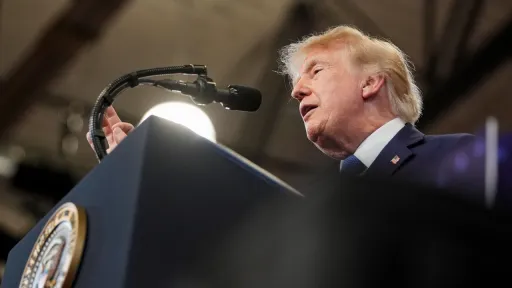
It is in this complex wreckage that a segment of the displaced farmers has turned their strategy towards Washington. Their courting of Donald Trump, who has shown a willingness to amplify narratives of “persecuted white farmers” in Africa, appears calculated.
Interestingly, what ought to be a plea for justice has now morphed into a sophisticated lobbying campaign. Their hiring of firms like Mercury Public Affairs, with its deep ties to Trump’s circle, signals a pivot.








The double standard and the unpaid debt
The current international focus on a $3.5 billion compensation package for 4,000 white farmers risks a severe case of historical amnesia.
Britain’s refusal to meaningfully engage is not neutrality; it is the final act of a colonial system that wants the benefits of history without paying its costs.
The primary architect and beneficiary of the colonial land system—Britain—has largely evaded its moral and financial responsibility.
If there is to be compensation for improvements made on the land (the buildings and infrastructure), then what of the compensation for the “original theft” of the land itself, and for the generations of forced labour and lost potential it enabled? That debt remains wholly unpaid.
Is a way forward possible?
The crisis was not created by a single decision or a single decade, and it will not be resolved by a single compensation cheque.
Any honest path forward must begin with responsibility being shared where it belongs. Britain cannot continue to treat the land question as a post-colonial inconvenience rather than a debt rooted in policies it designed and enforced. Without acknowledging its broken Lancaster House commitments, calls for “rule of law” ring hollow.
At the same time, Zimbabwe’s own failures cannot be ignored. The state’s inability to protect ordinary citizens, especially small Black farmers, turned a legitimate demand for justice into a source of new injustice.
Land reform did not fail because land was returned to Africans; it failed because it was politicised, captured by elites, and stripped of transparency.
The greatest casualties were not the former commercial farmers alone, but millions of Zimbabweans left without security, credit, or support on land that was supposed to restore dignity.
If compensation is to be paid, the question is not only whether Zimbabwe should pay, but how it possibly can. A country under sanctions, burdened by IMF debt, and deprived of access to global finance cannot be expected to carry the financial cost of a colonial problem it did not create.
If the United States or Donald Trump genuinely wish to facilitate justice, the most meaningful step would not be lobbying on behalf of one group, but easing sanctions, supporting debt relief, and urging Britain to assume its long-denied share of responsibility. Justice cannot be demanded from a state whose hands are deliberately tied.
Justice, after all, cannot begin with demands placed on a nation that is still being punished for confronting a history it did not write.
The author, Sare Şanlı, is a commentator specialising in African politics and global power relations on the continent.
Disclaimer: The views expressed by the author do not necessarily reflect the opinions, viewpoints and editorial policies of TRT Afrika