This week in Davos, Canadian Prime Minister Mark Carney delivered a speech that cut through the usual summit platitudes and spotlighted a hard geopolitical truth: the long-cherished “rules-based international order” is fading into history, not because we momentarily lost faith in it, but because it never quite functioned the way we said it did.
Carney’s diagnosis was stark: what many governments still call an international framework of predictable norms is now a world of great power rivalry, where economic integration, supply chains, trade networks, and investment flows are increasingly weaponized for coercive ends.
His blunt assessment was summed up in his warning that “middle powers must act together because if we’re not at the table, we’re on the menu.”
Carney’s words resonated because they reflect a lived reality for many nations outside the great power circle: the institutions crafted in the aftermath of World War II, such as the United Nations, are no longer reliable shields against geopolitical pressure.
But while much of the global discourse focuses on the shifting dynamics between the U.S., China, and Europe, one of the most consequential geopolitical transformations is happening in Africa, the world’s youngest continent.
Africa’s Demographic Moment
Africa is distinctive not just for its economic potential, but for its demographic profile. With a median age of roughly 19 years, it is the youngest continent on earth. About 60 to 70 percent of people in sub-Saharan Africa are under age 30, a fact that shapes everything from labour markets and innovation to political mobilisation and regional cooperation.
This youth-dominant reality carries both immense opportunity and immense risk. A large, young workforce could be a demographic dividend, driving innovation, productivity, and entrepreneurship.

However, without adequate jobs, education, and political inclusion, it could also fuel discontent, instability, and violence. Already, across Africa, youth are increasingly pushing for democratic accountability and economic opportunity, from protests in East and Southern Africa to political movements in West Africa.
The old global order offered a set of promises; development loans, trade preferences, and technical cooperation that often failed to address the structural gaps facing young populations in Africa. Today’s emerging geopolitical landscape demands African agencies that can set and defend Africa’s own agenda, rather than passively align with external powers.
From Global to Regional Frameworks
If Carney is right and if the multilateral system is losing its binding force, then the world is shifting toward regional frameworks of cooperation and governance. At Davos, middle powers talked less about restoring the old system and more about building coalitions and sovereign resilience.
In Africa, regional institutions are already central to political and economic strategy. The African Union (AU) and its sub-regional communities, like ECOWAS, COMESA, and SADC, aim to deepen integration, coordinate policy, and support collective responses to security and development challenges.
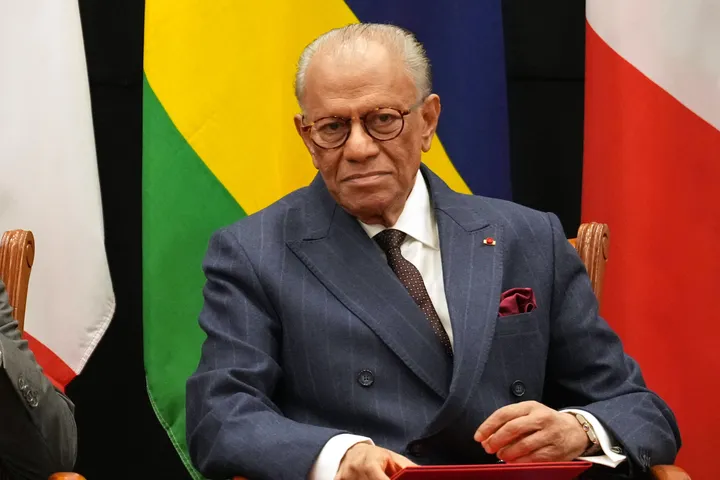

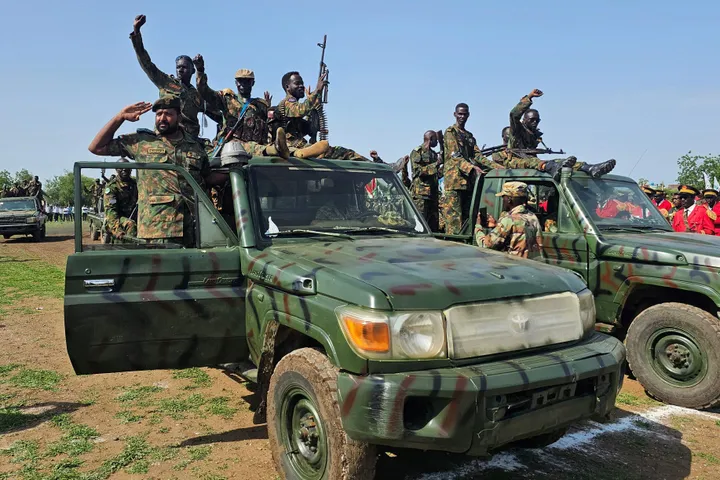




Through initiatives like the AfCFTA, the African Continental Free Trade Area, the continent is working to reduce internal barriers and shape a regional market of over a billion consumers, even as the agreement continues to face significant implementation challenges related to infrastructure gaps, regulatory harmonization, and uneven national capacity.
As multinational institutions falter under great power pressures, regional bodies can produce more tailored, responsive governance that aligns with the needs of African states. Regional cooperation can strengthen conflict response, improve public health emergency management, and deliver collective public goods more equitably than overstretched global institutions.
Why Africa Must Lead and Not Follow
For Africa, the current moment is a crossroads. The continent’s political voice, from AU representation in U.N. reform debates to its role in climate negotiations, remains underweighted relative to its demographic and economic weight.
Egyptian President Abdel Fattah el Sissi recently urged UN Security Council reform to grant Africa greater representation in global decision-making bodies, underscoring the mismatch between Africa’s population and its global voice.
If the era of the automatic global frameworks is ending, then Africa must invest in strengthening regional cooperation, not just economically but politically and institutionally.
A robust AU with effective enforcement mechanisms, coherent foreign policy platforms, and capacity for collective action would provide African countries with leverage and autonomy in a fragmented world.
In a system where rules cannot be trusted, trust must be built through shared interests and mutual accountability. Regional cooperation can nurture that trust in ways global frameworks have failed to do.
A Future Defined by Agency
Carney’s speech signalled an end to illusion and a call to realism. But realism need not mean cynicism. The world is not reverting to total chaos; it is reorganising. In that reorganisation, regional actors and youthful societies will shape the next decade of global politics far more than many analysts appreciate.
For Africa, with its youthful population, growing markets, and emerging institutional frameworks, this is not a moment to watch from the sidelines. It is a moment to build resilient regional architectures, invest in young leadership, and assert values that reflect African realities rather than external expectations.
The end of pretending might just be the beginning of a more honest and more equitable world order.
The author, Nhial Deng, is a multi-award winning youth advocate and systems innovator working at the intersection of artificial intelligence, social impact, geopolitics, and youth leadership.
Disclaimer: The views expressed by the author do not necessarily reflect the opinions, viewpoints and editorial policies of TRT Afrika.