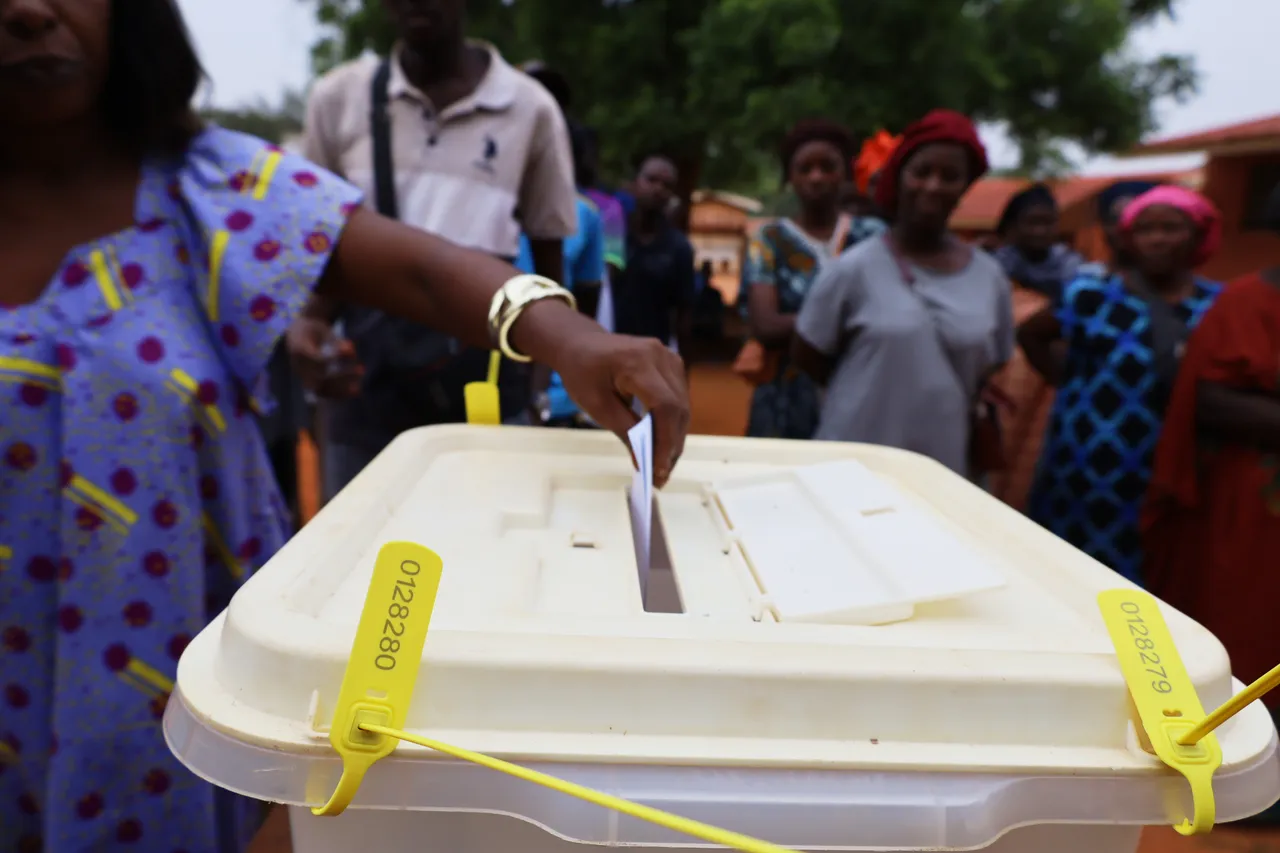
Initial results in Guinea's presidential election were due Monday, officials said, a day after the vote, in which the military leader Mamadi Doumbouya is seeking to transform into a civilian president.
The election is the culmination of a transition process that began four years ago after military leader General Mamadi Doumbouya ousted President Alpha Condé. Doumbouya now faces eight opposition candidates.
Two key opposition figures, former Prime Minister Lansana Kouyaté and former government minister Ousmane Kaba, were excluded on technical grounds, while long-time opposition leaders Cellou Dalein Diallo and Sidya Toure have been forced into exile.
Djenabou Toure, head of the General Directorate of Elections, announced on Guinean radio and television overnight that vote counting was underway.
Possible announcement on Monday
"This process (of centralising the results), both manual and computerised, already allows us to collect the first data," she said.
"The first partial results should be released as early as this Monday," she added.
Toure had already told AFP late Sunday that turnout, a key issue in a vote without prominent opposition figures, was 85 percent.
A total of nine candidates are contesting the election, and Doumbouya’s closest challenger is the little-known Yero Baldé of the Democratic Front of Guinea party, who was education minister under Condé.
Referendum
In late September, Guineans approved a new constitution in a referendum which permitted junta members to run for office, paving the way for Doumbouya's candidacy. It also lengthened presidential terms from five to seven years, renewable once.
Guinea's natural resources include bauxite, the chief mineral used in aluminium production, as well as iron, gold and diamonds.
But just over half of the population lives in poverty, according to World Bank figures.
Since independence in 1958, Guinea has had a complex history of military and authoritarian rule, including multiple military interventions.
Nearly 6.8 million voters, including 125,000 living abroad, were eligible to vote.