 Göktuğ Çalışkan
As 2026 begins, the Sahel is no longer fighting terrorists emerging from the desert to attack a convoy and vanish into thin air, the war has changed in scale, pace, and strategy.
In the Liptako-Gourma region, the Alliance of Sahel States (AES) is confronting a hydra that no longer merely seeks to challenge the state, but to replace it.
Between an armed governance that is taking root in the institutional vacuum and forms of popular resistance that are reshaping local loyalties, the region's future is being decided in a battle for legitimacy, presence, and services rendered.
It would be risky to continue reading the Sahel crisis solely through the lens of conventional "counterterrorism."
What is unfolding today in the tri-border area between Mali, Burkina Faso, and Niger amounts to a clash of political options.
On one side, governments, bolstered by the Alliance of Sahel States (AES), seek to make their authority visible and credible by placing the military back at the heart of the national narrative.
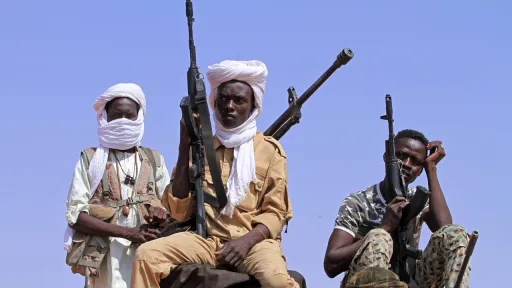
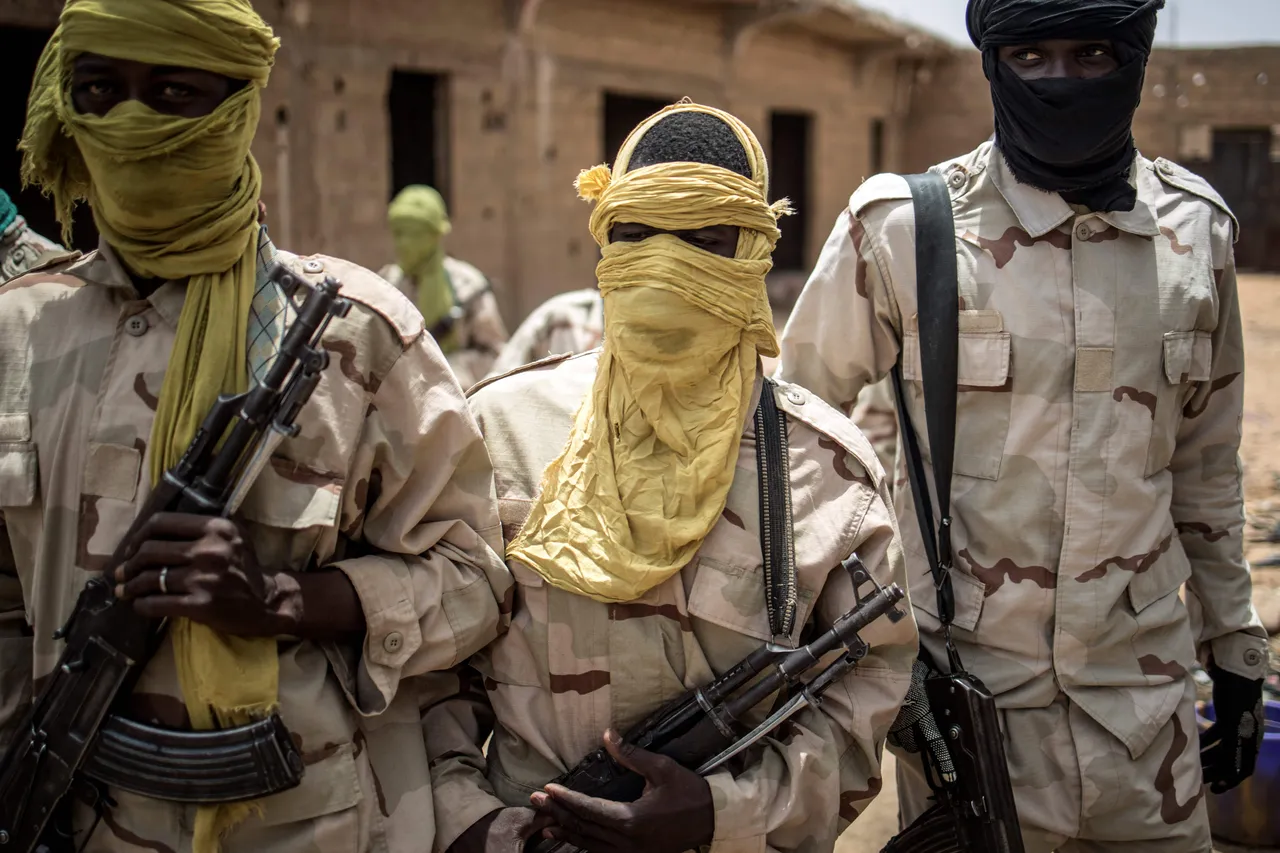
On the other, terrorist groups such as the Al Qaeda-affiliated JNIM and Daesh-GS, are building their presence, based on instilling fear, control of roads, and mechanisms of social management.
Illusion of void and strategy
Many external analyses have mistakenly considered areas beyond the reach of Mali’s government or Burkina Faso’s government as "ungoverned spaces." Yet, the political sociology of the Sahel abhors a vacuum.
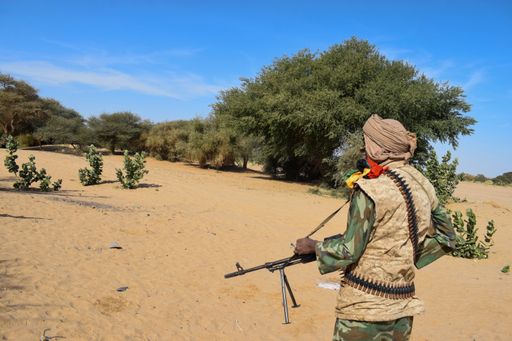
Where the administrator, the judge, and the gendarme withdraw, non-state armed groups do not merely establish chaos: they impose an order. A brutal order, but a predictable one, which is sometimes enough to produce compelled obedience.
In several rural areas, the terrorist group JNIM has implemented an administrative substitution.
Their mobile courts diligently settle land disputes and conflicts between farmers and herders. Within hours, they resolve what the state apparatus, perceived as distant, might have allowed to fester for months.
The armed actors appear as those who "respond" when the state seems "absent."
Taxation also transforms into a language of power. What resembles extortion stabilises, in some places, into a more regular system of levies, accompanied by an implicit promise of protection. The message is clear: the state collects without guaranteeing; the groups collect in exchange for conditional security.
This normalisation is alarming because it rests on a terrorist group whose growing capacity is documented: some estimates mention up to 6,000 armed men in the group.
The weapon of hunger
This armed governance has a darker side: the blockade, which involves controlling road arteries, markets, and crossing points, amounting to controlling a society's very breath. The goal is not only to encircle garrisons but to exhaust towns, fracture solidarity, and impose a hierarchy of survival.
The blockade becomes a political strategy: weaken the state through scarcity, then propose an "order" in exchange for submission.
The experience of Djibo in Mali illustrates the brutality of this mode of action: the crisis there is described as affecting over 300,000 inhabitants.
The phenomenon exceeds a local case: assessments mention about 40 localities under blockade, affecting up to two million people.
By forcing populations to choose between capitulation, exile, or starvation, terrorist groups seek to reshape demographics, create buffer zones, secure logistical corridors, and make society bear the human cost of war.
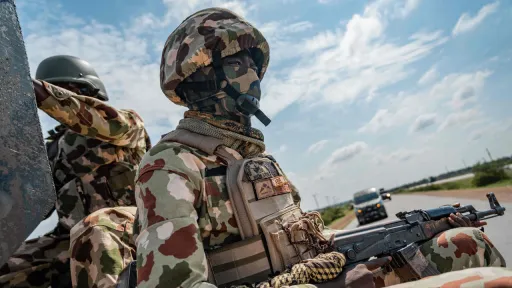
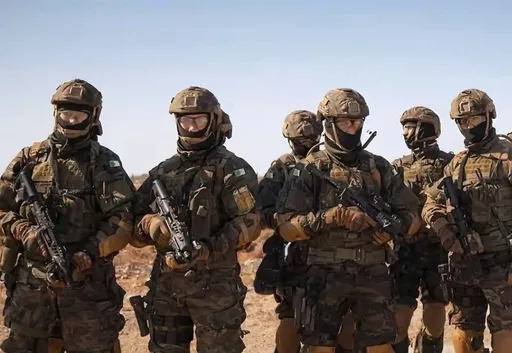
While the terrorist groups try to rule through fear, the governments are pushing back with a level of coordination that has often been missing in the central Sahel. Under the Alliance of Sahel States (AES), military authorities have expanded cross-border operations against mobile terrorist networks that survive by slipping between jurisdictions.
Clear momentum in Mali
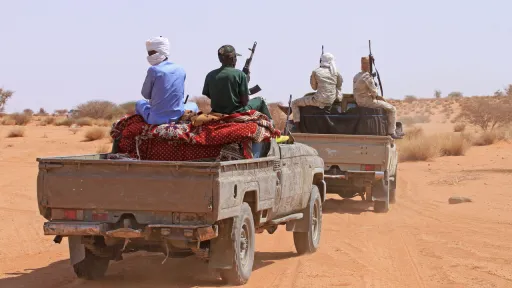
The practical effect is visible on the ground: tighter intelligence cooperation, more frequent joint operations, and a heavier use of aerial surveillance are narrowing the space for these groups.
In several hotspots across the Liptako-Gourma corridor, the message is simple: the state is trying to return as a security provider, not merely a distant symbol.
The return of the Malian armed forces to Kidal has become the clearest illustration of this momentum. Re-establishing control over a city long treated as untouchable carried operational value, but it also broke a damaging psychological barrier across the north of the country.
The incorporation of local auxiliaries—where command and accountability are enforced—has further constrained terrorist mobility by disrupting familiar routes and support channels. What emerges from this approach is a shift in ambition.

The goal is moving beyond containment towards restoration of authority over territory, where security operations and governance are meant to reappear together.
The response of the AES armies, based on militarised convoy escorts and the occasional retaking of key routes, remains vital but reactive. The central challenge is still territorial control: holding a road requires holding the villages that feed it, protecting the markets that animate it, securing the water points that make it habitable.
Even the projected deployment of a joint force of about 5,000 soldiers constitutes more of a foothold than a total solution, for the battle is fought as much in rural depth as on major axes.
The risky gamble
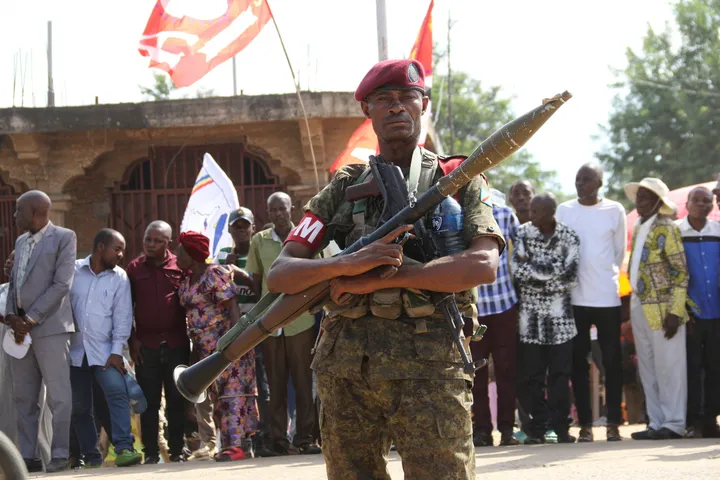
Faced with asymmetry, the Sahelian states have undertaken a doctrinal shift: integrating civilians into the defence architecture.
The Volunteers for the Defence of the Homeland (VDP) in Burkina Faso, and comparable dynamics in Mali and Niger, reflect a will to nationalise the war.
On the ground, the effect is real: detailed knowledge of trails, reading of local dynamics, proximity intelligence, reduction of the element of surprise.
The scale of this mobilisation has become a political fact. According to some estimates citing figures from authorities, up to 90,000 people may have been enrolled in the VDP. This human density fills operational voids; it also changes the collective psychology, making the war less abstract and more shared.
But it simultaneously creates a zone of fragility: when armed civilians don the uniform of fear, the line between protection and predation blurs, and legitimacy can be consumed faster than it is built.
The drift from "citizen-soldier" to "militiaman" can occur quickly when rumour becomes proof and fear becomes justice.
The terrorist groups specifically seek to provoke this rupture by framing the narrative: presenting auxiliary forces as instruments of one community against another, then fueLling a cycle of reprisals that would render the region ungovernable.
The success of the AES will therefore depend on strict oversight: clear chain of command, weapons control, training, investigation mechanisms, and effective sanctions. Here, human rights and the law of armed conflict are a strategic imperative: every abuse becomes a debt, every blunder an argument offered to the enemy.
The battle of ‘service’
Reconquest by force evaporates if it is not followed by the immediate return of administration. Communities in the Liptako-Gourma demand concrete things first: water, healthcare, schools, acceptable justice, passable roads. In this competition for sovereignty, public service becomes the decisive weapon, for it transforms fear into trust and military presence into social order.
The scale of need underscores the urgency. In 2024, Burkina Faso recorded 7,483 conflict-related deaths, and another 2,034 in the first quarter of 2025. At the same time, nearly 6.3 million people, over 25% of the population, are in need of humanitarian assistance.
Under these conditions, every village secured without a nurse, a teacher, or an accessible judge becomes a fragile victory. Terrorist groups often return through the same cracks: an unaddressed complaint, a pending land dispute, a deserted market, a road become impassable again.
New international partnerships change the technological and operational landscape. But no drone, no airstrike, no armoured column can replace the legitimacy of an administrative chief settling a local conflict, nor the trust a health centre builds by treating a child.
Hard security is deployed; social security is built on the ground, patiently. It is what prevents fear from becoming the government again.
Towards a new Sahel social contract
As 2026 dawns, the picture is not entirely bleak. A deep resilience runs through these societies. Rejection of the obscurantist model remains the majority stance; obedience is extracted from coercion more than from allegiance.
The challenge for the transitional authorities of Mali, Burkina Faso, and Niger is to transform passive resistance into active allegiance, and then into sustainable state capacity.
This implies a state that is closer, more legible, quicker in its responses, capable of arbitrating without humiliating and of protecting without preying in the rural imagination.
Armed groups seek to build a proto state on the ruins of a governance perceived as distant. The response cannot be a simple return to the old order.
What is at stake in the Sahel is a war for governance: a battle where citizenship and security become inseparable, and where victory will be measured by the ability to hold the territory, and then to hold society together.
The author, Göktuğ Çalışkan, is a PhD candidate & International Relations specialist.
Disclaimer: The views expressed by the author do not necessarily reflect the opinions, viewpoints and editorial policies of TRT Afrika.