Elephants are often admired for their enormous size and quiet majesty. But beyond their towering presence lies something even more remarkable: a deeply emotional and intelligent inner world.
Scientists have long documented behaviours that suggest elephants possess empathy, complex social relationships and even the capacity to grieve. In many ways, their emotional lives mirror aspects of our own.
So just how intelligent—and emotionally aware—are elephants?
Species built on empathy
Elephants are widely regarded as one of the most empathetic species on Earth.
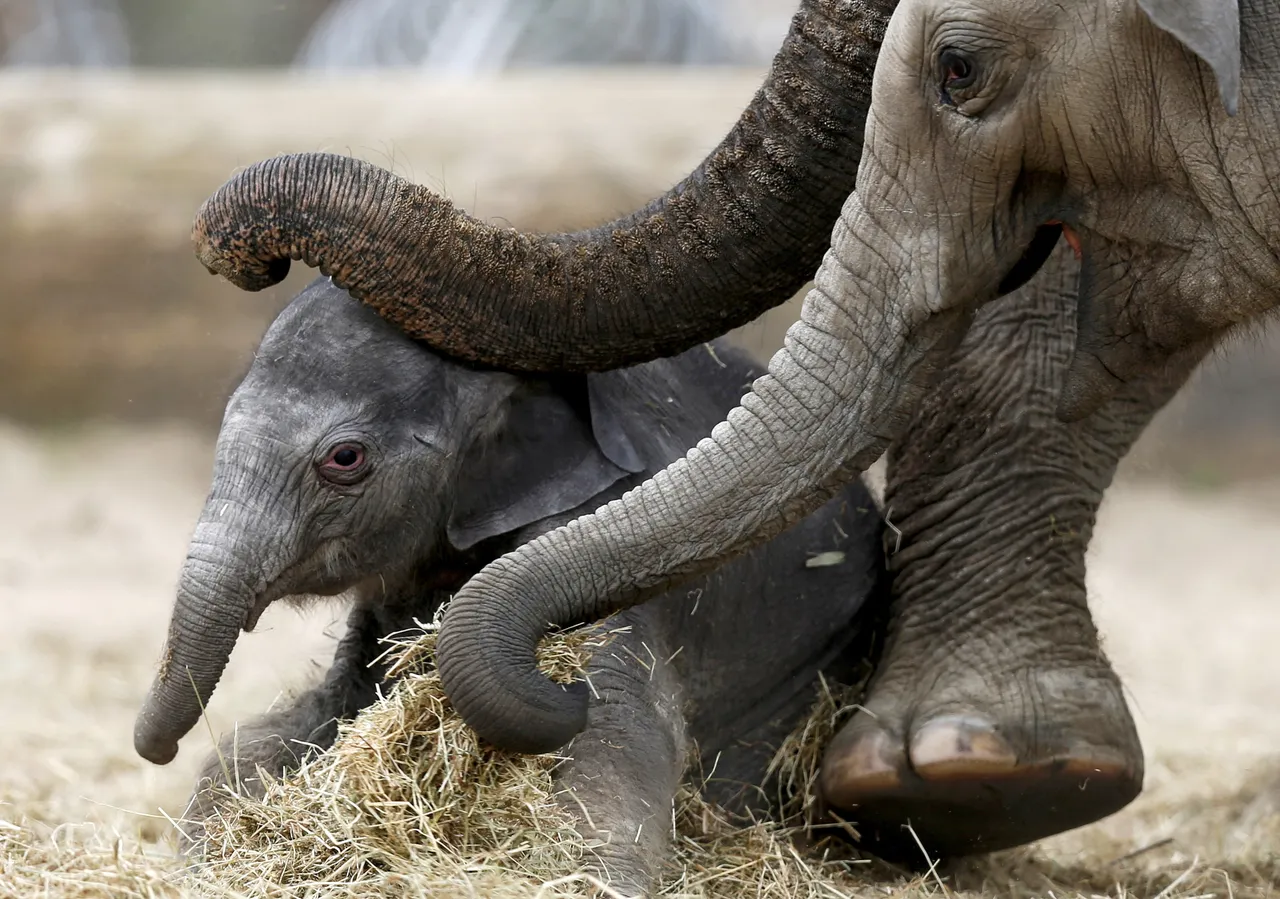
In the wild, calves depend heavily on their mothers and extended family members for survival during their early years. Researchers at World Animal Protection conservation group have observed that for the first four to five years of life, young elephants learn essential skills such as feeding, communication and social behaviour from the herd.
Female elephants usually remain within the family group for life, forming tightly bonded matriarchal societies. Male elephants, on the other hand, typically leave the herd during adolescence.
Young calves rarely stray far from their relatives. African elephants show that calves spend nearly “90 percent of their time within five metres of another elephant,” researchers say, highlighting the importance of close physical contact and social support.
Grief and mourning
Perhaps the most powerful evidence of elephant empathy emerges in how they respond to death.
Elephants are among the few non-human species believed to exhibit signs of grief. They have been observed returning repeatedly to the bodies of deceased relatives, touching bones with their trunks, and standing silently near carcasses for extended periods.
Conservationists say young elephants appear particularly affected by loss. If a calf loses its mother before the age of two, its chances of survival drop dramatically, according to World Animal Protection.
Protecting the vulnerable
Elephants are also known to anticipate danger and intervene to protect younger members of the herd.
Researchers have documented cases in which adult elephants—both mothers and unrelated females—step in to defend calves from potential threats. They may chase away predators, interrupt aggressive play fights, or physically position themselves between calves and danger.
What makes this behaviour particularly striking is that it often occurs “before the calf shows signs of distress,” researchers reckon.
Scientists believe elephants may draw on past experiences to anticipate how a calf might feel in a threatening situation. Acting before harm occurs suggests a level of emotional understanding rarely seen outside a handful of species.
Complex social lives
Elephants live in some of the most sophisticated social networks in the animal kingdom.
African elephants form large and intricate societies that can include dozens or even hundreds of individuals. Asian elephants, once thought to be solitary, also maintain complex social networks—though their connections may be spread over larger distances.
Female Asian elephants may have “10 to 50 social companions,” communicating with them through scent and low-frequency sounds that can travel kilometres across the landscape.
These signals allow elephants to stay aware of one another’s movements even when they are miles apart.








Elephants are also among the rare animals capable of recognizing themselves in a mirror.
In scientific tests, marks are placed on an animal’s body in a place they can only see with a mirror. If the animal uses the mirror to inspect the mark on its own body, it suggests a level of self-awareness.
Asian elephants have passed this test—placing them in the same category as great apes and dolphins.
World Animal Protection conservation group notes that human children usually develop this ability only between 18 and 24 months of age.
Elephants are also skilled problem-solvers.
In the wild, they use branches to swat flies and have even been observed covering carcasses with vegetation. Their ability to manipulate objects demonstrates both creativity and environmental awareness.
In one striking example, wildlife rangers reported elephants repeatedly blocking a road built for culling operations by dragging branches across it—effectively shutting it down.
Memories that last a lifetime
The old saying that “an elephant never forgets” may not be far from the truth.
Studies have shown that elephants can remember specific stimuli linked to rewards even eight years later. African elephants can also recognize the unique calls of family members who left the herd “more than a decade earlier” according to World Animal Protection.
These powerful memories are vital for survival, helping elephants locate food and water sources and maintain social bonds across vast landscapes.
But such intelligence and emotional depth also come with vulnerability.
Elephants that experience trauma—such as witnessing the killing of family members by poachers—can display signs of psychological distress. In orphanages caring for rescued calves, some young elephants have been observed waking at night trumpeting in panic after traumatic experiences.
Their behaviour suggests that, like humans, elephants may relive painful memories long after the event has passed.
Generational knowledge
Elephant societies are also built on shared knowledge.
Older females—particularly the matriarch—play a crucial role in guiding the herd. Their experience helps younger elephants navigate threats, locate food and water, and survive in challenging environments.
Observers have noted, for example, that adult females sometimes cross busy roads first, ensuring it is safe before allowing calves to follow. They then guide the younger elephants across before bringing up the rear themselves.
Such behaviour highlights the deep instinct elephants have to protect vulnerable members of the group.
Scientists are still uncovering new insights into elephant intelligence and emotional lives. What is already clear, however, is that these animals are far more socially and emotionally complex than once believed.
This makes the protection of elephants all the more urgent.
Exploitation in tourism, habitat loss and poaching continue to threaten elephant populations across Africa and Asia. Protecting them means more than preserving a species—it means safeguarding one of the most extraordinary minds in the animal kingdom.