Thousands of children under five across northern Nigeria's Jigawa State suffer from stunted growth and low immunity stemming from malnutrition. The triggers are stubbornly familiar: poverty, food insecurity aggravated by climate shocks and health services stretched beyond capacity.
But beneath the avalanche of data confirming the obvious, something seems to be changing for the better.
The Masaki Nutrition Initiative, run jointly by local government and communities, is reversing the trend of childhood health challenges directly attributable to malnutrition.
Incidence of stunting among children under five in Jigawa dropped from 64% in 2018 to 55.7% in 2024, marking what is the most significant improvement in childhood growth spurts in decades.
The model is now being studied by other Nigerian states and development organisations looking for solutions that work.
Nationwide problem
Malnutrition remains one of Nigeria's most critical public health challenges, with northern states bearing the heaviest burden.
Dr Shehu Sambo, executive secretary of the Jigawa State Primary Health Care Development Agency, believes tackling malnutrition starts with understanding that many families lack the knowledge or means to prevent the problem from taking hold in the first place.
"Malnutrition isn't just a health issue. Anything that directly affects children translates into stunting the engine of future growth," Dr Sambo tells TRT Afrika.
As various programmes to combat malnutrition have shown, treatment only solves part of the problem. The Jigawa State Government's strategy involves putting communities, mothers and local solutions at the heart of its response.
The Masaki Nutrition Initiative was designed to reach families before malnutrition becomes life-threatening. Using routine health data, the state identified the communities with the highest rates and established 300 Masaki centres across all 30 constituencies.
Each centre operates as a weekly meeting point where mothers and caregivers learn to screen children, prepare nutritious meals from locally available foods and monitor progress. Children with moderate malnutrition are managed within the community while severe cases are referred immediately for advanced care.
"What makes Masaki different is ownership," explains Dr Sambo. "Local women are empowered with the knowledge to feed their children better, using foods they already have."
The state's 27 local government chairpersons finance the programme collectively, contributing monthly towards food, health worker stipends and logistics. The funding structure has already transformed Masaki from a programme into a shared responsibility.
Political commitment
Those involved in building the initiative from the ground up credit strong political will for the success achieved so far.





The state government allocates 250 million naira (US $0.172 million) annually for treatment of acute malnutrition, ensuring consistent access to what is medically classified as ready-to-use therapeutic food or RUTF.
Lawmakers too channel constituency funding towards nutrition supplies and micronutrient supplements for pregnant women.
The 2024 National Demographic and Health Survey confirmed that after years of registering one of Nigeria's highest stunting rates, Jigawa's record was down nine percentage points in six years.
"For the first time, we are seeing real progress," says Dr Sambo. "It shows that community-based prevention, combined with strong treatment systems, works."
Jigawa's approach has invited plaudits from UNICEF, a partner in the initiative.
"The collaboration between UNICEF and the Jigawa State Government has resulted in Masaki becoming a model for other states," says Rahama Rihod Mohammed Farah, a senior UNICEF official. "It is a strategic, community-driven intervention that is delivering tangible results."
Through the Child Nutrition Fund, UNICEF matches the state's investment in RUTF procurement, effectively doubling available resources. The partnership has also contributed to improved immunisation outcomes across Jigawa over the past decade.
Lifechanging intervention
Hadiza Saleh watching her daughter play in the courtyard of a Masaki centre is something she once feared might never happen. The little girl would repeatedly fall ill in between periods of hospitalisation without much improvement.
Then Masaki happened. "Since my child started this treatment, I saw speedy improvement," says Hadiza. "Today, I can say she has fully recovered."
Masaki also changed how Hadiza feeds her family. She has learnt to prepare balanced meals using locally available soya bean, groundnut, vegetables and grains.
"We don't need to go far anymore," she tells TRT Afrika. "We now know how to feed our children properly."
By linking nutrition to livelihood support, the campaign in Jigawa also addresses one of the primary causes of malnutrition.
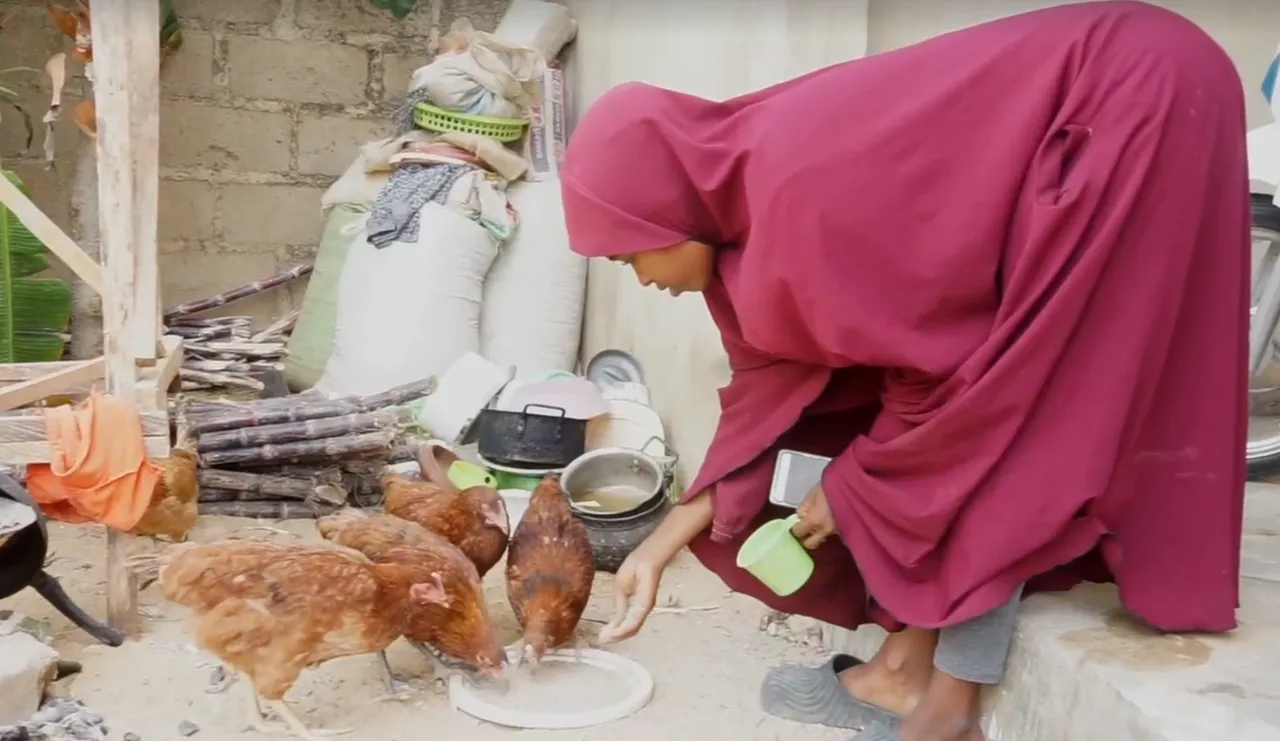
Hauwa Bisina Bature received poultry and seedlings through the state's empowerment programme. "Now, we have vegetables available in our backyard round the year. We don't have to struggle to buy eggs. Our chickens lay enough to feed our children much-needed protein," she says.
As other Nigerian states and development organisations search for replicable and scalable solutions, Jigawa offers evidence that building trust within communities, empowering mothers and putting children at the centre of policy creates the pathway to solving a persistent problem like malnutrition.