 Göktuğ Çalışkan
The tricolour flag was lowered at military bases and unwanted ambassadors were asked to leave the country. Mining contracts were rewritten in the name of sovereignty, as we saw with the takeover of Mali's gold. However, there was one last chain to break, the most invisible but strongest of all: the monetary chain.
At the end of 2025, West Africa is experiencing a second independence. However, this turning point remains dependent on the ability of the states concerned to build solid and credible monetary institutions capable of inspiring the confidence of their populations and partners.
The Alliance of Sahel States (AES), strengthened by its new mining power, is preparing to deliver the final blow to the CFA franc. This cold, costed and irreversible action plan goes beyond the mere wishful thinking of activists.
The decision by Bamako, Ouagadougou and Niamey to move towards a common currency marks the end of an eighty-year historical anomaly. It closes the chapter of ‘voluntary servitude’ and opens that of ‘total responsibility’.
For the first time, currency will no longer be an instrument of stability for foreign investors, but a tool for fighting for endogenous development.
A detailed autopsy of a rentier system
To understand the violence of the current rupture, we must face the accounting reality of the CFA franc. This system, created in 1945, imposed the centralisation of African foreign exchange reserves with the French Treasury. The evolution of this ‘mandatory deposit’ alone tells the story of persistent tutelage.
This mechanism forced African states to deposit 100% of their reserves at the outset, then 65% from 1973 onwards, finally stabilising at 50% since the 2005 agreements. In short, half of the liquid wealth of the poorest countries was used to finance the public debt of a European power.
Proponents of this system see it as a guarantee of stability and external credibility, but this “stability” has often been achieved at the cost of greatly reduced room for manoeuvre for Sahelian economies.
These billions of euros, lying dormant in operating accounts in Paris, have deprived the Sahel of vital liquidity for its investments.
Even more seriously, the fixed parity with the euro has acted as an economic straitjacket. It has made African exports artificially expensive and European imports competitive.
This system has nipped any attempt at local industrialisation in the bud, transforming the region into a vast bazaar of imported manufactured goods.

The monetary transition in the Sahel
The definitive psychological trigger did not come from economics textbooks, but from events on the ground at a specific point in time.
The sanctions imposed by ECOWAS and UEMOA on 9 January 2022 against Mali acted as a brutal wake-up call for Sahelian leaders.
The closure of borders and the freezing of Malian assets at the Central Bank of West African States (BCEAO) proved a terrible truth.
The regional banking system can be remotely disconnected to suffocate a government deemed too sovereignist. Political sovereignty without monetary sovereignty is nothing but a tragic illusion.
From that moment on, leaving the CFA became a matter of national security. Provided, of course, that the alternatives considered do not reproduce, in other forms, dependencies and vulnerabilities similar to those denounced today.
This is no longer an economic debate, but a matter of state survival. The AES understood that it could not leave the key to its safe in the pocket of institutions vulnerable to external political pressures.
Sahel gold and the technical challenge
Sceptics often ask what guarantees this new currency offers. The answer lies beneath the region's soil, now under national control. Loulo gold, Arlit uranium and Agadem oil constitute the world's most solid collateral.
But the mere existence of these resources does not guarantee monetary success: everything will depend on transparency in their management and the ability to prevent their capture by a small elite.
Unlike the CFA franc, which is backed by a political promise from the French Treasury, the AES currency will be backed by tangible wealth.
However, this transition involves immense technical challenges that would be unwise to ignore. The creation of a new central bank requires absolute rigour to avoid the pitfall of hyperinflation.
The experience of other African countries facing hyperinflation reminds us that monetary sovereignty, if poorly managed, can also become a factor of social and political instability.
Money supply management will have to be overseen by competent technocrats capable of resisting the temptation of easy money printing.
The credibility of the future currency, the ‘Sahel’, will depend on the ability of states to maintain strict budgetary discipline without Paris's arbitration.






Escaping the Eco trap
The Sahel Alliance had the strategic wisdom to turn away from the ‘Eco’ project. This ECOWAS single currency project, which has been postponed many times, maintains a rigid parity and a conceptual dependence on Western monetarist doctrines. It resembles too closely a ‘CFA bis’ to represent a genuine break with the past.
The AES proposes a different monetary philosophy, focused on flexibility. Its future currency will make it possible to finance the deficits necessary for the construction of critical infrastructure.
It will allow the exchange rate to be adjusted in order to protect local farmers from the dumping of subsidised imported products.
However, such flexibility will require clear rules and institutional safeguards to prevent opportunistic devaluations and a loss of public confidence.
The goal is not to have 2% inflation as in the eurozone, when young people need jobs.
The goal is to provide credit to the real economy. The challenge will be to strike a balance between financing productive investment and price stability, without benefiting from the arbitration of an external central bank.
Today, Malian entrepreneurs borrow at prohibitive rates, often above 10%, because monetary policy is modelled on the needs of Europe. The new currency must break this glass ceiling.
A region of 72 million people
The new currency will serve as the glue that binds the AES confederation together. It will facilitate direct trade between Bamako, Ouagadougou and Niamey, without the need for costly conversions.
An internal market of 72 million consumers is emerging, unified by a common political vision and, soon, by a single currency.
Joint infrastructure projects, such as refineries and solar power plants, will be financed by this sovereign currency.
However, the implementation of these projects will depend on how quickly the three capitals can set up a modern, reliable and interconnected banking clearing system.
This reduces exchange rate risk and dependence on dollar loans. Money created in the Sahel will remain in the Sahel to circulate and create value there.
This marks the end of the counter economy model. Currency becomes a tool for retaining local wealth and intelligent protectionism.
The nightmare of Françafrique and realism
This prospect is causing cold sweats in Paris, which sees a major lever of influence crumbling away.
The end of the CFA franc in the AES zone means the loss of a captive market for French companies. In the short term, some European companies will probably seek to adapt to this new landscape by renegotiating their partnerships on a more equal footing.
Alarmist talk about the risk of devaluation is already flooding the media. Although the risk of volatility is real in the short term, these analyses often overlook the fact that Mauritania and Ghana have been managing their own currencies for decades. Sovereignty involves a risk that the people of the Sahel seem willing to take.
Fear is being used to paralyse African boldness, but blackmail no longer works. At the same time, ESA leaders will have to demonstrate, through tangible economic and social results, that this boldness translates into real improvements in living conditions.
They are betting on the fact that the cost of perpetual servitude is infinitely higher for future generations.
The dawn of total sovereignty
The birth of the AES currency will be the official death knell for Françafrique. Provided that this currency does not remain a symbol, but becomes an instrument effectively controlled by responsible, transparent institutions that are accountable to citizens.
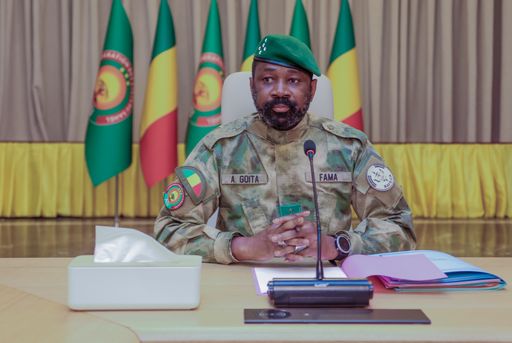
It will complete the triptych of sovereignty: defence, diplomacy and economy. Assimi Goïta, Ibrahim Traoré and Abdourahamane Tiani are laying the foundations for a renewed civilisation, beyond a simple political transition. This process will be complex and will require technical vigilance at all times.
There will be turbulence and speculative attacks against the new currency. The way in which the ESA states collectively respond to these shocks will be decisive in preventing social frustrations from being exploited against the project itself.
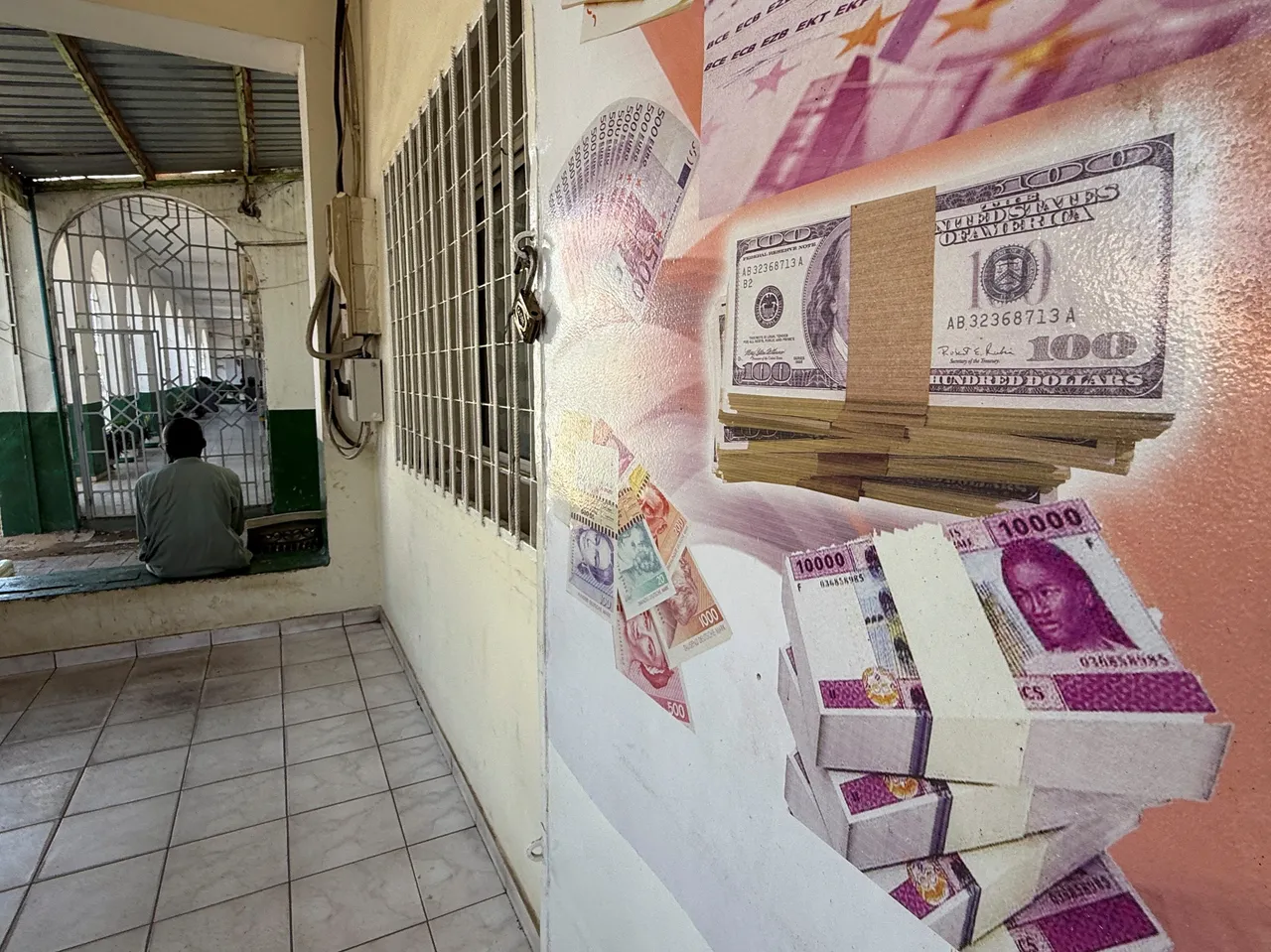
In a few years' time, CFA franc banknotes will be regarded as museum relics. They will bear witness to a bygone era when Africa paid for the right to be poor.
If the Liptako-Gourma states manage to bear this cost and build robust internal solidarity mechanisms, this combat currency could become a sustainable lever for transformation.
The combat currency is there, ready to feed the children of Liptako-Gourma rather than international finance.
he author, Göktuğ Çalışkan is a PhD candidate & International Relations specialist.
Disclaimer: The views expressed by the author do not necessarily reflect the opinions, viewpoints and editorial policies of TRT Afrika.