The air was still thick with tear gas when the votes were counted. Security forces had moved to keep protesters off the streets of Dar es Salaam after they defied a curfew to raise slogans against what they alleged was a fraught election. An internet blackout added to the sense of dread coursing through the country, with prominent opposition leaders being either behind bars or off the ballot.
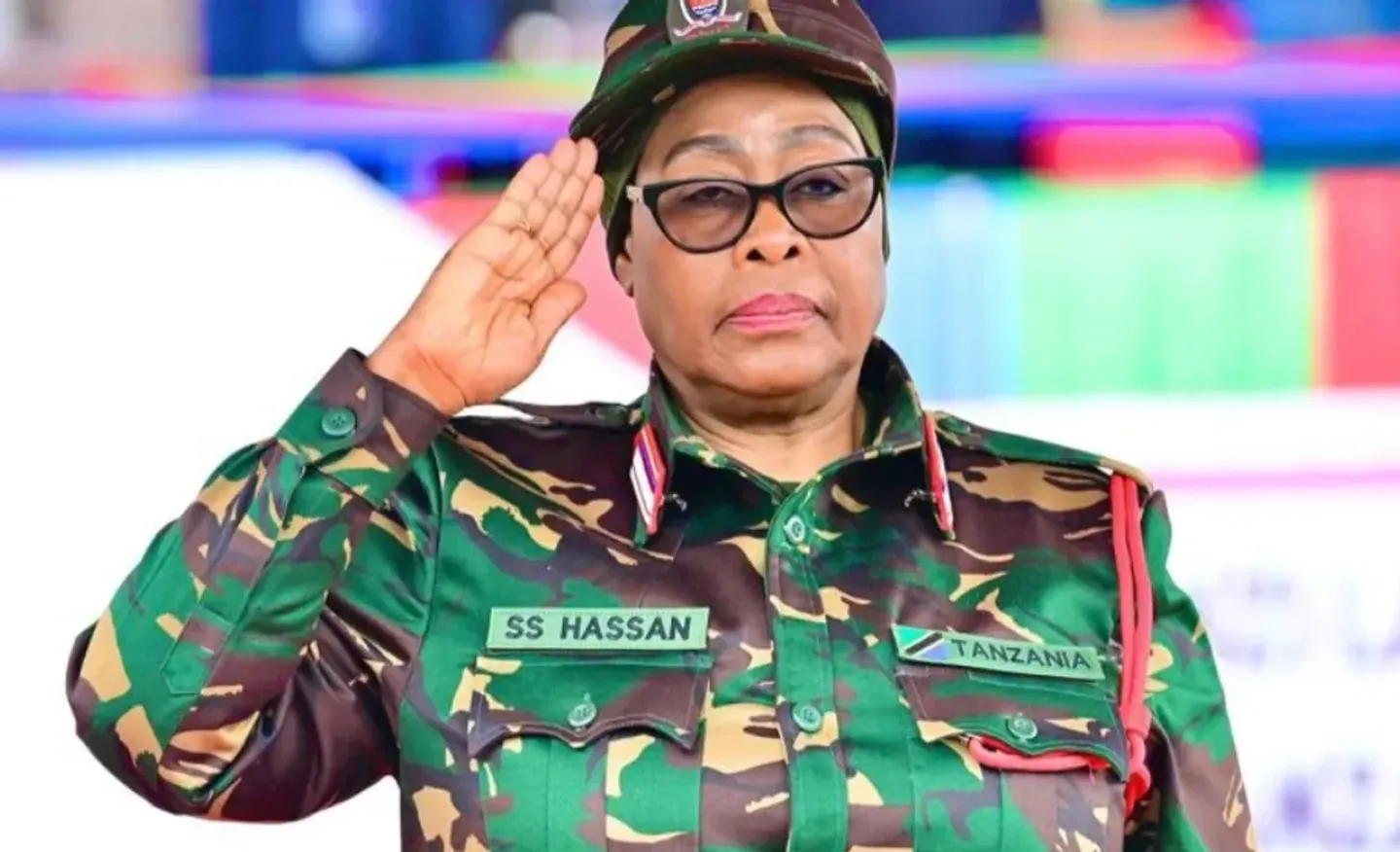
That was the Tanzania in which President Samia Suluhu Hassan took the oath of office on November 3 last year, days after winning the general election with 97.66% of the nearly 32.7 million ballots that were cast.
Now, having just completed 100 days in office on February 11, Hassan can look back at a country trying to heal politically and grow economically, although reconciliation efforts are drawing as much pushback as hope.
Hassan's rise to power was abrupt. She was elevated from Vice-President to the highest office in 2021 following the sudden death of incumbent John Magufuli, making her the first woman to become President of Tanzania and one of only two currently serving heads of state in Africa.
Tanzanians generally welcomed her as a leader whom they trusted to steer the nation with steady, measured authority. Her soft-spoken demeanour endeared her to crowds, and for some, the moment went beyond politics. "I never expected our country to be governed by a woman President someday," Dar es Salaam resident Mkaili Patric told TRT Afrika.
Prepping for presidency
Much of the early confidence rested on her years in public life as an understudy to the late Magufuli. "I am sure Mama Samia will do well, having already worked under a strong leader," said another Dar es Salaam resident. "She was empowered and taught by the late President."
Blogger and columnist Elsie Eyakuze noted Hassan's composure as one of her strengths. "She was the only woman in a room full of men. Did she look like she would be cowed down? Not at all," she said.
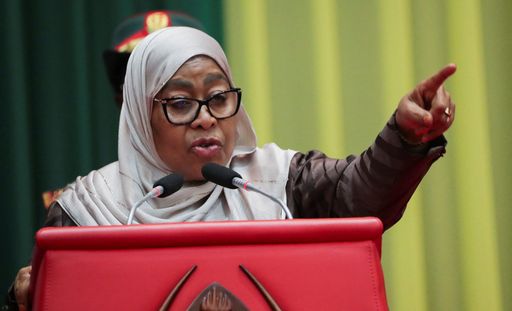
But Hassan's political persona transformed at the helm. The measured deputy became a combative leader over time.
"It will be like this — who are you?" she declared in a widely shared video clip of a speech, pushing back against foreign actors that she said were attempting to "lecture" Tanzania on how to run its internal affairs.
"I think within the course of a year, I have shown the power of women," Hassan said. "I have led the country in the same way the men before me did, and in some circumstances, more than they did."
Election and fallout
As the election last October approached, the sociopolitical atmosphere in Tanzania had grown increasingly tense, especially in Dar es Salaam. Opposition figures claimed they were systematically excluded from the ballot, with some prominent faces jailed on various charges and a few others disqualified.



The polls dented Tanzania's long-held reputation as an island of peace in a region where politics can easily turn volatile.
John Kitoka, chairperson of the opposition party Chadema, was blunt in his assessment. "Anyone who dares criticise Hassan or the way she runs the government, none of us is safe," he said.
Dodoma resident Julius Malima echoed these concerns. "Parliament should reflect a range of political voices, but it's now dominated by one party," he said.
The unease extended beyond Tanzania's borders. Former Kenya Chief Justice David Maraga voiced alarm at what he described as a broader regional pattern. "We are very concerned about the shrinking democratic space in the East African region," he said. "We have seen that in Uganda, Tanzania and even in Kenya."
Last December, Hassan announced an independent commission of inquiry to examine the incidents surrounding the election, signalling a willingness to address grievances. She attributed the unrest partly to external interference.
"Most of the youth that were arrested doing bad things came from outside Tanzania," the President said, appealing for unity. "Let's not dwell on the past, let us talk about what lies ahead. Every authority is established by God. Our nation was attacked. If you do not like Samia, why destroy the country?"
Redemption route
Hassan's administration has carried forward landmark infrastructure projects started under Magufuli while rolling out new initiatives focused on rural electrification, education and broader long-term development.
"Is it our mistake providing quality services and good schools in the rural areas?" she has been quoted as saying. "Is it our mistake growing Tanzania's economy to the point that we are praised globally?"
Government data shows more than 53,000 jobs were approved across the public sector within Hassan's first three months in office. These include posts of teachers, healthcare workers and local government staff.
Supporters say her opening months show a President focused on economic stability and inclusion. Her preceding years in office had brought renewed international engagement, signs of economic growth and genuine hope for development – a track record that makes the current tensions all the more striking.
More than anything else, the circumstances of Hassan's electoral landslide and her hardline stance on foreign observation have brought her leadership under scrutiny.
Beyond her first 100 days in office, the challenge is to strike a balance between strengthening her footing while winning over critics who allege that democratic space to speak truth to power is rapidly shrinking.