For years, Western governments have insisted that they will not permit the annexation of the occupied West Bank. The language has been consistent: annexation would violate international law, undermine the two-state solution, and destabilise the region.
Yet this framing increasingly obscures what is actually taking place on the ground. Annexation is no longer a hypothetical future step or a looming political crisis.
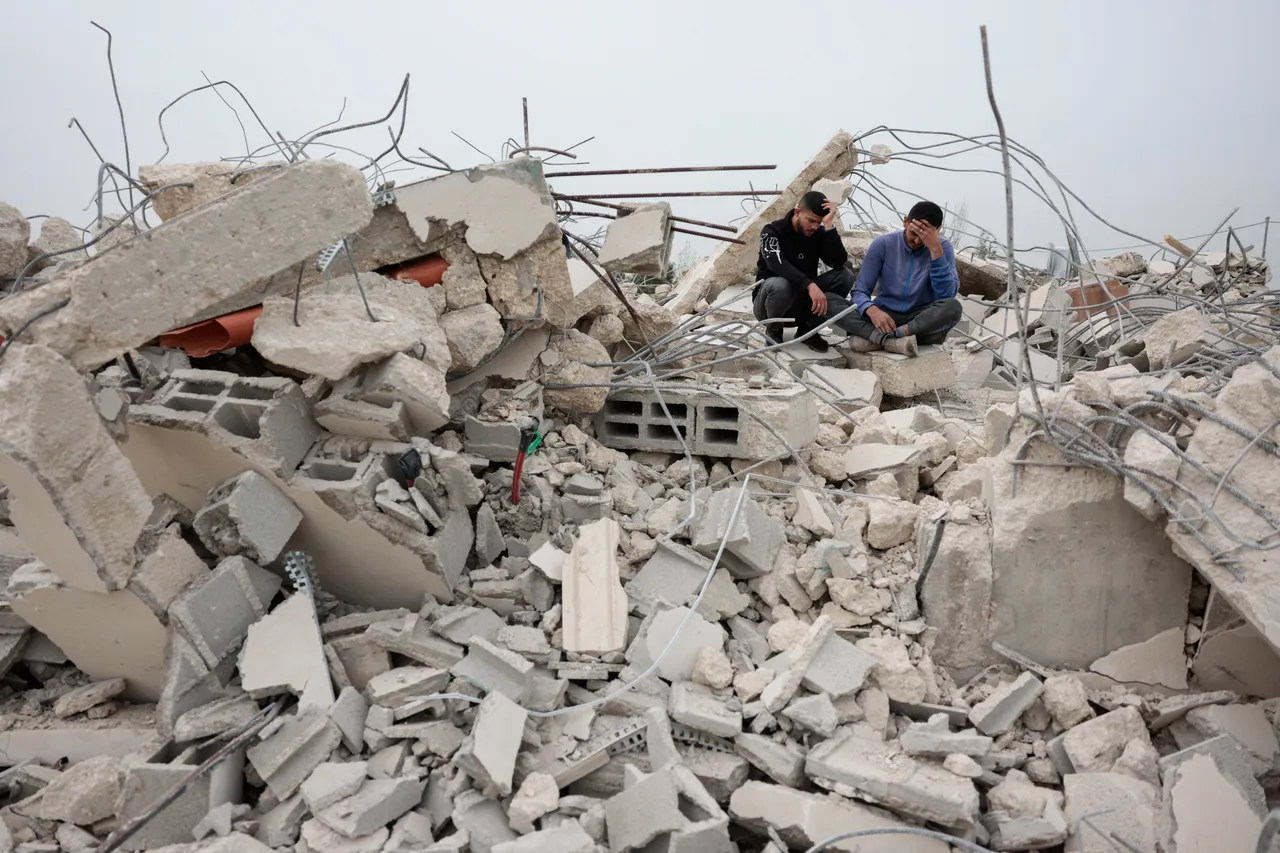
It is a process already well underway, advancing through legal, administrative and military measures that have steadily reshaped the reality of Palestinian life, while Western capitals continue to issue objections that remain largely unaccompanied by consequences.
On February 9, Israel’s security cabinet approved sweeping measures that significantly extend its civil and administrative reach across the West Bank — from easing the acquisition of Palestinian land by Jewish Israelis to expanding Israeli authority over planning and enforcement in areas previously under Palestinian Authority jurisdiction.
Senior Israeli ministers themselves described these changes as establishing “de facto sovereignty,” language that leaves little ambiguity about either intent or outcome.
These decisions were not framed as temporary security measures or emergency responses; they were presented as structural changes, consolidating long-term control over territory internationally recognised as occupied.

A long game
But these steps did not emerge in isolation. They reflect a broader trajectory that has unfolded over decades, in which settlement expansion, legal integration and permanent military entrenchment have progressively altered the status of the West Bank.
Rather than a single dramatic declaration of annexation, Israeli policy has favoured incremental measures that cumulatively produce the same effect while minimising diplomatic fallout.
Land is absorbed, authority is centralised, and jurisdiction is extended — not through proclamation, but through administrative normalisation.
Western reactions have followed a familiar script. Governments issued statements of concern, reiterated opposition to annexation, and warned against unilateral actions that undermine prospects for peace.
The United Kingdom called on Israel to reverse the decision, emphasising that changes to the status of the West Bank contravene international law.
In Washington, officials restated long-standing opposition to annexation and urged restraint, while stopping short of condemning the measures in concrete terms or signalling any shift in policy.
As in previous moments, verbal opposition was not paired with material leverage.
This disconnect has become central to how annexation advances. Western opposition has narrowed to opposing the formal declaration of annexation, while tolerating — and in some cases tacitly enabling — the policies that constitute annexation in practice.
By treating annexation as a singular event rather than a cumulative process, Western diplomacy has allowed Israeli authorities to entrench control without triggering meaningful repercussions.
Opposition expressed without enforcement does not function as deterrence; it functions as accommodation.
The mechanics of de facto annexation are now well established. Settlement expansion continues across the West Bank, accompanied by the retroactive legalisation of outposts previously deemed illegal even under Israeli law.
Israeli civil law increasingly governs settlers living beyond the Green Line, while Palestinians remain subject to military rule.
Infrastructure, transportation networks, and security arrangements are designed to integrate settlements into Israel proper, while fragmenting Palestinian communities into disconnected enclaves.




Planning authority and land administration are progressively transferred to Israeli institutions, hollowing out Palestinian governance without formally dissolving it.
Ambiguous laws
Under international law, the status of the West Bank is unambiguous. It is occupied territory, and the occupying power is prohibited from transferring its civilian population into that territory or making permanent changes to its legal and political status.
United Nations resolutions have repeatedly affirmed the illegality of Israeli settlements and the obligation to preserve the right of the Palestinian people to self-determination.
Yet the persistence of these violations, met largely with rhetorical condemnation rather than enforcement, has steadily weakened the authority of those norms.
For Palestinians, the consequences are not abstract. Each expansion of Israeli administrative authority further erodes the territorial contiguity and institutional capacity required for meaningful self-government.
The language of a future Palestinian state continues to feature prominently in diplomatic statements, but on the ground, the material conditions for such an outcome are being systematically dismantled.
Authority is exercised without accountability, land is absorbed without consent, and political horizons are narrowed through bureaucratic means rather than overt confrontation.
The implications extend beyond the Israeli-Palestinian context.
When Western governments invoke international law selectively — enforcing it rigorously in some theatres while tolerating its erosion in others — the credibility of the rules-based international order is diminished.
Opposition that remains symbolic signals that red lines are negotiable, provided violations proceed incrementally and without spectacle.
This dynamic does not merely affect Palestine; it shapes how international norms are perceived and tested elsewhere.
Annexation, then, did not advance because Israel defied Western opposition. It advanced because that opposition was never paired with the political will to impose costs.
By confining their response to statements and warnings, Western capitals preserved the appearance of principled resistance while allowing realities on the ground to harden.
The result is a widening gap between diplomatic language and lived reality — a gap that has become increasingly difficult to reconcile.
Understanding annexation as a present-tense process rather than a future contingency is not a semantic exercise.
It is essential to any honest assessment of responsibility and consequence.
The question now is not whether annexation will occur, but whether international actors are prepared to acknowledge that it is already unfolding — and to decide whether their opposition is meant to shape outcomes, or merely to register discomfort as those outcomes become irreversible.