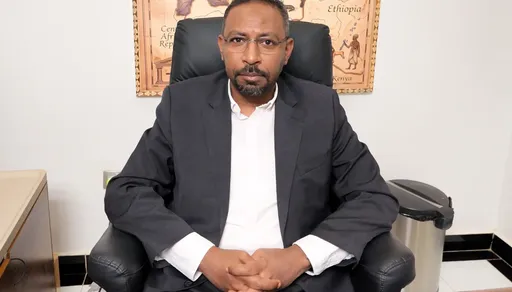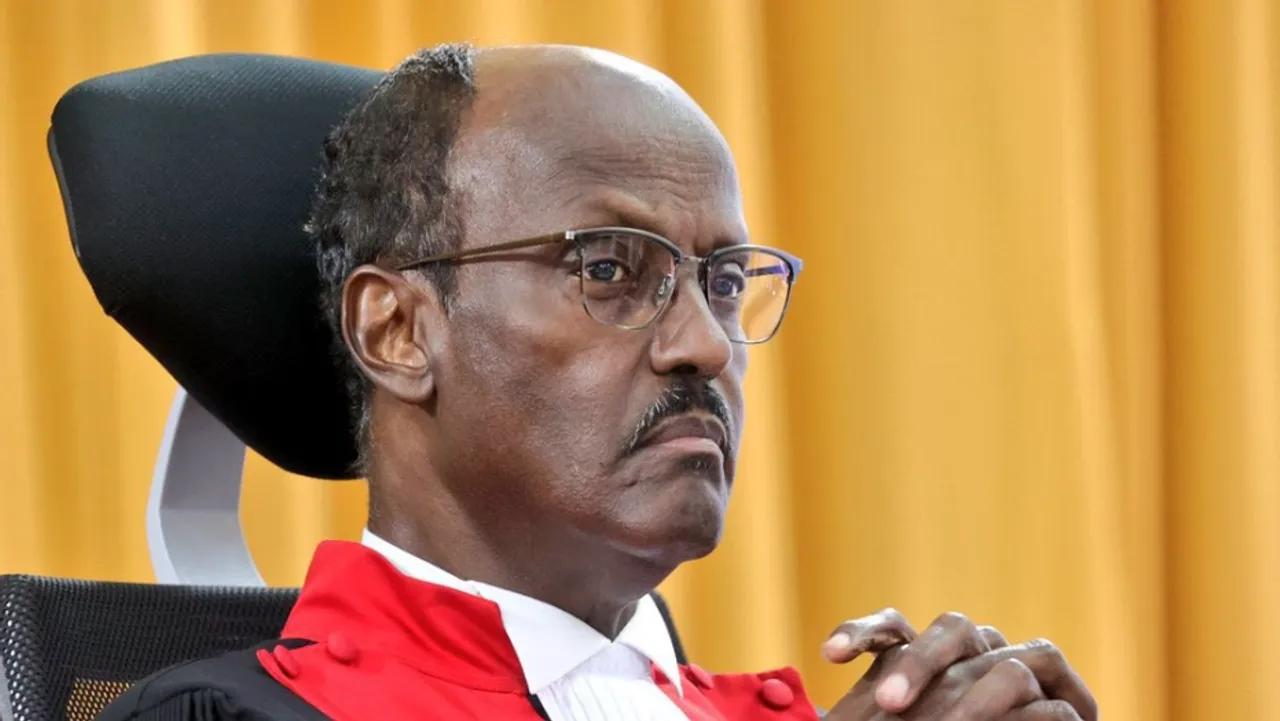
Kenyan Supreme Court Judge Mohammed Ibrahim has died aged 69, the country's Chief Justice Martha Koome announced on Wednesday.
According to Kenya's Daily Nation newspaper, Ibrahim died at an intensive care unit (ICU) of a hospital in the country's capital Nairobi, two days after returning from India, where he had been receiving specialised medical treatment.
Kenya's privately-owned television, Citizen, reported that Ibrahim died at 4:30 pm local time (1:30pm GMT).
"We extend our deepest condolences to his family, friends, colleagues, and the entire Judiciary and (Kenya's) Judicial Service Commission during this moment of immense loss," Koome said in a statement.
Legal career spans four decades
Judge Ibrahim was admitted to the Kenyan Bar in 1982, becoming the first Kenyan from the Somali community to attain the title "Advocate of the High Court of Kenya", which licenced him to engage in formal legal practice.
Kenya has more than 45 ethnic communities, with Somalis largely occupying the country's northeastern region.
Upon admission to the Bar, Justice Ibrahim ventured into private practice, setting up his law firm not long thereafter. He represented, among others, activists in the lead-up to Kenya's multi-party democracy in the early 1990s.







"His (Ibrahim's) principled advocacy led to his detention without trial, an experience that profoundly shaped his lifelong devotion to constitutionalism, the rule of law, and the protection of human dignity," Chief Justice Koome said in her statement.
Journey to the Supreme Court
In 2003, Justice Ibrahim joined the Judiciary as a Judge of the High Court of Kenya.
After Kenya promulgated its 2010 Constitution, which introduced Supreme Court as the East African nation's apex court, Ibrahim was appointed one of the seven inaugural judges of the top court.
Ibrahim, who held several other roles within the Judiciary, was scheduled to retire from his position as a Judge of the Supreme Court in January 2026 after attaining the mandatory retirement age of 70.
"His (Mohammed's) judicial career was marked by intellectual rigour, calm impartiality, and a deep concern for the vulnerable and marginalised," Koome said.
Presidential election petitions
Besides serving as the final arbiter and primary compass on constitutional matters, Supreme Court of Kenya's other main role involves hearing and determining presidential election petitions brought before it.
The court has handled petitions stemming from the disputed presidential elections in 2013, 2017, and 2022. In all the petitions, except in 2017, the court upheld the outcomes of the contested polls.