Her grandchildren's laughter still rang in her ears, cheery and close, but their faces had begun to fade.
When she wished to help around the house, her sight would betray her.
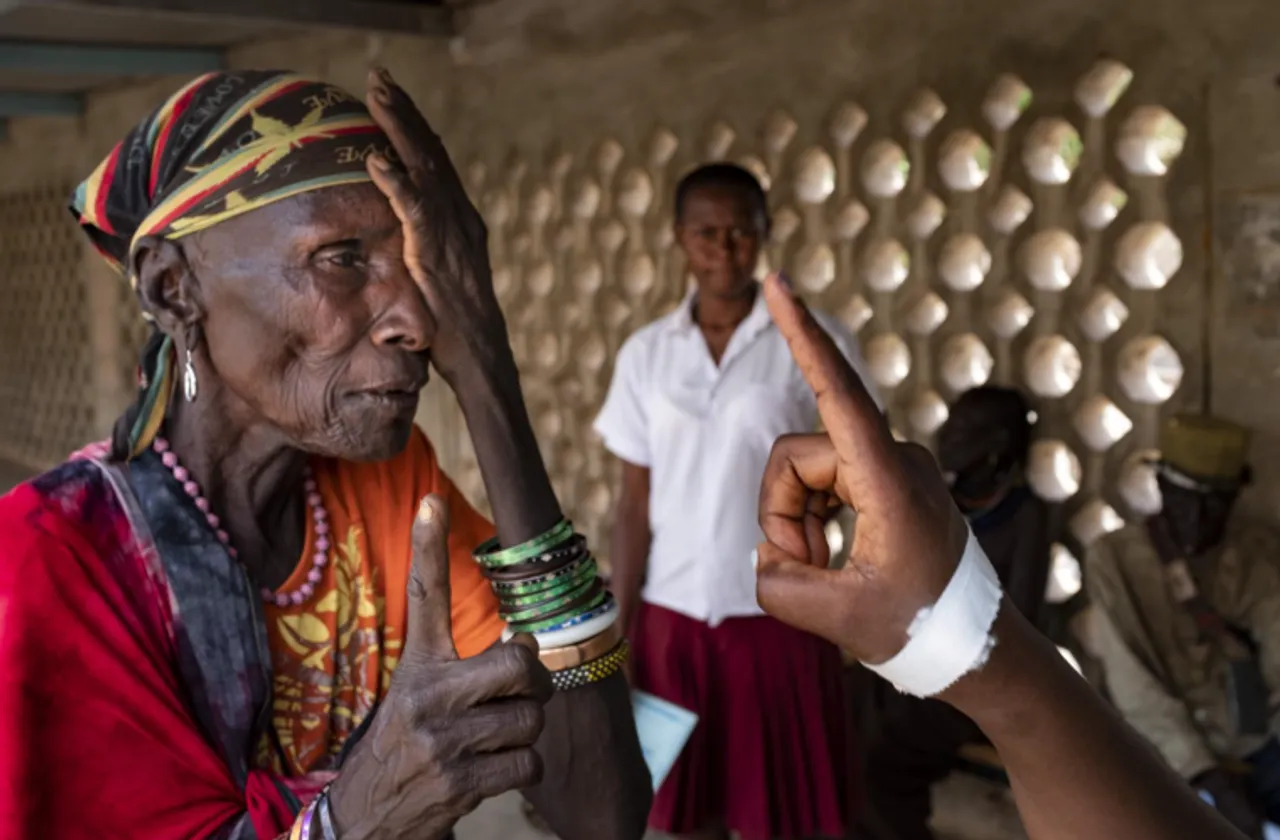
Trachoma had stolen from Abeba Mengesha even the simple joys of life. With every painful infection, her eyelashes would twist further inward until they scraped her corneas and blurred her world in more ways than one.
"I was disappearing into the darkness," the 68-year-old grandmother from a remote village in Ethiopia, tells TRT Afrika. "I feared I would become a burden."
A simple surgical procedure, part of a local healthcare campaign, repaired the damage that Abeba thought had irreversibly destroyed her life.
"The day they removed the bandages, I felt a gush of light. It wasn't just about the rays of the sun hitting my eyes again; it was about getting my life back," says Abeba. "Now, I watch my grandchildren run. I can fetch water; I can do other tasks. Sight is everything."
Abeba's story, once heartbreakingly common across dozens of African countries, is evidence of how the battle against trachoma is being won.
Turning point
The World Health Organisation (WHO) announced in December 2025 that for the first time in recorded history, the number of people worldwide requiring surgical interventions against trachoma – the leading infectious cause of blindness – had declined below 100 million.
From 1.5 billion people at risk of blindness from trachoma in 2002, the figure has dropped 94% to currently settle at 97.1 million.
In Kenya, community health worker Samuel Kariuki has gone through the cycle of burgeoning infections becoming an almost unmanageable burden to focused healthcare initiatives dragging down endemicity, especially on the continent.
"Twenty years ago, trachoma was everywhere. Medicines and surgeries alone haven't made the difference. Thanks to campaigns, people now understand the importance of better hygiene and sanitation. We are chasing out trachoma," he tells TRT Afrika.
Samuel sounds a note of caution, though. "But we cannot stop fighting the disease. We might relax, but the bacterium (Chlamydia trachomatis) that causes the infection and the flies that help spread it won't. The drop in infections is fuel for our work, not the finish line," he says.
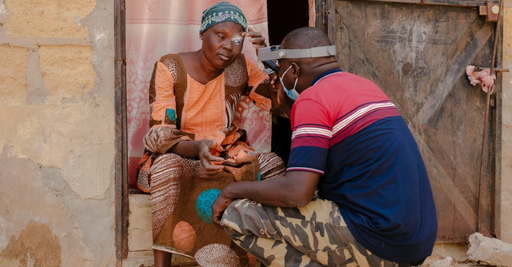





The decline is the result of decades of sustained effort under the WHO-endorsed SAFE strategy – surgery, antibiotics, facial cleanliness and environmental improvement.
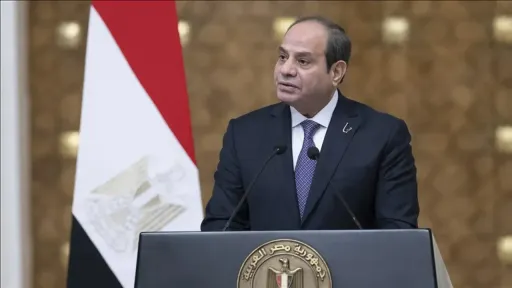
With WHO recently certifying Egypt and Fiji as having eliminated the disease as a public health problem, the list has swelled to 27 countries, spanning every trachoma-endemic region.
"The reduction of trachoma patients below 100 million is testament to strong country leadership and consistent implementation of the SAFE strategy," says Dr Daniel Ngamije Madandi, director of the malaria and neglected tropical diseases department at WHO.
"Data shows that SAFE is both effective and adaptable. WHO remains committed to supporting countries towards achieving elimination of trachoma globally by 2030."
Worldwide push
Pharmaceutical companies have donated over 1.1 billion doses of the antibiotic azithromycin, commonly used to combat infection, through the International Trachoma Initiative (ITI).
Parallel initiatives like the Global Trachoma Mapping Project and its successor, Tropical Data, have covered more than 15 million people, enabling health ministries to target interventions with precision –averaging one person examined every 25 seconds since 2012.
"Behind every milestone are millions of individual stories of people whose sight has been protected," says PJ Hooper, director of ITI.
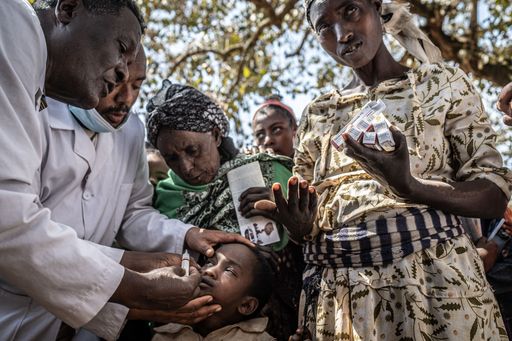
The primary challenge in achieving the target of trachoma elimination by 2030 is that nearly 100 million people remain at risk, the majority of them in underserved regions.
"A 94% decrease since 2002 is remarkable," says Michaela Kelly, chair of the International Coalition for Trachoma Control. "We need approximately another US $300 million to fill funding gaps in surgery, antibiotics sourcing, surveys and research."
Abeba, now leading a life she once thought was beyond her reach, can't express her gratitude enough for the intervention that restored her eyesight.
"Tell them their work is not just about numbers," she says. "They gave me my eyes and future."
Health worker Samuel feels victory is in sight. "We have shown that this disease can be beaten. Now, we must ensure the last mile is not the hardest."