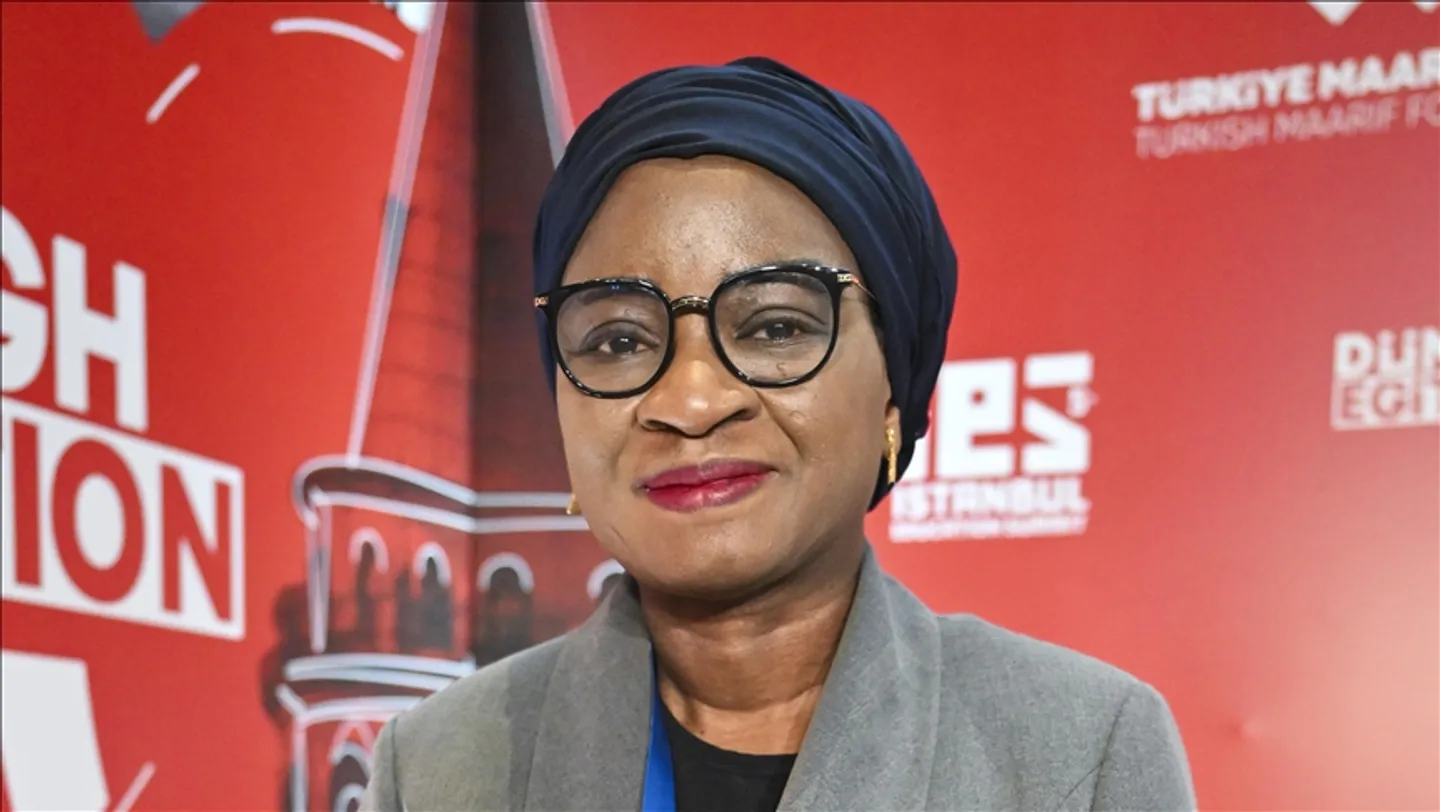
The Secretary General of the Senegalese Ministry of Education, Khady Diop Mbodji, has praised Türkiye’s expanding role in strengthening education across Africa, describing its initiatives as a valuable contribution to long-term development on the continent.
"Türkiye's approach in Africa is not simply to open schools but to create a model aimed at the sustainable development of human resources. This approach is extremely valuable for the countries of the region,” Mbodji said in an interview with Anadolu News Agency.
She noted that African education systems have long struggled with structural challenges, but regional cooperation and new policy programmes are helping to inject new energy into the sector.
“The lack of teachers, the high number of students per class, the insufficient number of classrooms and equipment, as well as the inadequacy of digital infrastructure, are realities common to almost all countries,” she said.
‘Türkiye and the Maarif Foundation’
Mbodji noted Türkiye’s presence in African education—especially through the Turkish Maarif Foundation (TMV)—has become increasingly visible.
“The school programmes run by the Maarif Foundation in many countries are an important example in terms of the quality and structure of education,” she explained, highlighting the foundation’s work in curriculum development and teacher training.
Cooperation between Türkiye and African countries continues to grow, she said. “Educational initiatives undertaken with Türkiye contribute to improving the quality of teachers and providing students with a higher-quality learning environment. We believe this cooperation will develop even further in the coming years,” Mbodji said.
Mbodji highlighted Africa’s demographic opportunity and stressed the need for strong educational investments.
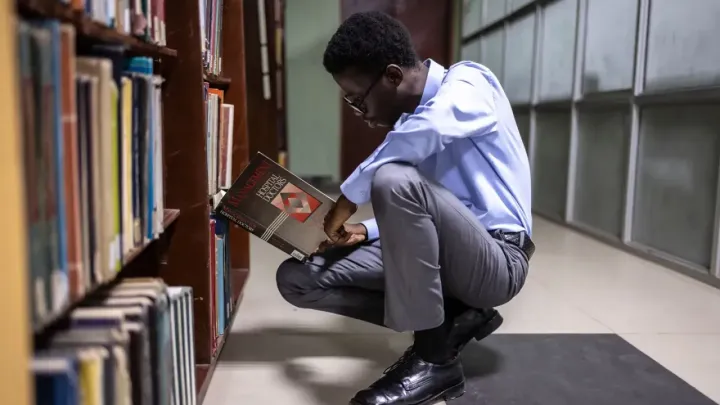
According to Mbodji: “Africa's greatest strength is its youth, but to mobilise this potential, we must go through education. Any delay in educational investments is equivalent to years lost in our development journey.”
She explained that regional projects launched over the last two years have strengthened teacher training and encouraged the creation of joint programmes aimed at harmonising training standards.
“Today, many countries consider teacher training not only as a national issue, but as a continental responsibility. This is a major turning point in terms of quality,” she said.
After the COVID pandemic accelerated changes in teaching methods, Mbodji said digital learning has become essential. Many countries, she noted, have expanded tablet distribution, online content production, and radio- or television-based learning systems.