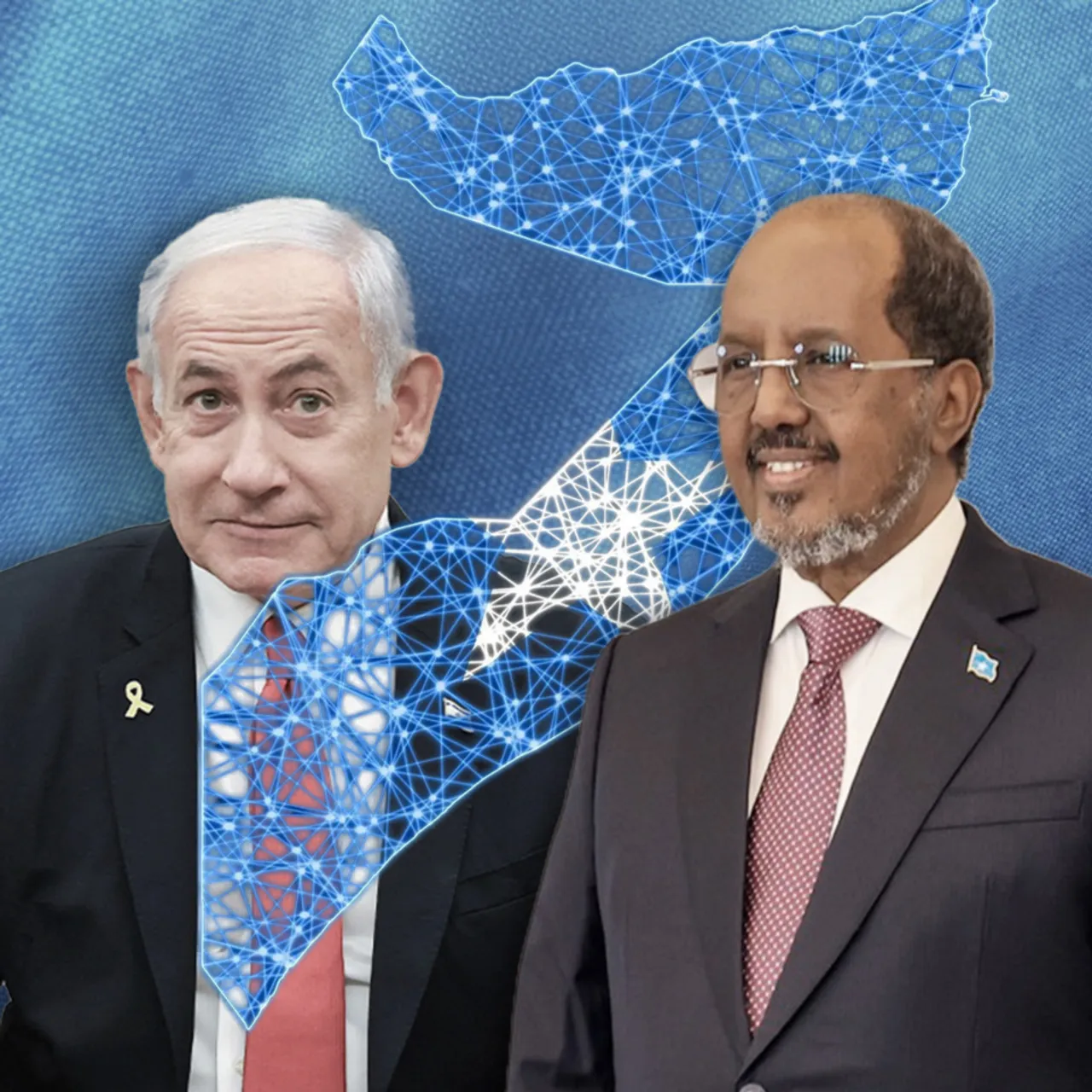
On December 26, Israel announced that it had recognised Somaliland, a breakaway region of Somalia, without the consent of the Somali federal government. This unilateral decision generated contrasting reactions across the region.
While it was welcomed by segments of Somaliland’s population that have long sought international recognition, it provoked strong opposition from Somalia and several regional and international actors.
Türkiye, Djibouti, Egypt, the Arab League, and the African Union condemned the move, warning that it could further destabilise an already fragile geopolitical environment.
To understand the intensity of these reactions, it is necessary to examine the historical and strategic significance of the Red Sea and the Horn of Africa.
Somalia has faced prolonged instability since the collapse of the military regime led by Siyad Barre in 1991.
His removal, following the entry of multiple armed factions into Mogadishu, triggered a violent civil war among rival groups competing for political control.
The conflict subsequently spread to other regions in the country causing a long stiff civil war for more than a quarter of a century.
The northern region, now known as Somaliland, followed a different trajectory. In the absence of a central state, the Somali National Movement, together with clan elders and religious leaders, established a separate administrative arrangement and declared a de facto state.
Significant maritime corridors
Rather than forming a formal or inclusive governance system, authority was exercised primarily through clan consensus, traditional mediation mechanisms, and religious leadership.
While this arrangement reduced large-scale violence, it also produced an exclusionary and uneven political order.
Certain clans particularly the Isaaq became dominant, while others such as the Issa, Gadabuursi, and the Dhulbahante and Warsangeli (Darood) clans were marginalised or excluded from meaningful political participation.
Numerous smaller clans were similarly sidelined. These structural inequalities continue to shape internal tensions and complicate claims that Somaliland represents a cohesive or fully functioning state.
The Red Sea is one of the world’s most strategically significant maritime corridors, facilitating approximately 15% of global trade and nearly 40% of international energy shipments.
To secure this route, several major powers, including the United States, France, China, Japan, Germany, and Italy, maintain a military presence in Djibouti.
Competition for control over the Red Sea is not a recent development. For more than five centuries, the region has been shaped by external interventions and imperial rivalries.
Portuguese naval incursions into the Indian Ocean, the Red Sea coast, and the Gulf of Aden were countered by Ottoman efforts to protect regional Muslim polities.
This contest continued until the First World War, after which British, Italian, and French colonial expansion transformed the Horn of Africa.
Colonial “divide and rule” policies fractured social cohesion, dispersed Somali populations across four states, Somalia, Djibouti, Ethiopia, and Kenya.
This left Ethiopia landlocked following Eritrea’s separation. These historical dynamics continue to influence contemporary regional geopolitics.
Israel war on Gaza at play
Since October 7, 2023, Israel has been losing its international reputation and global support after the genocide and crimes against humanity it committed on Palestinian people.
The international criminal court (ICC) has issued an arrest warrant for its prime minister Netanyahu and former of defense minister Yoav Gallant causing a huge damage of reputation even in the western world.
On the other side, since the Gaza war (2023) started, its supply chains through the Red Sea have faced increasing disruption, particularly as a result of Houthi attacks on vessels linked to Israeli ports.
These actions, framed by the Houthis as a response to Israel’s military campaign in Gaza, have intensified insecurity along key maritime routes.
However, Yemen is not the sole factor shaping Israel’s strategic calculations in the Red Sea. Long-standing concerns over maritime access, regional power competition (mainly to balance Turkish presence on the region, and the growing presence of other international actors have also influenced Israeli policy.
Within this broader context, Israel’s recognition of Somaliland appears to form part of a wider attempt to secure alternative strategic footholds near the Bab al-Mandeb corridor, including potential access to ports such as Berbera, most likely through indirect or allied arrangements rather than direct military deployment.
Israel has historically expressed unease with the fact that Muslim-majority states control both the northern entrance (the Suez Canal) and the southern exit (Bab al-Mandeb) of the Red Sea.
Consequently, it has sought opportunities to expand its strategic reach in the region, including involvement in Sudan’s internal conflicts over the past two decades.
Somaliland’s pursuit of international recognition for more than 35 years has thus intersected with Israel’s broader regional ambitions, albeit with uncertain outcomes.
Somalia vs Israel



Somalia is expected to raise the issue before regional and international forums, including the Intergovernmental Authority on Development (IGAD), the African Union, the Arab League, and the United Nations.
Both the African Union and the Arab League have reaffirmed their support for Somalia’s territorial integrity and condemned Israel’s recognition of Somaliland.
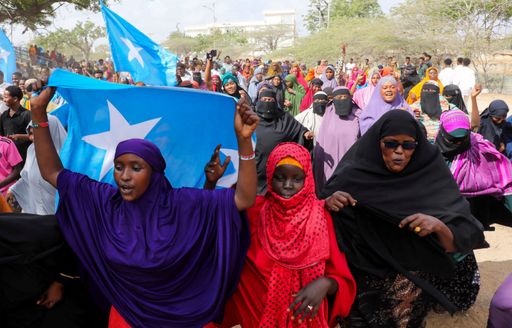
In addition, Somalia will use all diplomatic channels to stop Israel’s move and it is likely to mobilize domestic and diaspora opinion, including within Somaliland itself, to oppose the move.
Foreign existence on Somali territory has never brought peace and stability.
Türkiye’s ties with Somalia
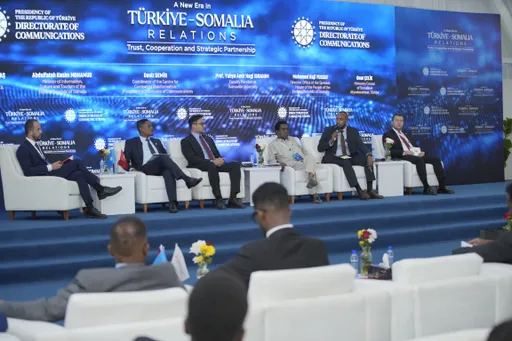
Türkiye’s relationship with Somalia has deep historical roots dating back to the Ottoman era, when naval missions were dispatched to protect Muslim polities in the region from Portuguese and Abyssinian incursions. This legacy remains embedded in Somali historical memory.
Türkiye’s modern engagement intensified in 2011, when then–Prime Minister Recep Tayyip Erdoğan visited Somalia during a devastating famine at a time when international attention was limited.
Since then, bilateral relations have expanded rapidly. Turkish companies have rehabilitated ports, airports, hospitals, and other infrastructure, while Turkish Airlines established direct flights to Mogadishu.
Türkiye has also provided scholarships, trained Somali security forces, secured energy exploration rights, and established a military base in the country.
This engagement is widely perceived by Somalis as fraternal rather than transactional. In contrast, Israel’s recognition of Somaliland is widely interpreted as a strategic move aimed at counterbalancing Turkish influence in East Africa. Given prevailing public perceptions, Israel’s presence is unlikely to receive comparable acceptance.
Israel vs the African Union
Israel was granted observer status at the African Union in 2021 following prolonged diplomatic efforts, but this status was revoked in February 2024 amid growing criticism of Israeli policies and human rights practices.
Recognition of Somaliland risks further straining relations with the AU, which maintains a firm commitment to preserving colonial-era borders and promoting territorial integrity among its member states.
The AU’s rejection of Ethiopia’s 2024 memorandum of understanding with Somaliland reinforces its opposition to unilateral border changes and its resistance to importing external geopolitical conflicts into the African continent.
The Horn of Africa remains highly fragile and prone to conflict. The introduction of Israeli strategic influence risks exacerbating existing tensions.
In the immediate aftermath of Israel’s announcement, several regional states including Djibouti, Eritrea, Sudan, South Sudan, and Yemen publicly rejected the move, signaling broad regional opposition.
Somali public opinion and the Palestinian Issue
Somalis are overwhelmingly Sunni Muslims of the Shafi‘i school and constitute one of the most religiously homogeneous populations in the region.
Solidarity with the Palestinian cause is deeply entrenched, and Israel is widely viewed as an adversarial actor. Any political alignment with Israel is therefore likely to be interpreted as a betrayal of this cause.
Religious leaders and clan elders continue to wield significant social authority, particularly in the absence of strong state institutions.
Their opposition to Israel’s recognition of Somaliland has already contributed to public mobilisation and may intensify religious and political polarisation.
Israel’s recognition of Somaliland represents a significant intervention in the already complex geopolitics of the Horn of Africa and the Red Sea.
Impact on regional stability
While it reflects broader Israeli concerns regarding maritime security and regional access, the move has generated widespread opposition from Somalia, neighbouring states, the African Union, and influential regional actors such as Türkiye.
Rather than stabilising Israel’s strategic position, the recognition risks deepening regional tensions, reinforcing internal divisions within Somaliland, and further complicating security dynamics along one of the world’s most vital maritime corridors.
In a region shaped by historical fragmentation, external intervention, and ongoing conflict, Israel’s strategy faces substantial political, diplomatic, and societal constraints.
The decision of Israel on this region might cause the appearance of unprecedented terror groups.
These limitations suggest that Israel is unlikely to achieve durable acceptance or strategic advantage through this approach, while the broader implications for Red Sea security and regional stability remain uncertain.
The author, Ali Mohamed Farah, is a PhD student of political science at Institute of Social Sciences, Ankara Yıldırım Beyazıt University, from Djibouti.
Disclaimer: The views expressed by the author do not necessarily reflect the opinions, viewpoints and editorial policies of TRT Afrika.