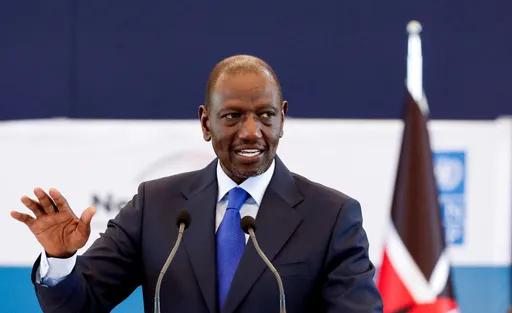
"Somalia has endured many hardships and difficult circumstances throughout its history, but never a transgression like the one committed on December 26," President Hassan Sheikh Mohamud told a special joint sitting of parliament this week.
The president was referring to Israeli Prime Minister Benjamin Netanyahu's decision to make Israel the first United Nations member state to recognise Somaliland as an independent nation, almost three-and-a-half decades after the region unilaterally declared secession from Somalia in 1991.
The announcement, made alongside Somaliland's self-proclaimed president Abdirahman Mohamed Abdullahi, often addressed as "Irro", immediately triggered widespread condemnation from Somalia, regional powers, continental bodies and much of the international community.
Somaliland had been functioning as a self-governing territory since 1991, albeit without international recognition and in defiance of Mogadishu's constitutional authority and Somalia's territorial integrity.
In his address to lawmakers, President Mohamud described Israel's recognition of Somaliland as not only a dangerous precedent for Somalia but also a threat to the primacy of international law. He also made it clear that Somalia wouldn't allow any part of its territory to be used as a base for launching attacks against other nations or regions.
Mogadishu's strong stand isn't without reason. Somaliland's main port city, Berbera, sits along the Gulf of Aden near the Bab al-Mandeb Strait, a maritime corridor through which around a third of global sea traffic passes.
Berbera has increasingly attracted international interest for maritime trade, security operations and potential naval access. President Mohamud argues that this strategic value is precisely what makes Israel's recognition of Somaliland so dangerous. For Somalia, it inherently raises the risks of being dragged into conflicts originating far beyond its borders.
President Mohamud also warns that foreign involvement could lead to occupation, destabilisation and even displacement of local populations.
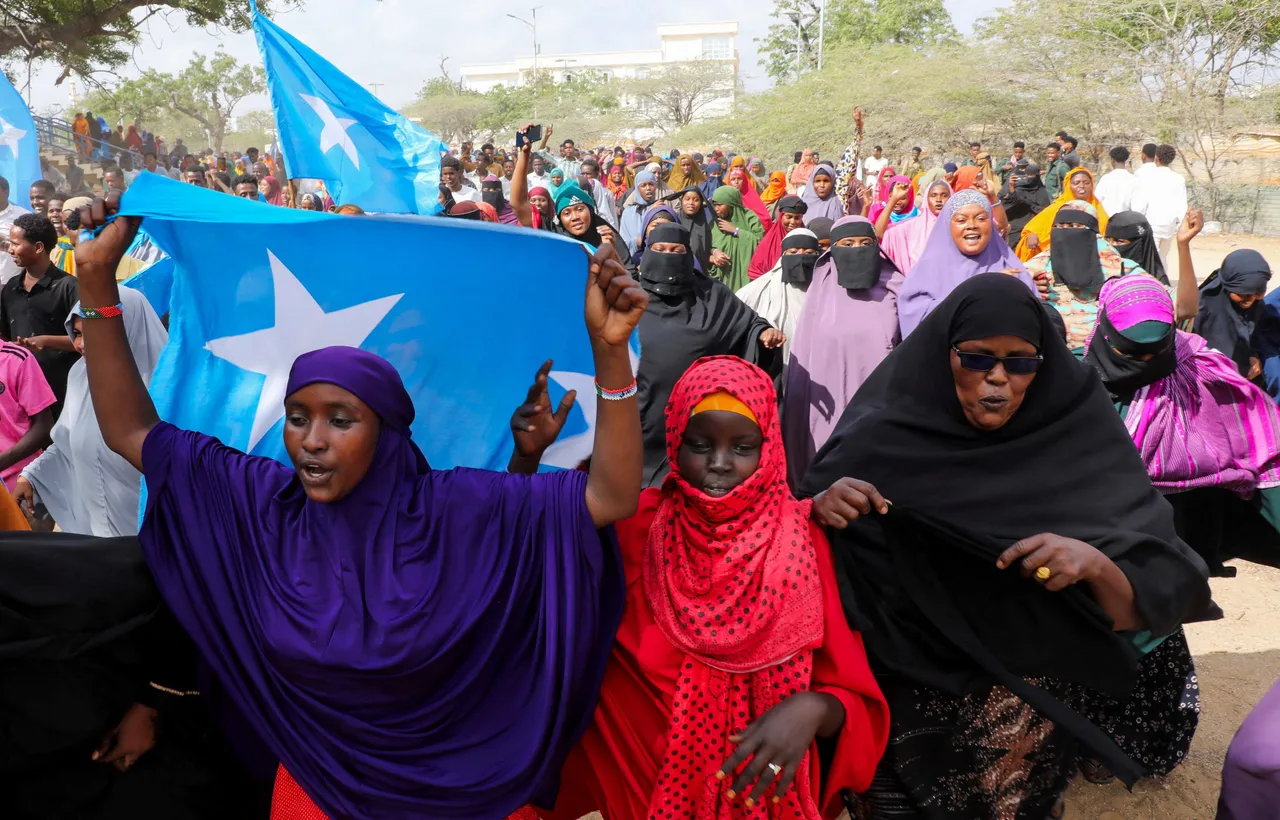
Invoking Somalia's long history of resistance to external domination, the president reminded parliament that no foreign power had ever been allowed to occupy Somali territory without a stiff fight. "This is not a time for division along clan or regional lines," he said. "We need to be united to safeguard our existence, sovereignty and territorial integrity."
President Mohamud also used the moment to restate Somalia's moral and political stance on Palestine, firmly rejecting any proposal involving the forcible displacement of Palestinians from their land and their potential relocation to Somalia or any other country.
Such actions, he said, undermine international law and constitute an attempt to dismantle the internationally agreed two-state solution, denying Palestinians their right to a sovereign state with East Jerusalem as its capital.
Historical context
Somaliland was a British protectorate that gained sovereignty on June 26, 1960, before voluntarily uniting with southern Somalia on July 1, 1960, to form the Republic of Somalia.
In the decades that followed, political marginalisation, authoritarian rule and brutal military campaigns – particularly in the late 1980s – left deep scars. After the collapse of the central government in 1991, the Somali National Movement declared Somaliland's independence on May 18 that year. Although 34 years have elapsed since, no foreign government or international organisation recognised Somaliland's declaration of independence until Israel's move this December.


Under successive administrations, Somaliland has pursued an increasingly diverse foreign policy aimed at one goal: international recognition. Hargeisa hosts a small number of representative offices and consulates, maintains informal foreign engagements and operates representative missions abroad. Still, the international community has, until now, refrained from according recognition to Somaliland out of respect for Somalia's sovereignty.
Somaliland's strategic geography has only intensified global interest. Stretching along hundreds of kilometres of coastline on the Gulf of Aden, bordering Ethiopia and Djibouti, and sitting at the gateway to the Red Sea, the region occupies a critical position in global trade, maritime security, anti-piracy efforts and counter-smuggling operations.
Analysts say Israel's recognition signals long-term strategic calculations, including access to ports, intelligence gathering and geopolitical leverage in an increasingly volatile region.
In January 2024, a memorandum of understanding between Ethiopia and Somaliland to grant Addis Ababa access to the Red Sea sparked a serious diplomatic crisis.
Somalia viewed the deal as an infringement on its sovereignty, leading to months of tension. That stalemate was eventually resolved through the Ankara Declaration, signed on December 11, 2024, in which Somalia and Ethiopia reaffirmed respect for Mogadishu's territorial integrity while addressing Ethiopia's maritime needs.
Somaliland's place within Somalia's federal system further underpins Mogadishu's position. Like Jubaland, Puntland, Galmudug, Hirshabelle, South West State and the newly formed North East State, Somaliland is represented in both chambers of Somali parliament and within the federal cabinet. These structures, Somalia argues, reflect constitutional reality and national unity rather than separation.
International condemnation
International reaction to Israel's recognition of Somaliland was fast and furious. On December 27, altogether 21 Arab, Islamic and African nations issued a joint statement unequivocally rejecting the move.
The Somali foreign minister called on Israel to urgently revoke its decision to preserve regional and global stability. More than 100 countries publicly condemned Israel's action. Türkiye led diplomatic efforts in support of Somalia, joined by Saudi Arabia, Egypt, Djibouti, Palestine and many others.
Regional and continental organisations have echoed this stance. The African Union reaffirmed that Somaliland remains an integral part of Somalia, saying Israel's recognition violates its principles.
IGAD reaffirmed Somalia's sovereignty. The Arab League described Israel's action as a clear violation of international law while the Gulf Cooperation Council called it a grave infringement on Somalia's unity.
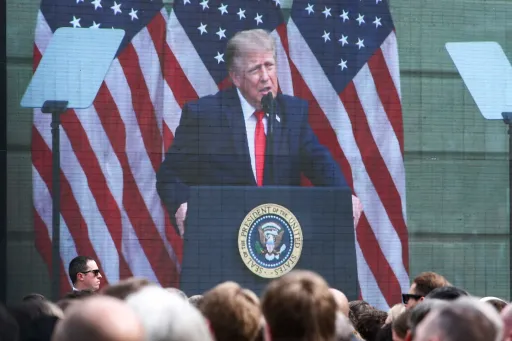
Even the US declined to follow Israel's lead. President Donald Trump said Washington had no immediate plans to recognise Somaliland.
The diplomatic weight of Somalia's response is further amplified by its growing global role. On New Year's Day, Somalia will assume the presidency of the Security Council, placing it at the epicentre of international peace and security discussions.
As of now, the message is unequivocal. Israel's recognition does not change Somaliland's legal status. External interference that bypasses federal authority threatens not only Somali unity but also regional stability across the Horn of Africa.