Maya was visiting family for the Tabaski (Eid al-Adha) holiday in her native Senegal when she learnt that her father had decided to marry her off again.
The news came as a shock to the 30-year-old, having barely overcome the trauma of being widowed early and left to bring up two children alone.
The man chosen to be her new husband, Mamadou B, was a friend of her father's who lived at Casamance in southern Senegal. He wanted Maya to leave her job as a housekeeper in Dakar and join him immediately. She would become his third wife.
"During my first forced marriage 14 years ago, I had no choice but to submit to my father's decision," Maya tells TRT Afrika. "He makes the big decisions in our family, good or bad."
Maya's first husband was also her father's acquaintance, a man in his sixties.
This time, Maya hopes to make herself heard. She would rather work hard to raise her two boys alone and rebuild her life than be betrothed to a man old enough to be her father.
There are millions of stories like Maya's across Africa, despite national legislation and pan-African courts condemning forced marriages.
Shocking statistics
Almost one in three women have been subjected to physical or sexual violence at least once in their life, according to UN Women.
The 16-day UniTE to End Violence against Women Campaign, launched on November 25 to coincide with International Day for the Elimination of Violence against Women, focuses on how forced marriage remains a pressing crisis across Africa.
Senegalese sociologist Sely Ba points out that one in five girls in developing countries is married off before turning 18. Poverty drives many of these marriages, although cultural and ethnic factors also play a role.
In South Sudan alone, four million girls were victims of early or forced marriage in 2022, up from 2.7 million in 2021, according to a UN report.
Globally, UNICEF estimates that 60 million forced marriages took place in 2022, with West Africa and Central Africa reporting the highest rates. Gabon, Congo, Gambia, Burkina Faso, Nigeria, Chad and Sierra Leone also feature on that list.
Maya grew up poor in Casamance, forced by circumstance to drop out of primary school and stay home to help her mother with the household chores. She was barely out of her teens when marriage was thrust on her.
Asked about those 10 years, Maya falls silent, partially out of respect for the memory of her children's father.
"The rates of forced marriages are three times higher in rural areas than in the urban belt," explains Ba. "These marriages represent 42.8% of all nuptials in rural areas and 14.3 per cent in urban areas."
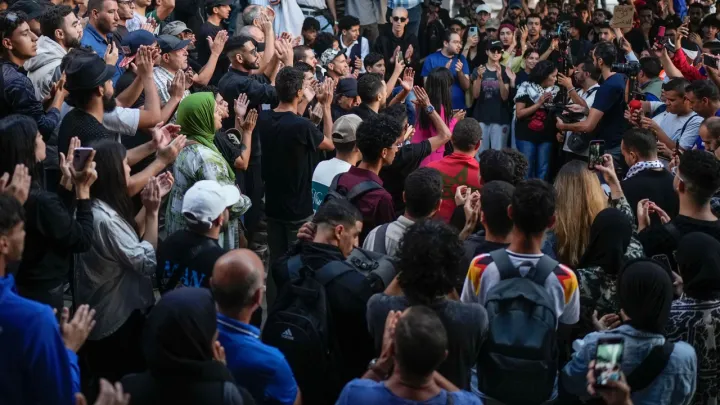




In many rural communities, superstition plays a part in decisions that go against the physical and mental well-being of girls.
Based on her interactions with victims and their families, Ba points out that many people believe marrying daughters off early ensures they are spared of disorderly conjugal relationships.
Climate change has also emerged as a factor. UNICEF increasingly sees drought pushing families toward child marriage.
"We are seeing alarming rates of child marriage and female genital mutilation across the Horn of Africa, with some poor families arranging for girls as young as 12 to marry men five times their age," Andy Brooks, UNICEF's regional adviser for child protection in eastern and southern Africa, says in a 2022 report.
Enforcement problem
Most African countries have laws prohibiting forced marriage. In 2021, almost all of them ratified the Protocol to the African Charter on Human and Peoples' Rights on the Rights of Women in Africa.
Article 21, paragraph 2 of the African Charter on the Rights and Welfare of the Child, introduced in 1998, also prohibits forced marriages.
Sociologists like Ba blame slack enforcement rather than the lack of deterrents for the spiralling problem.
"All actors in society must work to enforce and respect these laws for the well-being of our girls and young women," she tells TRT Afrika, citing early pregnancies and birth complications that kill many mothers.
Plan International reports that nearly 16 million girls between 15 and 19 give birth each year. Some 70,000 teenage girls die annually from complications related to pregnancy and childbirth, with forced marriages among the primary causes.
Congolese parliamentarian Exaucé Ngambili Ibam says the authorities in his country treat forced marriage, mostly of underage girls, as a serious social problem.
The Republic of Congo's Mouebara Law, enacted in 2022 to prevent discrimination and increase protection against sexual harassment, classifies forced marriages as violence. Article 20 defines social violence as "the expression of codified and institutionalised relationships within the social sphere that exert pressure or social coercion".
"Forced marriage is a form of social coercion," says Ibam. "Anyone who dares to engage in this kind of retrograde practice concerning women will face the law, which spares none."
In Chad, Burkina Faso and Senegal, there is legislation barring forced marriages on grounds of human rights, and for health and safety reasons. Sociologists, anthropologists, doctors and elected officials routinely call on authorities to raise awareness and ensure that the existing laws are enforced.
For Maya, the future remains fraught. She has had to leave her job in Dakar under family pressure and move to a new home as the third wife of her father's friend Mamadou B.