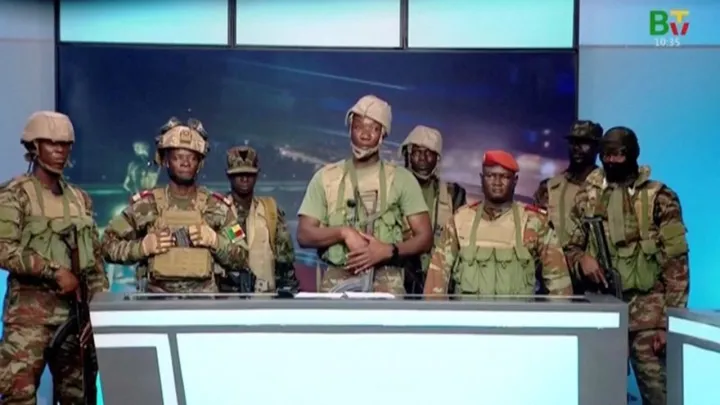
The script looked ominously familiar when videos flooded social media last weekend, showing a group of mid-ranking Beninese military officers announcing on national television that they had overthrown the elected government of President Patrice Talon.
But just as everyone braced for what usually follows a putsch, the story took an unexpected turn.
Lieutenant Colonel Pascal Tigri, who led the putsch, was widely expected to become Benin's newest strongman when a post on X triggered speculation about something significant brewing behind the scenes.
Without directly mentioning Benin, President Emmanuel Macron of France wrote on his official X handle that he had spoken to his Nigerian counterpart Bola Ahmed Tinubu about security challenges in that country, particularly the terrorist threat in the north.
"I conveyed France's solidarity (with Nigeria) in the face of the various security challenges," Macron wrote. "At his request, we will strengthen our partnership with the authorities, and our support for the affected populations. We call on all our partners to step up their engagement. No one can remain a spectator."
Almost immediately, people across the region read this as a tacit nudge for Nigeria to intervene in Benin.
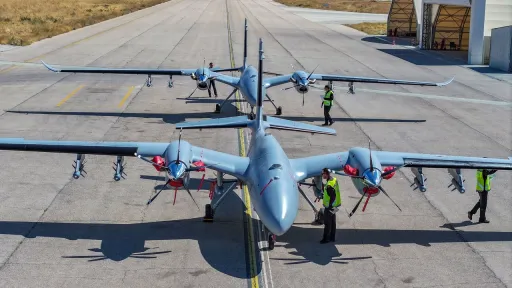
These assumptions were backed by maps tracking aircraft movement that showed two Nigerian fighter jets returning to base after reports of explosions in Cotonou, the capital city of Benin.
President Tinubu would confirm soon after that Nigeria had indeed intervened to quell the putsch in Benin. Presidential spokesperson Bayo Onanuga said Nigeria acted based on two separate requests from President Talon.
"Today, the Nigerian armed forces stood gallantly as a defender and protector of constitutional order in the Republic of Benin on the invitation of the government," Tinubu said in a statement.
"Our armed forces acted within the ambit of the ECOWAS Protocol on Democracy and Good Governance. They have helped stabilise a neighbouring country and have made us proud of their commitment to sustaining our democratic values and ideals since 1999. Nigeria stands firmly with the government and people of the Republic of Benin."
French connection
So, was Nigeria's hand in curbing the turbulence in Benin before things blew up a case of all's well that ends well? Not quite.
The underlying message in Macron's social media post just before Nigeria moved against the coup brains trust in Benin has had many questioning why France should have anything to do with whether the Nigerian military needs to act on something or not.
But Dr Aminu Hayatu of Bayero University Kano believes there is little justification in speculating about any such link, arguing that there is no evidence the French explicitly asked Nigeria to intervene in Benin.

"I think that even if there is a great deal of diplomatic cooperation and involvement with France, the French President doesn't have to give a directive to the Nigerian President for him to be able to intervene," he tells TRT Afrika. "The official word is that the intervention was in response to a request from the President of Benin."
While linking Macron's tweet with Nigeria's intervention might appear a stretch, the reality is that France has been struggling with worsening perceptions of domination and exploitation among its former colonies in the region.
Many of them, in fact, blame France for their problems. This has already prompted Niger, Burkina Faso and Mali to expel French troops from their territories.
Pros and cons
Like all such decisions, Nigeria's intervention in ending the putsch in Benin has implications beyond stubbing out a flaming torch that could have singed the region.
"Nigeria is repositioning itself and showing evidence of its capacity to serve as a regional power in Africa and signal to countries outside the continent that it has the wherewithal to protect itself from external aggression, including by the US," Dr Hayatu tells TRT Afrika.
On the flip side, this advantage is precisely what is drawing criticism regarding Nigeria's handling of domestic security challenges. Critics of Nigeria's intervention in Benin wonder why a country struggling to curtail over a decade-long insurgency would be swiftly deploying soldiers to foreign countries and getting the job done quickly.
"I see this as a disadvantage. It will send across the wrong message that Nigeria is compromising internally and has a lot of issues within its own borders to deal with, but has chosen to avoid the substance," says Dr Hayatu.
Those supporting the Nigerian government's decision to intervene in Benin insist that there is a distinction between the putschists and the terrorists and bandits wreaking havoc in Nigeria.
The argument is that the military leaders behind the coup were confined to barracks that could be targeted with precision airstrikes, while terrorists and bandits in Nigeria are highly mobile guerrilla fighters hiding in ungoverned spaces and melting into civilian populations.
They add that while a few bombs could take out the coup plotters, many weapons and vast areas need to be covered to reach the terrorists and bandits operating within Nigeria.
Securing the region
Another reason being proffered to justify Nigeria's actions in Benin, its western neighbour, is preventing the chaos and arms proliferation that a military coup could have caused.
Cotonou is only about 128 km from Lagos, Nigeria's commercial hub. Any instability in Benin would not only affect Nigeria but also impact the country's commercial capital and its economy.
But for Nigerians caught in the cycle of internal security challenges, this justification would appear sound only when they feel safe enough within their country.