 Pauline Odhiambo
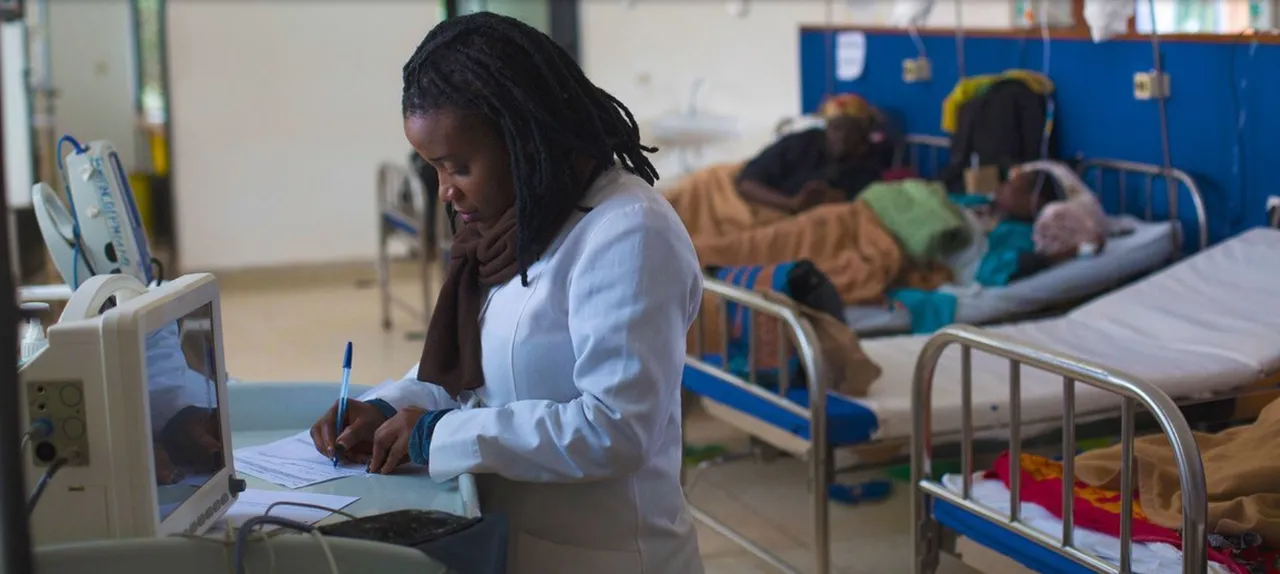
Malawian Grace Banda, 40, has a message for every woman she meets: cancer isn't the curse it is often made out to be. In most cases, it can be stopped before it starts.
She should know, having fought through the disease and lived to tell the tale.
Diagnosed with advanced cervical cancer two years ago, Grace was convinced the persistent pain and bleeding were beyond medical help. A screening campaign and subsequent treatment changed everything. Now, her young daughter is vaccinated against the virus that nearly killed her mother.
"We didn't know a simple virus could cause this," Grace tells TRT Afrika. "We feared something we did not understand."
Her story illustrates a finding now confirmed by the most comprehensive global analysis to date: a substantial portion of cancer cases are preventable.
A new study by the World Health Organisation (WHO) and the International Agency for Research on Cancer (IARC) reveals that up to four in ten cancer cases worldwide, extending to approximately 7.1 million diagnoses in 2022 alone, stem from preventable causes.
Released ahead of World Cancer Day on February 4, the analysis examines 30 modifiable risk factors – from tobacco, alcohol and air pollution to, for the first time in such a broad assessment, nine cancer-causing infections that include human papillomavirus (HPV) and Helicobacter pylori.
"This is a comprehensive assessment of preventable cancer worldwide," says Dr Isabelle Soerjomataram, deputy head of the IARC Cancer Surveillance Unit. "Addressing these preventable causes represents one of the most powerful opportunities to reduce the global cancer burden."
Gender dynamics
Data from 185 countries shows tobacco remains the single largest preventable cause of cancer, responsible for 15% of global cases, followed by infections (10%) and alcohol (3%). Lung, stomach and cervical cancers alone account for nearly half of all preventable cases.
The gender gap is even more startling. Around 45% of new cancer cases among men are linked to preventable risks, while it's 30% for women. In men, smoking has been identified as the trigger for 23% of all cases.

Among women globally, infections like HPV are the leading cause at 11%. These gender disparities are a measure of risk exposure shaped by social, economic and behavioural factors.
The burden of preventable cancer varies starkly by region too. In sub-Saharan Africa, 38% of cancer cases in women are linked to preventable causes, the highest regional proportion globally. In East Asia, 57% of cancer cases in men are categorised as preventable, being attributed primarily to smoking.

In Nairobi, John Otieno, a 52-year-old former factory worker diagnosed with lung cancer, rues what he calls "an intersection of these risks".
"We worked with chemicals, and everyone smoked. It was the way to cope with stress," he tells TRT Afrika. "Nobody spoke of the air in the factory and the cigarettes as a double danger. Prevention isn't just about one thing; the environment we live in matters too."
Prevention response
The WHO-IARC report underscores the point that effective prevention requires context-specific strategies. The primary ones are robust tobacco and alcohol control, widespread vaccination against HPV and hepatitis B, improved air quality, safer workplaces, and policies that promote healthier food and physical activity.
"This is the first global analysis to show how much cancer risk comes from causes we can prevent," explains Dr André Ilbawi, technical officer for cancer control at WHO. "By examining patterns across countries and population groups, we can provide governments and individuals with more specific information to help prevent many cancer cases before they start."
The path forward is coordinated action across all sectors – from health and education to energy, transport and labour. The goal is not merely to reduce statistics but to build a world where fewer families face the news of a diagnosis that could have been prevented.
As Grace succinctly puts it, "To overcome cancer, we must not just fight the disease. We must grow the shield that stops it from taking root."