When Collins Odhiambo picked up his secondary school results, the D grade staring back at him felt like the end of his teaching ambitions.
More than a decade later, working as a social worker in South Sudan, he sees that moment not as a closed door, but as the beginning of an unexpected journey.
"I didn't get the grades I wanted in my final exam," Collins tells TRT Afrika. "I wanted to be a teacher for the longest time, but every time I applied for a position, I would get a disappointing answer."
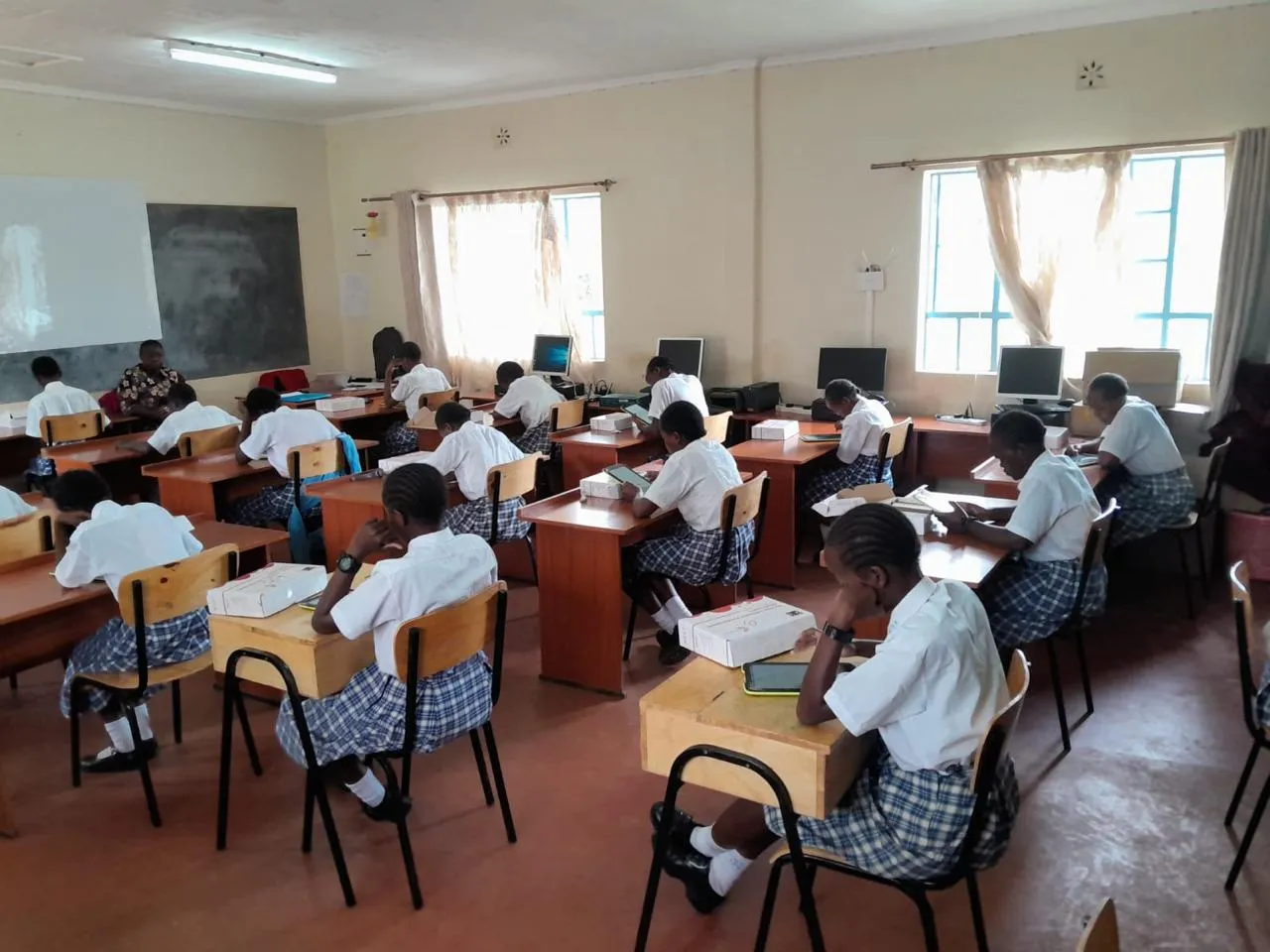
His experience reflects a reality that hundreds of thousands of students worldwide confront each year. Of the 965,000 students who wrote the 2024 Kenya Certificate of Secondary Education (KCSE) examination, only 244,563 scored C+ and above, which is the minimum standard for most degree programmes.
Even among those who passed, tens of thousands did not apply for university placement through the Kenya Central College Placement System (KUCCPS). Among those who filed applications, many struggled to make the cut due to the high number of candidates.
"For more than two years after finishing high school, I didn't know what to do. I couldn't go to college to continue my studies, so I started volunteering with non-governmental organisations. That's when I fell in love with community service and decided to pursue it as a potential career," says Collins.
Emerging opportunities
Kenya is making efforts to encourage more students to pursue higher studies despite poor secondary school grades.
The KUCCPS institutional framework that places students in universities has announced that by 2026, the minimum score for students who will be offered a place in the KMTC College of Health Sciences could be lowered to D. The idea is to give more students opportunities to enter streams that were previously out of bounds for them.
Under the amended programme, students will start with certificates and then move on to diplomas that are offered in various medical training institutions across the country. At the certificate level, the available courses include community health assistant, health insurance administration, health records and information technology, emergency medical technician, medical engineering, nutritional science, orthopaedics and public health.






Diploma courses are more advanced, including clinical medicine and surgery, community health, oral health and dental technology and others.
KUCCPS has since successfully placed about 310,000 students in various universities and colleges, which include degree, diploma and certificate programmes.
Finding his path
Collins advises young people who don't meet university entrance requirements not to give up, focusing instead on alternative opportunities that will build their skills and help reach their goals.
"I tried out many things, including joining theatre groups, volunteer work in the community, and helping NGOs who benefited from my familiarity with our neighbourhoods and the local youth. I gained experience in the process and developed a love for what would become my new career path," he tells TRT Afrika.
Almost twelve years since graduating from high school, Collins enrolled in a university. He is currently studying for his first degree in social sciences and development studies, parallel to the work he does with an NGO.
"Not getting the grades you hoped to get doesn't mean you have failed in life. It just means you need to take a different path. These paths can be just as rewarding, if not more so, depending on your interests and goals," Collins tells TRT Afrika.
In 2025, nearly a million students wrote the Kenyan Form Four exams, the final secondary‑school assessments that determine university admission. Of those, 1,932 students scored an A. Data from the ministry of education shows that only 270,000 students scored a C+ or higher to gain admission to university.
Collins is scheduled to graduate in August this year. Although he couldn't fulfil his childhood ambition of becoming a teacher, he hopes his journey will serve as a guide for many others who miss out on the grades they aspire to.