 Göktuğ Çalışkan
Türkiye’s Africa policy is entering a phase where influence is measured less by speeches and more by systems. In the Horn of Africa, the vocabulary of partnership is being rewritten through infrastructure that does not end at the shoreline.
Ports, training missions, energy corridors, and now a spaceport project are forming a single strategic sentence: presence that produces capability.
The Somalia spaceport initiative should be read through this lens. What looks, at first glance, like a niche aerospace investment is turning into a test of strategic maturity.
It asks whether a state can convert diplomatic access into industrial momentum, and whether security cooperation can evolve into a platform for long-horizon technology partnerships.
Somalia’s geography advantage
The project moved from ambition to timetable when Türkiye’s feasibility and design work was publicly confirmed and the first phase of construction was announced.
That matters because space projects rarely fail for lack of vision; they fail when logistics, financing, and political patience cannot survive the long runway.
Somalia’s advantage is simple and stubborn: location. Launch operations favour countries that can offer safe corridors over open water, predictable weather windows, and proximity to the equator. In a world where each marginal gain in efficiency changes payload economics, geography becomes strategy.
Türkiye is effectively purchasing a new kind of access: not to a market, but to a trajectory. The strategic logic is familiar to space-faring actors; Europe’s own experience at Kourou shows how launch geography can be translated into long-term capability.
This is also why the project has been framed as a three-phase effort. A phased approach signals institutional discipline, reduces political shock, and allows the ecosystem—materials, propulsion, avionics, ground support—to build step by step rather than collapse under a single oversized promise.
Türkiye's investment in Somalia is an extension of its African engagement strategy.
Beyond tech partnership
The relationship between Somalia and Türkiye has a visible security dimension, and that history gives the spaceport idea a political foundation. When a country trains, equips, and helps reorganise security structures, it builds trust that cannot be replicated by a short visit or a press statement.
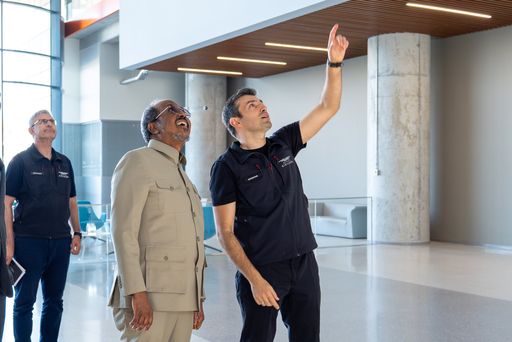
The long-standing military training mission at TURKSOM—active since-2017—is relevant here for one reason: it shows continuity.
Technology diplomacy works when the partner believes the relationship survives headlines and survives crises. A spaceport, by definition, is a long bet. It requires the kind of political reliability that is proven over years, not announced in a week.
This is where Türkiye’s pitch becomes distinct in Africa’s crowded partnership market. The continent has seen many external offers that stop at extraction, procurement, or temporary security fixes. A launch facility is structurally different.
It pulls education, engineering, regulation, and supply chains into the same orbit. It turns bilateral ties into a platform that other actors must factor into their regional planning.
A spaceport in Somalia will attract attention because it compresses prestige, revenue expectations, and strategic symbolism into a single site.
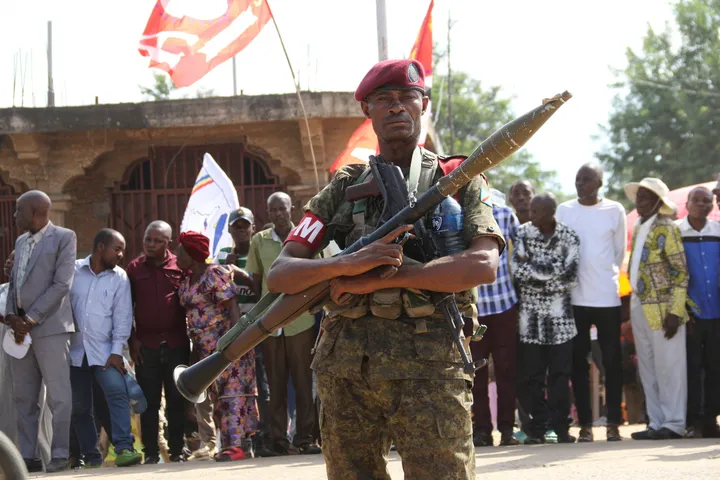



That makes it a magnet for spoilers. Any adversary who wants to discredit state authority will understand the value of disrupting a project that represents “the future.”
Security, therefore, becomes part of the design brief. It is not a perimeter problem; it is an institutional problem.
Türkiye’s advantage is that it is not improvising from scratch. The spaceport discussion has been embedded in a broader package of cooperation that includes security coordination and emerging technologies, a framework reaffirmed at the leadership level and reported as a widening of bilateral engagement into the space sector itself.
This reduces the risk of the spaceport being treated as an isolated trophy project. It becomes, instead, one node inside a larger stability-and-development architecture.
Orbit’s prestige
Space is no longer a luxury domain. It is becoming an industrial layer that supports communications, agriculture monitoring, disaster response, mapping, maritime oversight, and security planning. For countries that can offer reliable launch services, the upside is not symbolic; it is commercial.
Recent analysis has already framed the global space economy’s expansion and the scale of the market Türkiye is targeting, including projections that reach $1.8T by the mid-2030s. Whether one treats such projections with optimism or caution, the direction is clear: demand is rising, launch capacity is strategic, and late entrants need a differentiator.
Somalia can become that differentiator if the project is treated as a regional ecosystem rather than a single facility. The strongest version of this story is not “Türkiye launches its own satellites.”
The stronger story is “Türkiye helps create an African launch corridor that trains local talent, builds maintenance chains, and offers services to friendly partners.” If that happens, the project becomes economically defensible and politically resilient.
There is also a soft-power dividend that is easy to underestimate. For Somalia, hosting advanced infrastructure can shift narratives from permanent crisis to future-facing capability.
For Türkiye, it expands the national space agenda beyond geographic constraints and turns Africa partnership into a visible innovation story—one that speaks to youth, engineers, and investors, and connects to the wider satellite communications ecosystem anchored by TÜRKSAT.
How to make it work
For this initiative to survive the long run, the hardware is actually the easy part. The harder task is credibility. Governance has to be transparent enough to convince global insurers, not just local politicians.
Then there is the talent gap. A spaceport run entirely by foreign experts is just an outpost; for genuine sovereignty, Somali engineers need to be holding the keys, not just the clipboards. Finally, security cannot be a static checklist. In a region where threats shift overnight, protection has to be as adaptive as the technology itself.
If these conditions are met, the Somalia spaceport will represent more than a bilateral headline. It will mark the maturation of Türkiye’s technology diplomacy in Africa: influence that is built into hardware, skills, and institutions—then defended through partnership rather than posture.
In the Horn of Africa, power is rarely announced. It is assembled. And sometimes, it is launched.
The author, Göktuğ Çalışkan, is a PhD candidate & International Relations specialist.
Disclaimer: The views expressed by the author do not necessarily reflect the opinions, viewpoints and editorial policies of TRT Afrika.