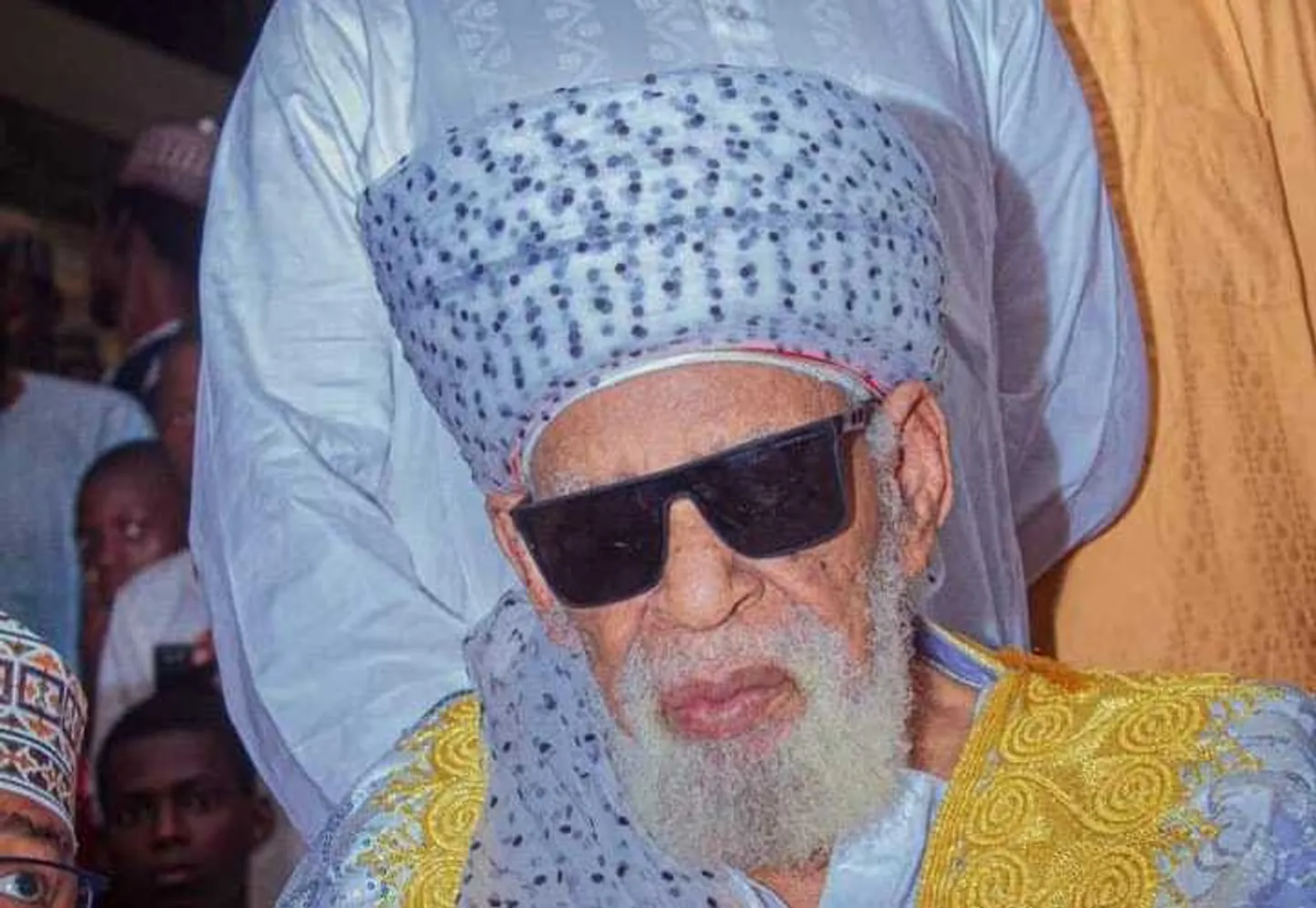
Hundreds of thousands of people descended on Bauchi in northeast Nigeria on the afternoon of November 28, packing the Eid Ground to capacity and spilling into the city in one of the largest funeral gatherings the country had witnessed in recent memory.
These were mourners who had come from across the country and beyond – including delegations from Morocco, Mauritania, Cameroon, Niger, Benin and Chad – for the burial of Sheikh Dahiru Usman Bauchi, the 98-year-old Islamic scholar who had passed away the previous day.
Vice President Kashim Shettima led Nigeria's official delegation, with his predecessor Atiku Abubakar and state governors from across the north in attendance.
The scale of the turnout took many by surprise, especially those unfamiliar with the life and teachings of the late scholar and the influence of the Tijaniyyah movement he led.
For Nigerian Muslims, Sheikh Dahiru Bauchi wasn't just a religious scholar who spent decades studying and propagating the tenets of Islam. He was an institution with a legacy of scholarship, moral guidance and social service that influenced generations.
Sheikh Dahiru Bauchi served as deputy head of the fatwa committee for the Supreme Council for Islamic Affairs, the umbrella body of Islamic organisations within the country.

Spiritual moorings
Born on June 29, 1927, in northeast Nigeria, Sheikh Dahiru Bauchi began his Islamic education under his father before embarking on what would be a lifelong journey across continents in search of the highest levels of spiritual scholarship.
He studied under some of the world's most venerated Islamic scholars, including Sheikh Tijani Usman Zangon-Bare-Bari, Shaykh Abubakar Atiku and Sheikh Abdulqadir Zaria, eventually settling on the Tijaniyyah spiritual path. His father was himself a Tijani scholar.
As a leader of the Tijaniyyah, Sheikh Dahiru Bauchi's influence stretched far beyond Nigeria. His Sufi order now commands a substantial following throughout West Africa, the Maghreb, and as far as India's Tamil Nadu.






Sheikh Dahiru Bauchi would often refer to the late Sheikh Ibrahim Niasse (1900-1975), among the most influential Islamic scholars of the 20th century and the first West African to lead prayers at Egypt's Al-Azhar Mosque, as his guiding light.
He married one of Niasse's daughters, becoming not only part of the family but also the inheritor of the Tijaniyyah spiritual legacy.
By the time he was in his nineties, Sheikh Dahiru Bauchi had become the patriarch of a large clan running into hundreds, while serving as the leader of a school of Islamic theology spanning continents.
Visionary approach
Sheikh Dahiru Bauchi's relationship with the Quran extended far beyond exegesis.
He established around 600 schools dedicated to Quranic memorisation across northern Nigeria, Niger Republic, Cameroon, Benin and Ghana. These schools became renowned for producing brilliant reciters of the Quran, some as young as ten years old, with the astounding ability to recite the entire Quran by heart.
Such was his influence that the Bauchi State government declared November 28 a public holiday to enable residents to pay their last respects to the late Islamic scholar and spiritual leader at his funeral.
President Bola Tinubu of Nigeria and his Algerian counterpart Abdelmadjid Tebboune both hailed him as a spiritual beacon whose influence shaped generations.
Former Vice President Abubakar described Sheikh Dahiru Bauchi's passing as "a monumental loss to Nigeria and the African continent", noting that his was a voice of reason needed in increasingly divisive times.
The legacy of Sheikh Dahiru Bauchi now lives through hundreds of schools and 76 years of uninterrupted teaching that speak of a life dedicated to articulating the wisdom of the Quran.