 Pauline Odhiambo
For seven-year-old Amani, the journey to her primary school in the heart of Nairobi's Mukuru industrial area is a daily exercise in vigilance. Her small hand is clutched tightly in her grandfather’s as they navigate a narrow path, flinching as delivery trucks roar past on the adjacent road, their exhaust mingling with smoke from nearby informal workshops.
“I tell her to watch the trucks, not the sky,” Amani’s 68-year-old grandfather Robert Maina tells TRT Afrika.
“When I was a boy, we played football in that field where the factory now stands,” says Robert while gesturing to a rare patch of greenery. “The city has now become a machine, and our children are just moving through it, careful not to get caught in the gears.”
Over 4,000 kilometres away in Accra, Ghana, the story echoes but with a different rhythm.
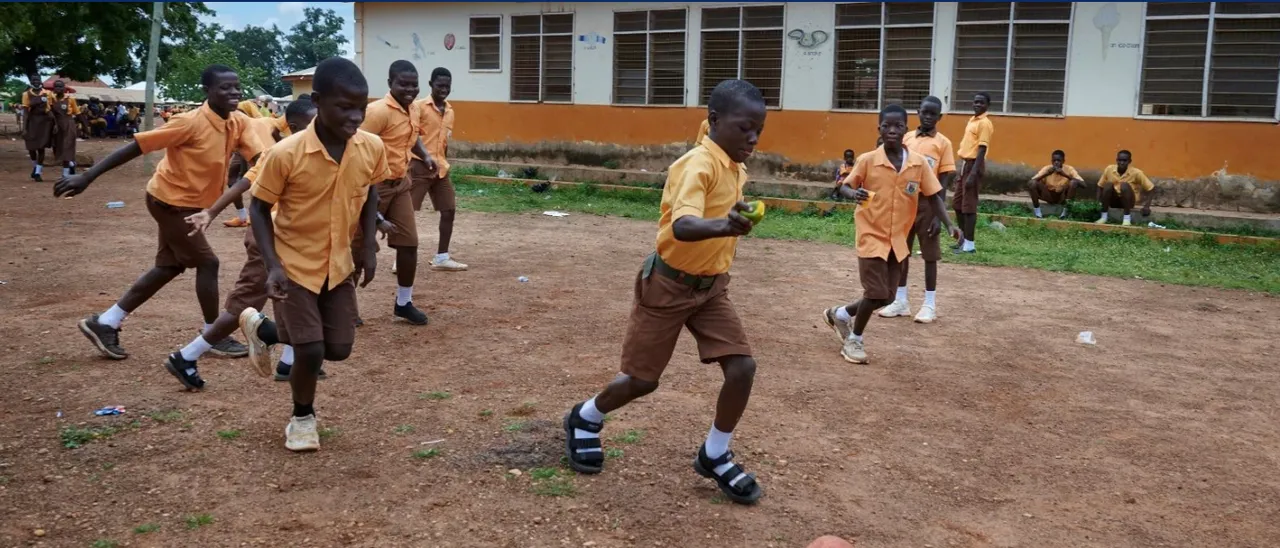
Ten-year-old Kofi helps his mother sell kelewele (spicy fried plantains) by a bustling intersection. His playground is the patch of pavement behind the stall, his toys are bottle caps and a deflated football.
“When the rain comes, this whole place floods,” his mother, Afia, explains, pointing to the clogged drain beside them. “The water is dirty and he can’t play. I want him to have a clean, dry place to just be a boy, away from this smoke and noise. But where?”
Safe playgrounds
These two voices, from Nairobi and Accra, capture a universal urban reality felt acutely across Africa—the continent with the world’s youngest and fastest-growing population.
As African cities swell, safe public spaces for children to play, move and simply breathe are vanishing, usurped by traffic, construction and informal settlement.
But a new global blueprint, the Guide to Creating Urban Public Spaces for children, released by the World Health Organization (WHO), UNICEF and UN-Habitat, argues this tide can be turned.
The statistics are stark. Globally, only 30% of urban residents in low- and middle-income countries live near an open public space. For millions of African children, "play" is a precarious activity conducted in flood-prone alleys, traffic-choked streets, or cramped, one-room homes. A 2022 analysis revealed that over 60% of children in Africa’s largest cities lack access to safe, dedicated play areas within a 10-minute walk of their home.
“Access to safe, inclusive public space is directly linked to children’s health, development, learning and social ties and is a child’s right,” says Dr Etienne Krug of WHO.
The new guide is a direct response, translating this right into a practical framework built on six acronym principles: Safety, Play, Access, Child health, Equity, and Sustainability (SPACES).
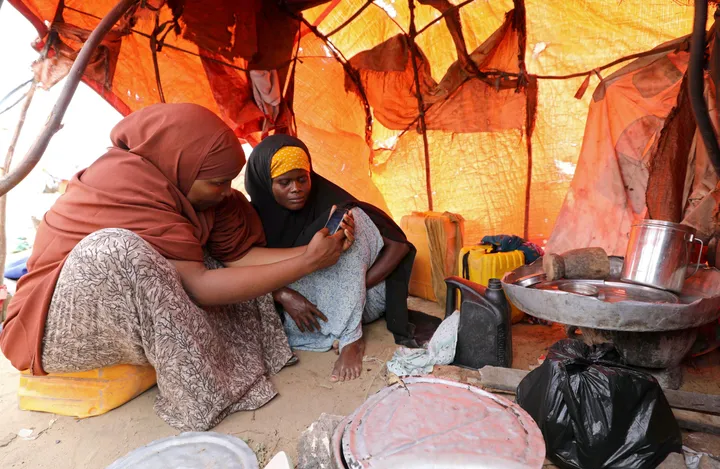




For African city planners and community leaders, the guide offers a toolkit tailored to the region's unique challenges and opportunities. It calls for traffic-calming measures and safe school routes in cities like Nairobi, where pedestrian fatalities are high. It champions embedding play in all public spaces —transforming a paved courtyard in a Kigali housing complex or a shaded street in Lagos into a play zone with simple, low-cost interventions.

Eco-friendly spaces
Critically, it urges cities to prioritize access where need is greatest. This means using mapping to identify and invest in low-income, high-density, and informal settlements—places like Mukuru in Nairobi or Ashaiman in Accra—where green space is often non-existent.
“This guide shows how child-centred urban areas can fulfill the right to play and accelerate progress toward safe, accessible public spaces for everyone by 2030,” says Dr. Nathalie Roebbel, WHO Technical Lead for Urban Health.
The guide’s principles align with Africa’s urgent needs: Ensuring clean air and shade in heat-intense cities, revitalizing underused land and integrating green, play-friendly infrastructure into climate resilience strategies.
A park isn’t just a playground; it’s a sponge for floodwater, a cooler in a heat island, and a lifeline for social connection.
The potential is immense. With over 55% of the world’s urban growth to 2050 expected in Africa, the continent has a unique opportunity to build differently. Accra’s flood-prone drains could be transformed via bioswales bordered by safe play walkways. Nairobi’s leftover urban spaces in neighbourhoods like Mukuru could similarly be transformed into vibrant, community-managed play fields.
From the bustling streets of East Africa to the vibrant communities of the West, the call is clear. The future of Africa’s cities will not be written in concrete alone, but in the laughter of children reclaiming their right to the city—one safe, green, and inclusive space at a time.
“We cannot build cities for banks, cars, and concrete, and then wonder why our children are not thriving,” says Robert Maina in Nairobi, his granddaughter Amani now dreaming aloud of a park with a slide.
In Accra, Afia hears of the guide and nods firmly. “A place for Kofi to play is not a luxury. It is as important as a school. It is where he learns to live.”