When Asiya Mohammed Sururu became Kenya's first female para-rower to qualify for the Paralympics at Tokyo 2020, the double-amputee athlete used her moment in the spotlight to push a cause she believed needed a face.
During an interview with public broadcaster Kenya Broadcasting Corporation ahead of the Games, she asked producers to take the footage to special schoolchildren.
"I wanted the kids to get motivated and know that everything is possible," declared Asiya, who lost her limbs in a childhood accident.
But for every Asiya who reaches the Paralympics stage, dozens of disabled athletes never get that far.
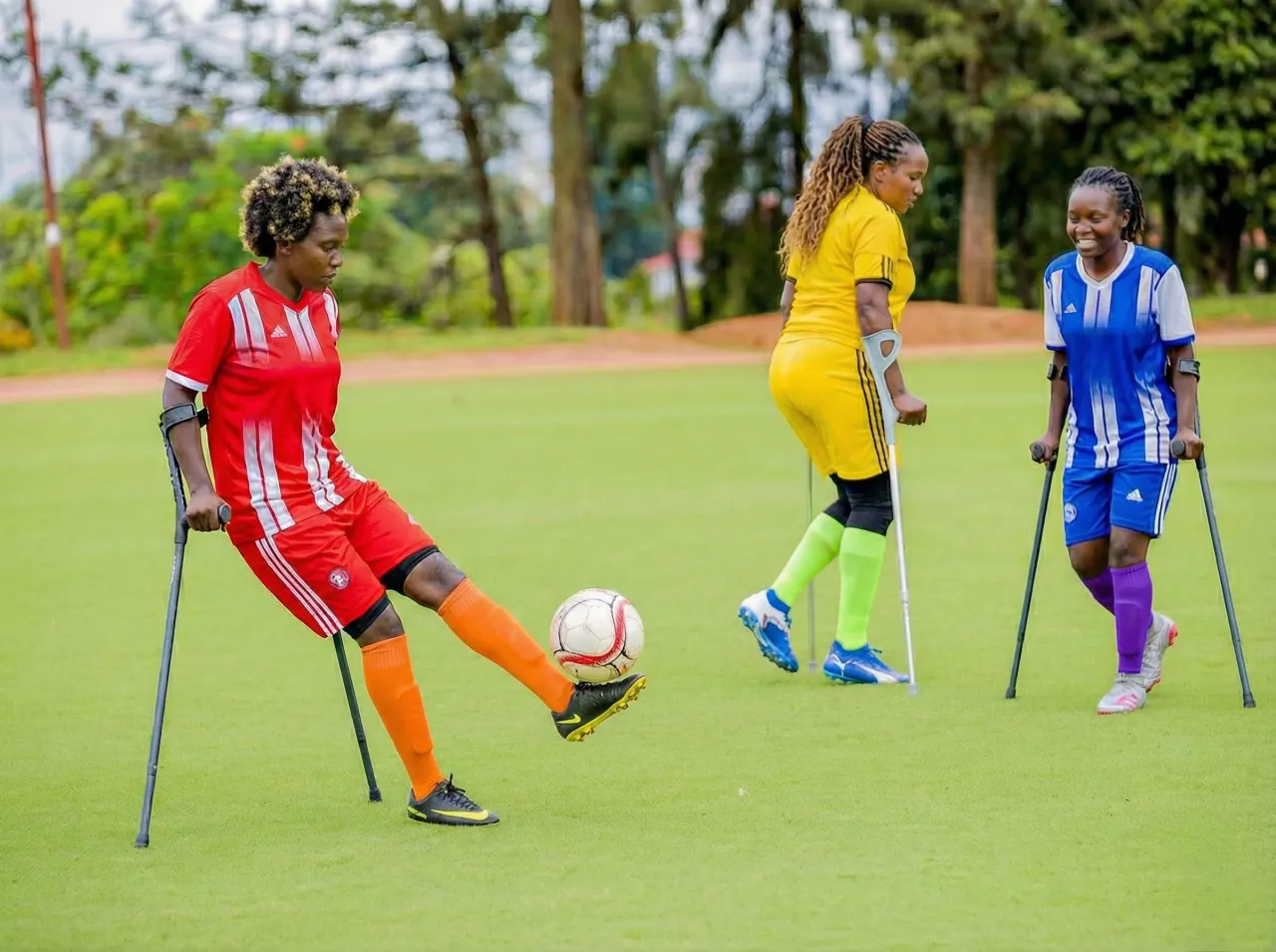
KickStartKenyaFootball, an organisation that promotes inclusivity in the sport, estimates that around 918,000 people – approximately 2.2% of the population – live with disabilities. Many battle significant challenges, including societal stigma, limited access to education and employment, and restricted recreational opportunities.
For a country that has competed in Paralympic Games since 1972 and won 49 medals, including 19 golds, most disabled athletes never reach that level for want of support.
A women's para football programme in Nairobi has received targeted funding from Indian entrepreneur and philanthropist Saad Kassis-Mohamed to address exactly those barriers: the health and logistics challenges that stop disabled athletes from training and developing consistently.
The support, delivered through WeCare Foundation to Umoja Adaptive Sports Centre, covers injury prevention equipment, transport support and consistent coaching time – basics that determine whether players can show up week after week and train safely.
For many athletes in the programme, the challenge isn't motivation. It's more about managing recurring injury risks, replacing worn-out kits and ensuring they don't miss training sessions.
Focused intervention
Kassis-Mohamed, part of the 2025 Forbes "30 Under 30" honours list for social impact, has just mobilised US $5 million in funding through his WeCare Foundation to support projects across underserved communities in Central Africa and beyond.
His work spans renewable energy initiatives, ethical finance and humanitarian aid, including the Darfur Water Renewal Project in Sudan and early childhood development programmes in Asia.
"We talk about disability sport when medals happen, but the real work is everything in between," Leila Njoroge, director of programmes at WeCare Foundation, tells TRT Afrika.



"If a player cannot get to training safely, replace worn equipment, or has no recovery guidance when pain starts, talent disappears. We wanted to fund the basics that actually keep women on the pitch."
Multiple barriers
Research shows that para-athletes face numerous practical barriers, from transport costs and equipment not designed for their bodies to limited medical support and recovery pathways.
For women with disabilities, these barriers often compound. At present, there are no national impairment-specific leagues for females in many disability sport contexts, mainly due to a lack of female impairment-specific teams.
Opportunities to compete in international events remain limited for women across most para-sport categories, with participation levels in developing countries being particularly low.
The WeCare Foundation package includes injury prevention protocols, strengthened safeguarding for athlete wellbeing, and clear referral routes for medical and psychosocial support. The aim is to protect training continuity, specifically helping athletes manage pain and recovery without long clinical delays that derail participation.
"Women's para football is growing, but too many athletes are still pushed out by practical health barriers that never make the headlines," says Kassis-Mohamed. "This is not a one-off gesture; it's about stability week after week. When athletes can get to training, move safely and recover properly, you protect talent and wellbeing at the same time."
Supporting consistency
Grace Wanjiku, head coach at Umoja Adaptive Sports Centre, says the priority is to address friction points that compound quickly.
"We have players who can compete at a high level, but are constrained by external factors. When you remove those barriers, they train more, get injured less and stay in the game."
The funding has already strengthened programme stability, keeping training on schedule and improving the week-to-week experience for players who might otherwise have dropped out.