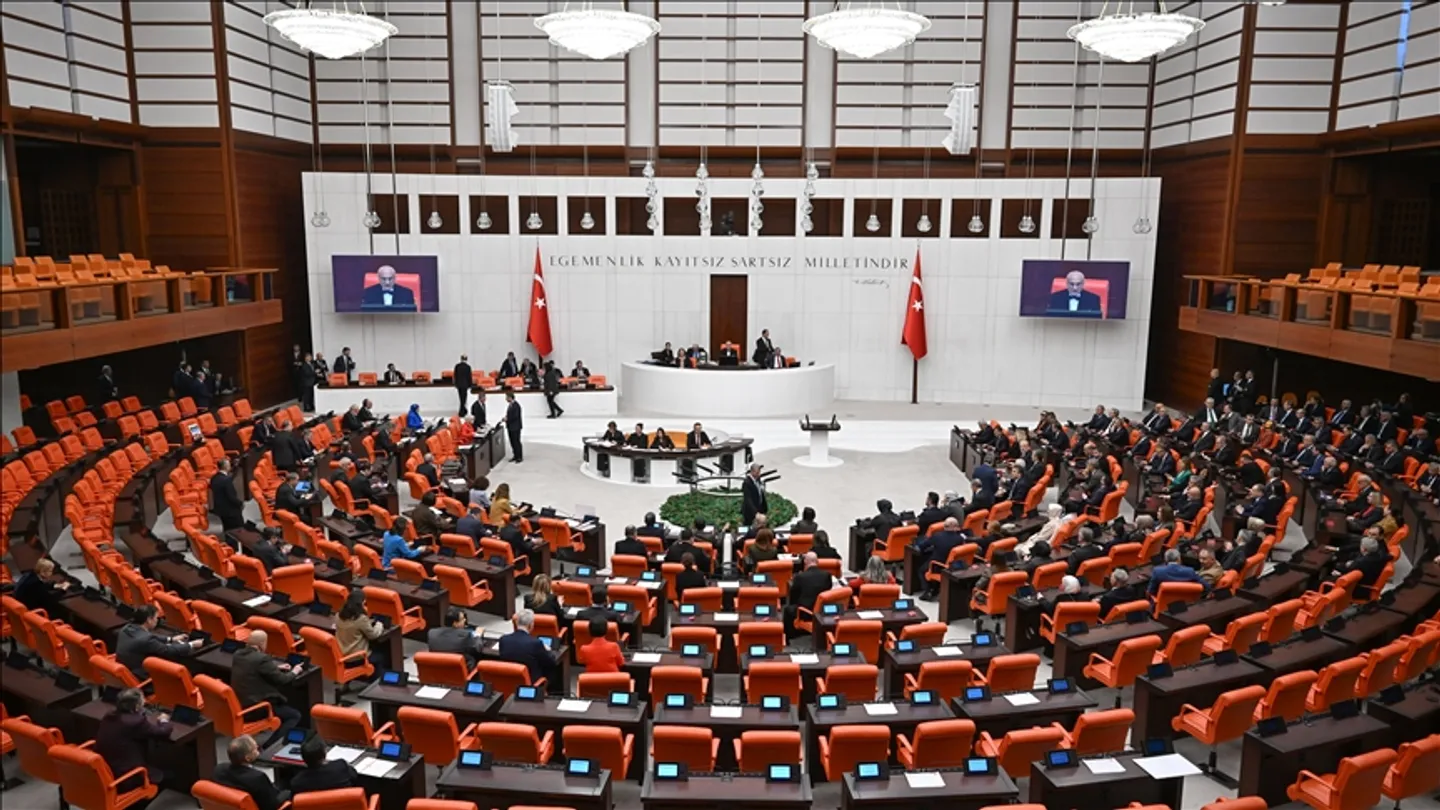
Türkiye’s Presidency has formally submitted a motion to parliament seeking a 24-month extension of its military deployment in Libya, citing continued political uncertainty, unresolved security challenges and the need to preserve stability in the North African country.
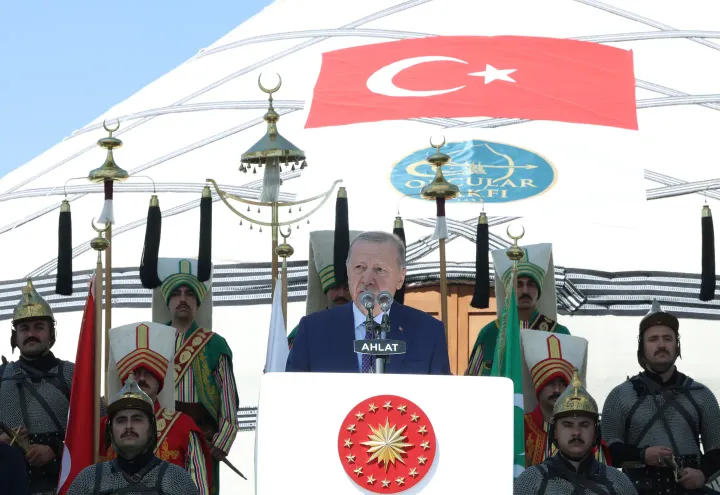
The motion, signed by President Recep Tayyip Erdoğan, was presented to the Turkish Grand National Assembly (TBMM) on Sunday. If approved, the mandate will be extended from January 2, 2026, for a further two years.
Background to Türkiye’s deployment
The motion recalls that efforts to establish democratic institutions in Libya following the unrest that erupted in 2011 were undermined by escalating armed conflict, leading to a fragmented political and security structure.
It refers to the Libya Political Agreement, signed in Skhirat, Morocco, in December 2015, which resulted in the formation of a UN-backed government recognised by the international community under UN Security Council Resolution 2259.
Turkish President Recep Tayyip Erdogan meets with Libyan PM Abdul Hamid Dbeibeh within the 4th edition of the Antalya Diplomacy Forum [FILE].
According to the motion, attacks launched in April 2019 aimed at toppling the internationally recognised government prompted a formal request from Libya in December 2019 for Türkiye’s support.
Türkiye stresses importance of peace and stability in Libya
The document states that while subsequent developments helped halt attacks and internal turmoil, Libya has yet to finalise a permanent ceasefire or complete the political dialogue process.
It warns that the continued inability to hold elections has prolonged political uncertainty and governance challenges, placing at risk the calm achieved on the ground and posing security concerns for Libya and the wider region.
“The ongoing inability to hold elections in Libya has prolonged political uncertainty and governance problems, putting at risk the calm established on the ground through great sacrifice and posing a serious obstacle to lasting stability,” the motion stated.
The motion emphasises that the failure to unify institutions, particularly military and security bodies, remains a major obstacle to lasting stability.
Türkiye’s role and security cooperation
The motion underlines that Türkiye continues to provide training and advisory support to Libya under the Security and Military Cooperation Memorandum of Understanding, which remains in force.
It adds that Ankara actively contributes to maintaining stability and calm on the ground, while supporting UN-facilitated military and political talks aimed at preventing a renewed outbreak of conflict.
The document also stresses that a return to fighting could negatively affect Türkiye’s interests in the Mediterranean basin and North Africa, while increasing risks related to terrorism, irregular migration and human trafficking.
Diplomatic and regional context
Türkiye remains a key actor in Libya, maintaining diplomatic and security engagement as efforts continue to stabilise the country.
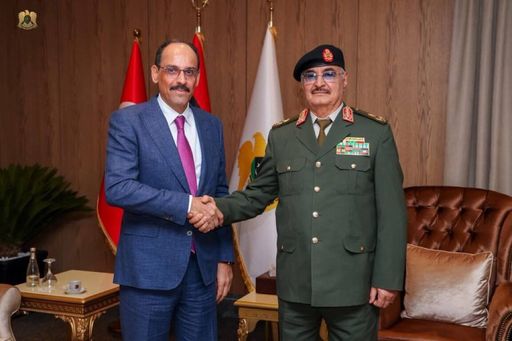
In recent months, Turkish intelligence chief Ibrahim Kalın visited Libya as part of Ankara’s ongoing contacts with Libyan stakeholders. Türkiye has also held outreach efforts with head of the armed groups in eastern Libya Khalifa Haftar, reflecting broader engagement with different political and military actors amid evolving dynamics in the country.
Ankara is also seeking the approval of Libya’s Tobruk-based parliament, aligned with Haftar, for the 2019 maritime jurisdiction agreement signed with the UN-recognised government in Tripoli.
Parliamentary mandate
Türkiye’s parliament first authorised the deployment of troops to Libya in January 2020, with the mandate extended several times since. The current authorisation was last renewed in November 2023.
The latest motion seeks parliamentary approval to extend the mandate for another 24 months, in line with Article 92 of Türkiye’s Constitution, allowing the government to respond swiftly to evolving security developments.