 Charles Mgbolu
"You make the film, but you have nowhere to take it."
As southern Nigeria's film industry celebrates record box office receipts and lucrative Netflix and Amazon Prime deals, Kannywood veteran Sani Mu'azu is describing an entirely different reality – northern Nigeria's prolific Hausa-language film industry having almost no cinemas to screen its work.
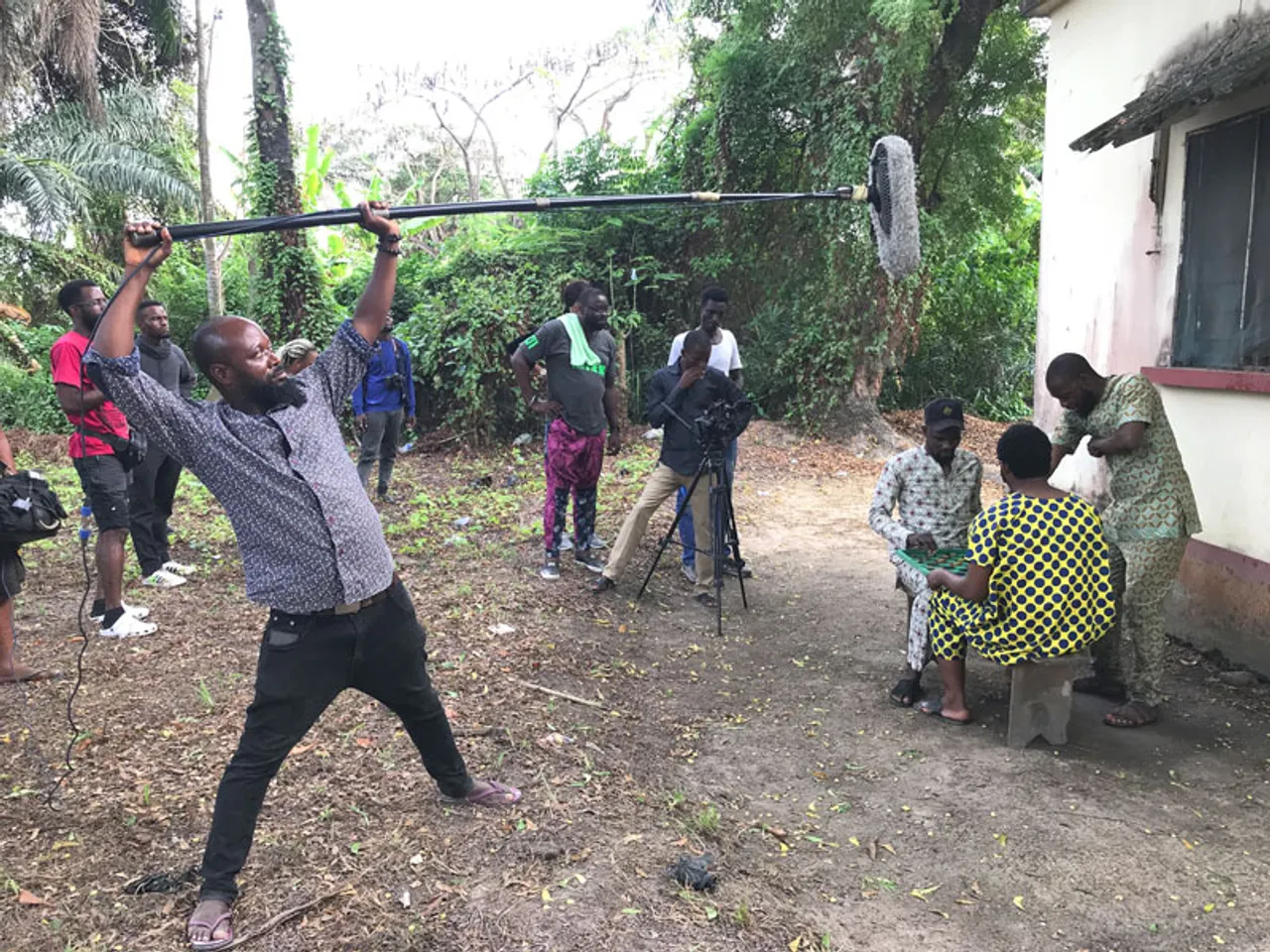
Mu'azu, a producer, director, actor and former national president of the Motion Picture Practitioners' Association of Nigeria, has spent more than three decades watching Kannywood grow from grassroots beginnings into a cinema hub producing hundreds of titles a year.
He has also been witness to the industry gradually losing its foothold while parent Nollywood strides ahead.
"Cinema is meant to give you return on investment," Mu'azu tells TRT Afrika. "If you don't have screens, you can't recover your money. So, Kannywood cannot afford big budgets."
Indeed, for decades, Nigeria's film conversation has been dominated by Nollywood's southern axis – million-naira budgets and Lagos premieres.
Far from that buzz, Kannywood has been fighting to survive against censorship, piracy, underfunding and deep cultural conservatism. Now, it faces its biggest challenge yet: how to modernise for a digital, global audience without losing the cultural values that have shaped its identity.
"Kannywood is an integral part of Nollywood," explains Mu'azu. "Nollywood grew from zero to become one of the largest film industries in the world. Kannywood was part of that journey. The volume of titles alone shows how many creatives are desperate to tell their stories."
Like Nollywood itself, Kannywood emerged from grassroots determination rather than state support. Early filmmakers relied on VHS tapes, and later VCDs and DVDs distributed through Kano's major markets such as Kofar Mata and Bata. These were the northern equivalents of Lagos's Idumota and Alaba film distribution centres.
But while southern Nollywood became increasingly professional in its methods and expanded into global streaming and multiplexes, Kannywood was caught in a time warp.
The contrast has become starker in recent years. Data from the Cinema Exhibitors' Association of Nigeria shows that the country's film industry generated 11.5 billion naira (US $8.4 million) in revenue in 2024, a 60% increase from the previous year.
Most of that growth came from the south, where hundreds of screens support high-budget productions. Northern Nigeria, by comparison, has only a handful of functioning cinemas. Some have shut down.
The digital gap
Kannywood's troubles are even more pronounced in the digital space. While Netflix and Amazon Prime provide ample airtime to southern Nigerian productions, there is hardly any content in Hausa.
As the number of cinemas dwindle and content restrictions limit access to OTT streaming, many Kannywood producers are turning to YouTube, where revenue depends on algorithms rather than structured distribution. Piracy is another challenge.
"Pirates download and distribute our movies to people and make a little money out of it," says Mu'azu. "The producer knows nothing about his intellectual property rights being violated and somebody making money out of it."


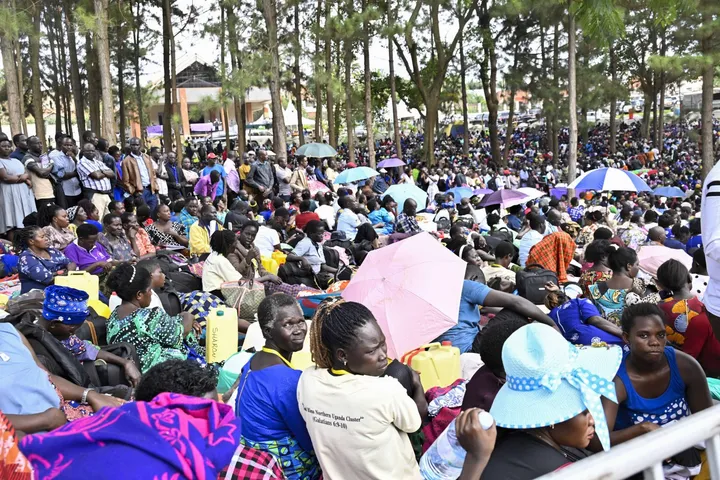





Kannywood's potential audience is humongous – more than 80 million people across West and Central Africa and the diaspora speak Hausa – but that doesn't automatically translate into profit.
"Northerners are not very strong in internet usage compared to other regions," Mu'azu tells TRT Afrika. "And even where people are online, many are not paying to watch content."
New initiatives such as Arewaflix, a northern-focused streaming platform offering multilingual subtitles, signal growing awareness that Kannywood must control its digital future. Still, Mu'azu urges realism.
"The market is there," he says, "but internet penetration in the north is not growing as robustly as in other parts of the country."
Government regulation
For Kannywood to catch up, Mu'azu believes the government's involvement is unavoidable. Investment-friendly policies, support for cinema infrastructure, capacity-building and digital literacy are all critical to the industry.
Conversely, insecurity remains a major deterrent. Across much of northern Nigeria, the threat of kidnappings, banditry and terrorist attacks have made entertainment ventures especially risky.
"Nobody wants to watch a movie in an environment where every door is locked by 6pm," says Mu'azu says.
For the cinema culture to thrive, audiences must feel safe gathering in public spaces. That sense of safety is often absent. In many cities, commercial activity slows dramatically after dusk, and leisure outings are treated as unnecessary risks rather than routine social experiences.
In 2018, gunmen attacked a cinema in north-western Zamfara State, killing 11 people and injuring more than 20 others.
"We have tried attracting investors from Lagos," says Mu'azu. "But insecurity remains an issue. How do you invest where nobody is sure of anything?"
New storytelling
Amid the uncertainty, filmmakers are experimenting with historical epics, social commentary, and pan-Nigerian narratives that go beyond regional boundaries.
Mu'azu's upcoming film, Gamji Zone, is set in the 1960s and depicts the romance between a Hausa man and a Fulani woman against the backdrop of civil war, identity, and nationalism, as seen through the eyes of an Igbo officer.
"It's not just a love story," says Mu'azu. "The film is about understanding Nigeria as one culture despite our differences."
Caught between survival and ambition, Kannywood now stands at a crossroads – rich in talent and ideas but constrained by economics, policy gaps, and cultural realities.
"Although the potential is enormous, Kannywood is not where it should be," Mu'azu tells TRT Afrika.