For di first time, Nigeria and Saudi Arabia don sign agreement wey go regulate recruitment and open official work pathway between Africa biggest economy and di country wey dey provide most job opportunities for Middle East.
Di deal show big change for how Nigeria workers dey enter Gulf economy — e move dem from informal migration system to one wey government dey support.
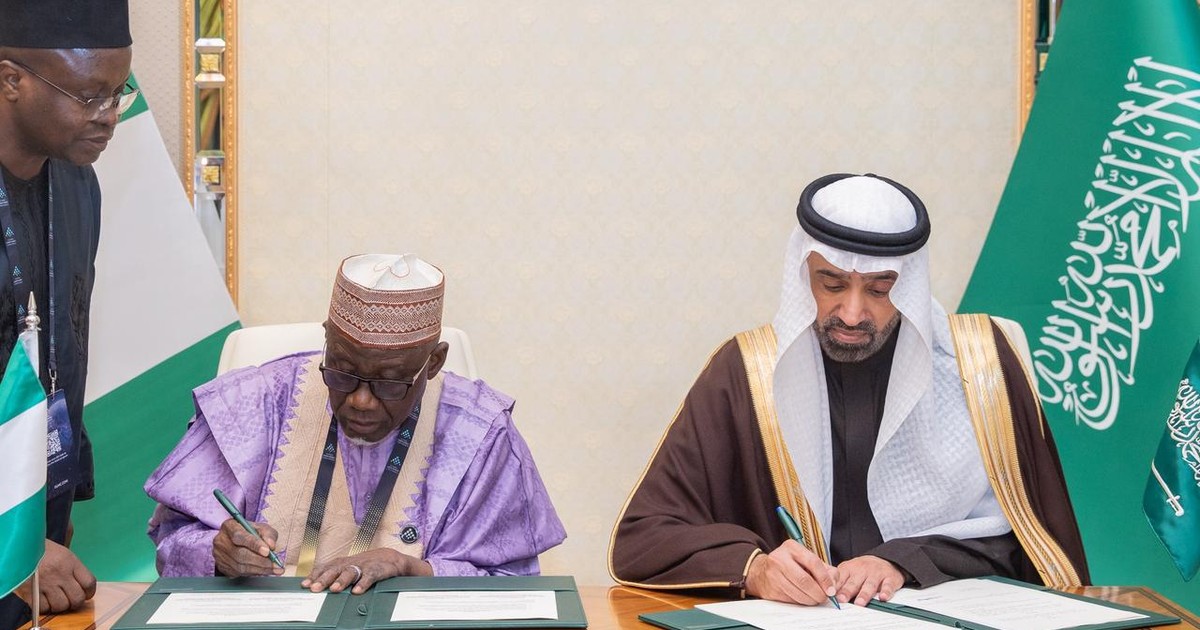
Dem sign am for sideline of di 2026 Global Labour Market conference wey hold for Riyadh. Di agreement make Nigeria become one important labour partner for Saudi just as di kingdom dey reshape im workforce under Vision 2030.
For Nigeria, di deal open new channel for people to find work abroad and fit help reduce di pressure wey de job shortage for inside di country dey cause.
Di signing happen when top government people from both sides put their hand for di paper. Saudi Minister of Human Resources and Social Development, Engineer Ahmed bin Sulaiman Al-Rajhi, and Nigeria Minister of Labour and Employment, Dr Muhammad Maigari Dingyadi, na dem sign am.
Journalists talk to one representative wey describe di agreement as structural arrangement wey from now on go guide recruitment, provide work permits, and protect workers.
Wetin di agreement change for Nigerian workers?
Under di terms, dem set regulated recruitment system wey go send Nigerian workers to Saudi only through licensed and authorized agencies. Di move na to cut out di usual middlemen, reduce risk of abuse, and make sure contracts legit and fit follow.






Working conditions — like pay, working hours, leave entitlements, and welfare — now go fall under rules wey both governments don agree on.
Why Saudi dey need workers from Nigeria?
Saudi dey increasingly rely on foreign labour to meet demand for construction, services, healthcare, hospitality and logistics as big projects linked to Vision 2030 dey grow. While Asian workers don long dominate Saudi workforce, African countries — especially Nigeria — dey emerge as important sources of young trained workers.
Why di agreement matter for Nigeria?
Di timing important for Nigeria because youth unemployment dey rise, and remittances from citizens wey dey work abroad still dey important for foreign exchange. By formalizing travel to Saudi, government dey try protect workers for abroad and increase economic benefits wey dey come from overseas employment.
Example of labour cooperation between Africa and di Gulf
Di agreement align with Saudi efforts to reform how dem manage labour, improve regulations, and strengthen worker protections, moves wey don attract international attention. Riyadh dey position these labour reforms as key part of economic growth and global competitiveness.