 Pauline Odhiambo
In a small village in rural Malawi, nine-year-old Chikondi sits at the front of her crowded classroom, her brow furrowed in concentration. She watches the teacher’s lips move, catching a word here and there, but most of the lesson is lost to her, swallowed by a persistent ringing in her ears that began after a series of untreated ear infections.
Chikondi’s mother, Amina, a farmer, thought the fevers and earaches were just a part of childhood.
“She would cry and pull at her ear, but by morning, she would be playing again,” Amina tells TRT Afrika. “I didn’t know it would take her voice, too.”
Once a chatterbox at home, Chikondi has grown quiet and withdrawn. Her teachers say she is “slow,” but the truth is far more profound: she simply cannot hear them.
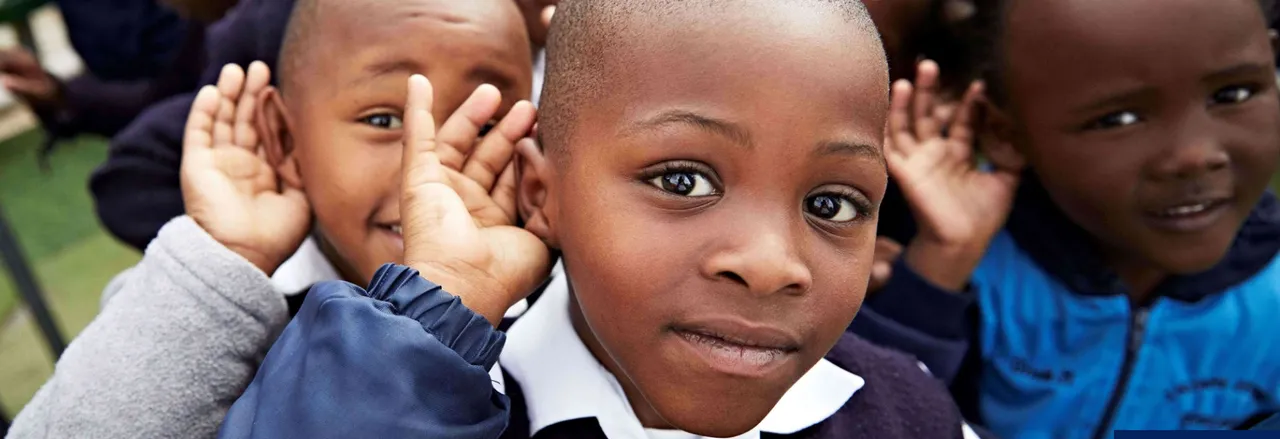
For Chikondi and millions like her across the continent, the world is not a place of vibrant sound, but a muffled landscape where opportunity is just out of earshot.
This is the reality for over 95 million children and adolescents globally who live with unaddressed hearing loss, a crisis that the World Health Organization (WHO) is spotlighting this World Hearing Day marked annually on March 3. Under the theme ‘From Communities to Classrooms: Hearing Care for all Children, the message is clear: hearing is not just a medical issue, but an educational and economic imperative.
Untreated hearing loss
The data reveals a stark imbalance. While hearing loss affects children everywhere, its prevalence is disproportionately higher in low- and middle-income countries, and the WHO’s Africa region carries one of the heaviest burdens.
More than 3,000 kilometers away from Chikondi’s village, in the northern Nigerian city of Kano, the story takes on a different but equally urgent tone.
Fourteen-year-old Ibrahim was an energetic and curious boy until meningitis struck his community two years ago. He survived the deadly infection, but the high fever and subsequent inflammation left him with profound hearing loss in both ears.
Ibrahim’s father Issa, a trader in the bustling local market, sold his livestock and took on debt to buy Ibrahim a pair of basic hearing aids. But with no access to follow-up care, the devices soon malfunctioned, and there is no audiologist within hundreds of kilometers to repair them. Now, Ibrahim sits silently at the back of his classroom, disconnected from the lessons and his peers.
“He was my brightest child,” Issa says, his voice heavy with despair. “Now he just stares out the window. The sickness took his hearing, but our poverty is stealing his future.”

The consequences of this untreated hearing loss ripple far beyond the individual child. It can delay speech and language development, hinder cognitive growth, and limit social interaction, creating a cascade of challenges that lead to poorer educational outcomes, reduced employment prospects, and long-term economic disadvantage.
Affordable ear care





It is a cycle of poverty perpetuated by silence — a cycle that is playing out in countless communities across Africa, from the villages of the Sahel to the townships of Southern Africa.
But it does not have to be this way. The WHO is championing a radical shift in approach, arguing that the solution lies not in expensive, centralized hospitals, but within the very fabric of communities and schools.
The key is integration. By weaving ear and hearing care into existing school health programmes, children can be taught simple, life-changing practices to prevent hearing loss caused by infections or noise. By integrating simple screenings into these programmes, a child like Chikondi could be identified before her world goes quiet.
“Communities and school settings provide a natural and effective platform to reach children with both preventive measures and early care,” says Dr Shelly Chadha, WHO Team lead for eye, ear, and oral health. “With practical and affordable solutions now available, no child should be left behind due to unaddressed ear and hearing problems.”
To make this vision a reality, the WHO has developed a suite of practical, evidence-based tools. A new, comprehensive package of interventions is designed for use in primary health care, empowering local nurses and community health workers to manage common ear problems.
Perhaps most transformative is the upcoming launch of WHOears, a free mobile application for iOS and Android. This app will enable teachers, community volunteers, and health workers — after brief training — to conduct accurate hearing screenings for children right in their schools or village squares. It bypasses the need for expensive clinics and specialists, bringing the point of care directly to the child. In a continent where health infrastructure is often stretched thin, this technology could be a game-changer.
Rehabilitative therapy
This is the crucial first step. As Dévora Kestel, Director of the WHO Department of Noncommunicable Diseases and Mental Health, points out, the gap in care is immense.
“Over 80% of the people who need ear and hearing care do not receive it,” she states. “This gap has serious consequences for children affecting their education, psychological wellbeing, and future livelihoods.”

The irony is that much of this suffering is preventable. The WHO estimates that nearly 60% of ear and hearing problems could be managed at the local level with trained health workers and basic equipment like medicines and hearing devices.
For children already living with hearing loss, like Ibrahim, early and appropriate intervention is a lifeline. Access to cost-effective solutions — from antibiotics for an infection to properly fitted hearing aids and rehabilitative therapy — can mean the difference between a life of isolation and one of full participation. It opens the door to education, friendship, and a future of choice.
On World Hearing Day, the WHO is issuing a call to action to African governments and partners to stop accepting silence as an inevitable part of a child’s life. By turning classrooms and communities into hubs of hearing care, every child, whether in a Malawian village or a Nigerian city, can get the chance to hear their teacher, their friends, and the full promise of their own future.
For Ibrahim’s father Issa, that hope is all he has left.
“I have not given up,” he says. “If help comes — if someone can just fix his devices or teach him a new way — I know he will rise again. A child’s voice may be silent, but their spirit is not.”