Maralal International Camel Derby na one kain sport event wey no common for Kenya.
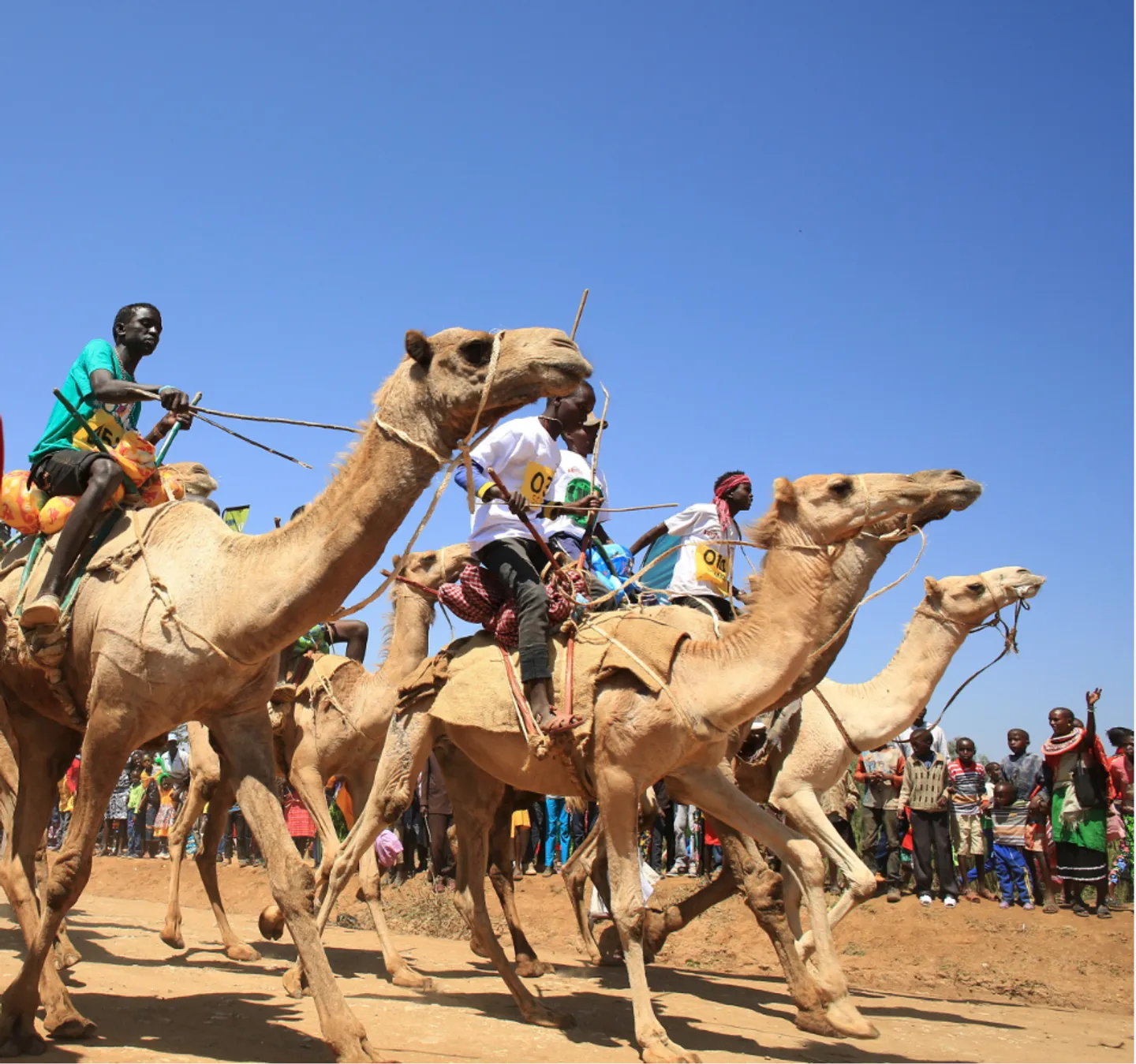
Camels dey jostle for starting line for town centre, riders dey hold reins tight as the animals dey push and lurch go front.
Plenty people dey line the dusty track; many wear layers of bright beaded ethnic jewellery wey dey flash red, blue and yellow for sun.
Every September, Samburu County capital for northern Kenya dey host three days of camel racing wey gather professional riders, amateurs and plenty tourists to watch this kind unique and entertaining event.
This year's festival, wey hold from September 25 to 28, mark the 32nd edition of the annual derby.
Na jointly organised event by the Samburu County government, local elders and tourism stakeholders; e don grow from informal seasonal contests for the early 1990s into one major fixture for the region calendar.
"Dis one event dey show how northern Kenya different and e dey advertise the whole country," na so Jonathan Lelelit, governor of Samburu County talk.
Competition side
Dem hold competition for two categories and different distances.
Professional riders dey compete for 20km course; winner go carry 80,000 Kenyan shillings (US $617), first runner-up go get 60,000 shillings (US $463), and second runner-up go receive 40,000 shillings (US $310).
Amateur competitors dey race 10km for prizes of 70,000 shillings (US $540) for first place, 50,000 shillings (US $388) for second, and 40,000 shillings (US $310) for third.
Arne Selengubaya don dey compete for the Maralal derby for more than two decades, and each time e say e dey different.
Another racer, Emmanuel Labartengat, believe say wetin make the event pass just prize competition na the atmosphere. "We love racing our camels, and the income is a bonus. The presence of hordes of tourists adds to the derby's appeal," na him talk to TRT Afrika.
Outside the track
The festival show more than the spectacle of camel racing.
Traditional Samburu bead jewellery na one big attraction; people display elaborate necklaces, earrings and headpieces for vibrant reds, blues, yellows and whites. Each pattern dey represent the wearer identity, age and social status.
For women, the beadwork mean artistic expression and also economic empowerment.

Rebecca Miano, cabinet secretary for tourism and wildlife, describe the atmosphere as "a sight to behold."
"Anybody wey wan experience adventure, culture and traditions should travel go Maralal," she talk.
First-time visitor Charity Beduli come from the derby impressed by the sights, sounds and hospitality.
"I get the most unforgettable experience when I ride camel for the first time for my life," Charity say. "I also get insight into the local culture and traditions. Dancing with the Morans (young men of the community) sweet well well."
Wetin dey unite
Community leaders and promoters recognise say the derby get potential as tourism value-addition since the early 1990s.
Wet in start as traditional seasonal contest wey only local communities dey take part don become big event wey represent northern Kenya.
"All communities for northern Kenya — the Turkanas, the Pokots, the Boranas, the Somalis, the Rendiles and the Gabras — dey rear camels. We see that as a unifying factor," Governor Lelelit explain.
The derby dey generate substantial income for the local economy through hospitality, handicraft sales, transport and guide services. E still position Samburu as one important destination for cultural tourism.
Evelyn Lentaano, executive committee member for sports for the Samburu County government, happy to see communities dey connect the success of the derby with local pride.
"When I see visitors, I dey motivated to do better as proud native of Samburu, Kenya and Africa," Evelyn tell TRT Afrika.
Tickets to the derby dey available through the Samburu County tourism office or authorised partners; prices dey vary for local and international visitors, and between general access and VIP seating.
Some cultural programmes around Maralal still free, so locals fit participate together with tourists.