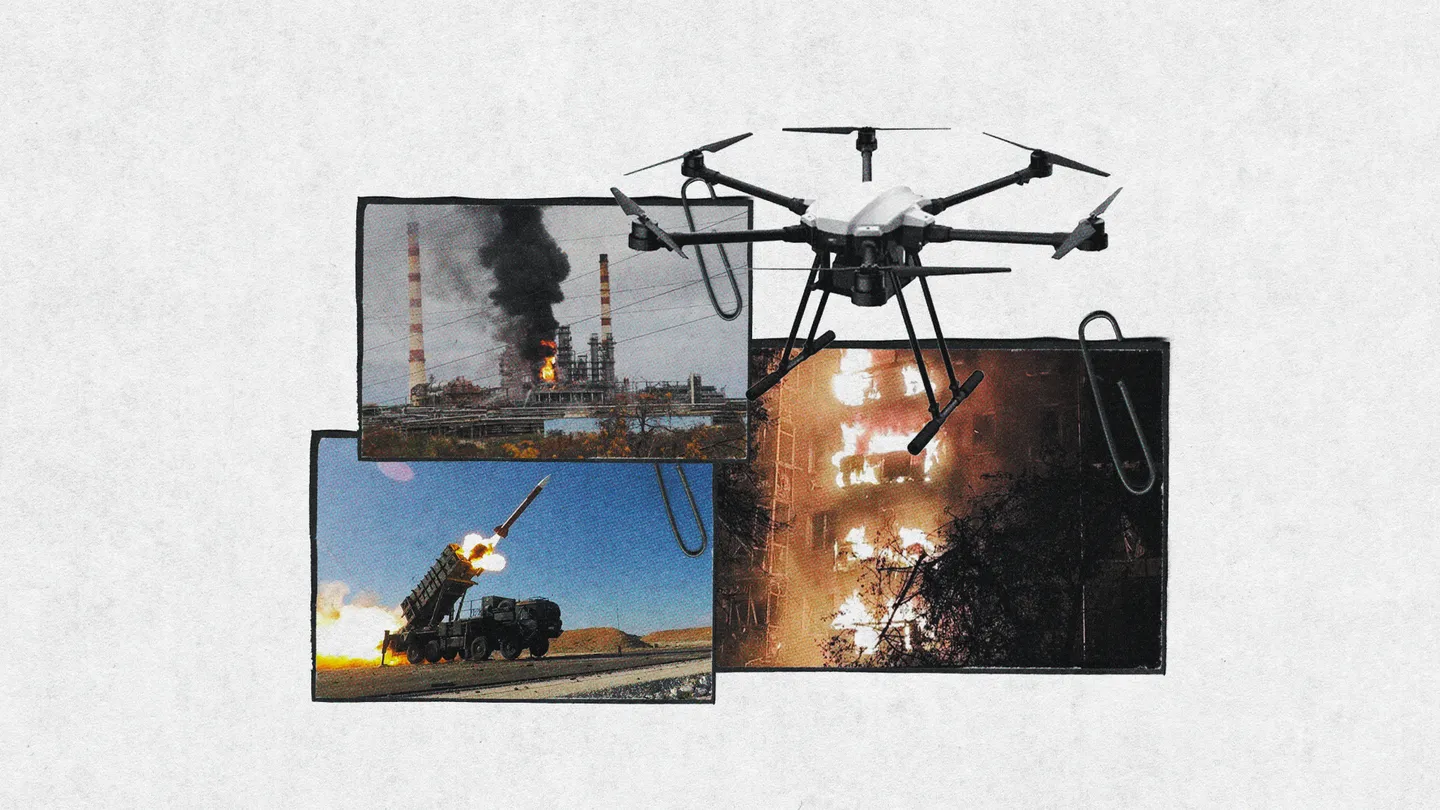
TRT for Russian tok wit head of All‑Ukrainian organisation "Ukraine na NATO", Yuri Romanyuk, about how modern war dey, weak point for defence and main weapon dem dey use for Russian‑Ukrainian conflict.
— One of di things wey dey special for this war na optical‑fibre drones. Wetin make dem different?
— If drone dey control by radio signal (by "internet", or as you dey see am straight), dem fit use electronic jammers (REW) jam am — signal go scatter, connection between operator and drone go comot, so drone go blind and fall because e no dey receive commands from base again.
For optical‑fibre FPV drones, that problem no dey: picture from camera dey go through cable until last moment, image dey steady, colour, high resolution. For normal FPV drones image sometimes black‑and‑white, and for final phase of flight when drone dey descend and enter target, radio signal fit drop — operator no go see anything.
So optical‑fibre systems dey more complex, more reliable and more effective. Their main disadvantage na the cable itself: through am dem fit trace where the operator dey and where drone start from.
— How dem dey fight dem?
— The simplest way for front na normal hunting guns, wey soldiers dey buy with their own money. Dem dey use cartridges wey get buckshot: one cartridge get almost hundred small pellets. When dem shoot e go form cloud of hundreds of pellets wey fit cover about 1–2 square metres.
Against big drones like "Shaheds" dem dey use "drone‑antidrone" — one drone go chase and destroy the other for air. Na cheap and effective method too. Plus helicopters still dey used to shoot down drones.
Dem get different technological systems as well.
First, German rapid‑fire guns of 23 mm calibre with programmable airburst shells: the shell go burst for air and scatter shrapnel, like big hunting cartridge. The system dey very rapid‑fire: small number of rounds fit destroy target. Effective range reach up to 2 kilometres.
Second, for Estonia dem dey develop relatively cheap "antidrone" about 30–40 cm long and 5–6 cm diameter. E dey in trials now, but e small and cheap compared to a surface‑to‑air missile — good for short‑range drone destruction. Estonians talk say e very effective.
Also dem dey use lasers and microwave guns. Lasers fit burn individual targets, while microwave complexes dey work over area. Anything wey enter microwave field fit stop work: drone electronics basically dey "burn".
But even with all these means, main problem still remain — drones dey evolve faster than the systems wey suppose intercept dem.
— So wetin be the main difficulties to protect against them?
— E hard to build perfect system when upgrade dey happen almost every month — the process no dey stop even for one minute.
Russian designers dey change things all the time. Then Ukraine go improve something. Russia go adapt again, and so on. Na continuous technological race dey go on.
— Wetin be the problems now for protecting Ukraine sky?






— Russia dey use combined attacks: dem dey launch ballistic missiles, cruise missiles and drones together, so all of dem go show for radar at the same time.
That one mean say you must hit different targets for different altitudes and speeds: from drones wey dey run around 180 km/h to hypersonic ballistic missiles like "Kinzhal" for their terminal phase.
— Patriot no fit handle am?
— Patriot na the only allied system wey fit reliably intercept ballistic missiles. Zelensky dey talk say dem need 27 batteries. One battery fit fire 32 interceptors for one salvo. If interceptor cost around $3 million, that salvo na about $100 million. E no for one target, but for plenty threats at once.
But interceptors dey badly short. Before war US dey make less than one Patriot missile per day, now about two. Even if dem reach three per day, e no enough. Russia dey launch 5–15 missiles per day, and norms for air defence say you need minimum two interceptors per incoming missile. Ukraine dey save — dem sometimes fire one interceptor, but na risk, and sometimes dem gats fire second.
So Kyiv dey also buy other systems, for example SAMP/T. Military people dey say e near Patriot for effectiveness.
— Wetin dey happen with Russian air defence? E don hard to bypass?
— Before war Russia get plenty air‑defence systems, but for four years Ukraine don destroy more than half. According to some figures, about 49% of "Pantsir" complexes don already get destroyed.
Recently for Novorossiysk dem destroy four launchers and a radar. For Crimea almost every other day dem dey put either launcher or radar out of action. Factories no fit produce new complexes at the speed wey dem dey destroy them.
Russia dey forced to replace modern components with more primitive ones — roughly where dem need 5th–6th generation chip dem go put something like from a washing machine. The system go still work, but e go perform worse.
Na same story like strikes on refineries: repair capacity and equipment dey short because of sanctions.
— How situation go change for long term?
— If war finish and sanctions loose, Russia go try to make up for all the air‑defence systems wey dem lose. But that one no go happen quick. Both Ukraine and Russia need years to fully re‑equip.
For peacetime to modernise army e for take at least 5–10 years. For war things dey speed up: training pilots for F‑16 or Gripen fit finish in six months, even though for the US the training fit take years.
But to fully restore the fleet of air‑defence, aviation, missiles and high‑tech weapons na years, not months.