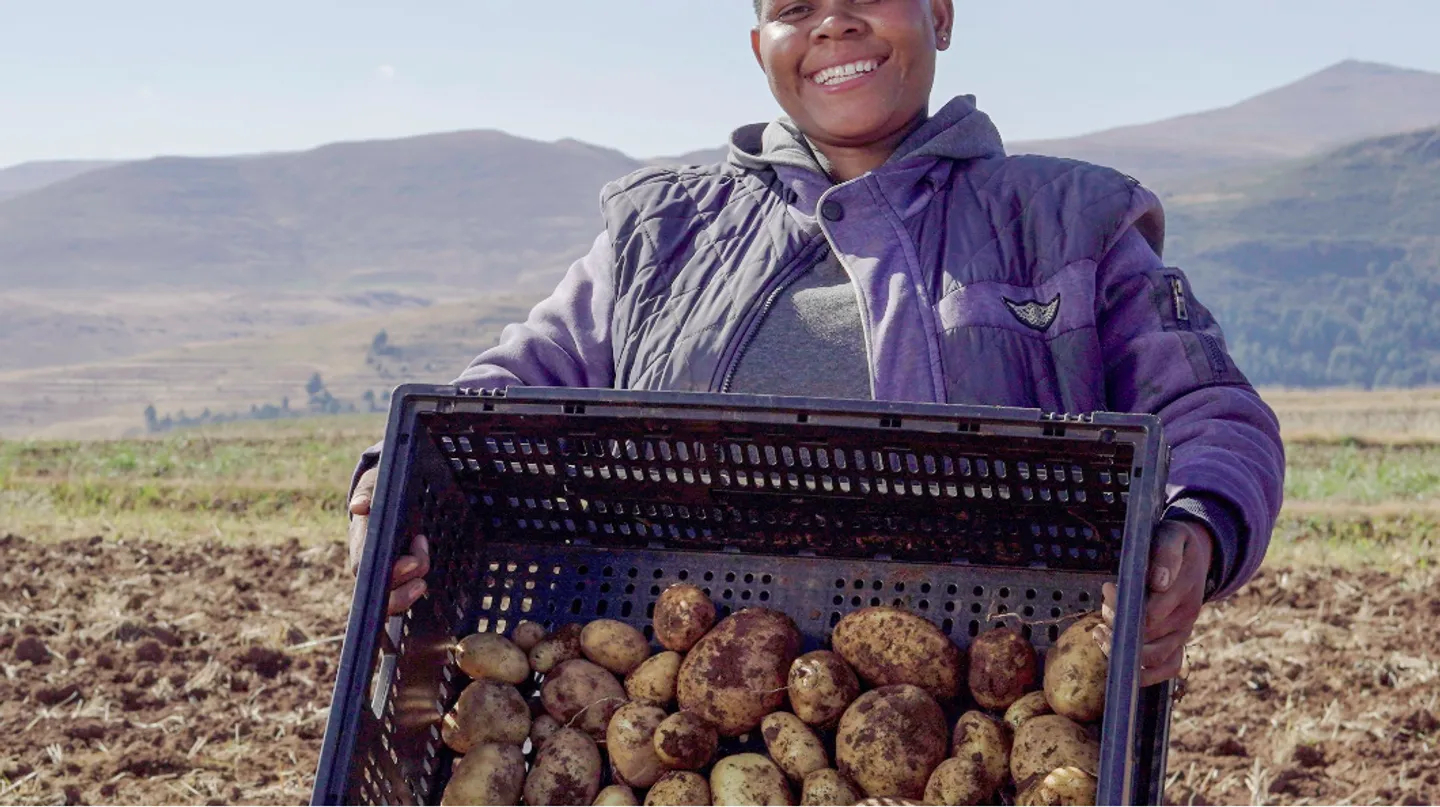
Thabo Mokoena dey waka for him potato field for the mountainous Matebeng region for Lesotho, dey check the plants carefully for any sign say disease don show or dem no dey grow well.
The crop dey fine this year, e clear difference from past seasons when him small plot no fit even give enough to survive.
For years, Mokoena dey gamble every planting season against erratic rains and poor soil. Small rows of maize and some vegetables — enough to manage, but never enough to thrive.
Short walk away, his neighbour Malerato Ntai dey face the same wahala, dey watch her hopes for reliable income disappear with every drought or early frost.
This season different. Healthy potato plants don cover the terraced slopes, and Mokoena fit allow himself small rare smile.
"Before, the land tired, and I sef tired," he tells TRT Afrika. "Now, these potatoes no be just food; na our future. For the first time, I dey see road for my children wey no go end with them comot go the city."
How dem dey boost food security
Mokoena and Ntai na among hundreds of Basotho farmers wey dey benefit from government programme wey dem dey implement together with the United Nations Food and Agriculture Organisation (FAO) to boost the potato value chain.
In partnership with the Potato Lesotho Association, the programme aim to improve food security and rural incomes while to build climate resilience.
Designated as a flagship commodity under the global One Country One Priority Product (OCOP) initiative, the common potato don emerge as strategic answer to these challenges.
Agriculture still remain main livelihood for Lesotho, but climate-related shocks and the lingering socioeconomic impact of the pandemic don seriously weaken am.
"The potato dem prioritise because e resilient and e get good nutritional value," explain Dr Karaba Dlamini, agronomist wey based for Lesotho capital Maseru.
"Potatoes dey grow well for cooler climates, dem get shorter growing season pass many traditional crops, and dem give plenty nutrition per hectare. For country wey dey face food insecurity and need make diet diversify, e be game-changer."
Dr Dlamini believe say the programme no just about planting potatoes; e dey create opportunities and protect communities from climate shocks wey don affect their livelihoods.




How dem dey teach farmers
The transformation wey farmers like Mokoena and Ntai don experience no happen by chance.
One core part of the initiative na direct investment into farmers through partnership wey World Bank back. Participants receive certified seeds, fertilisers, and hands-on training for improved agronomic practices and climate-smart techniques.
"For we women, the knowledge we receive na the real seed of change," Ntai tell TRT Afrika as she point to the lush green crops wey dey cover the terraced slopes.
"Dem teach us how to conserve water, how to space our plants, and how to read the soil. This no be just about planting crops; na structured farming."
Knowledge-sharing through field demonstrations and targeted technical support don also help for other ways.
Exploratory work on potato tissue culture dey lay groundwork for sustainable seed production, reduce dependence on expensive imports and build self-sufficiency from the ground up.
Production for big scale
Available data show confirm how the programme don deliver significant gains across the potato value chain.
The area wey dem dey use plant potato for the project don increase by 146%, while farmers report say yields don increase by up to 42%.
National production don more than treble in a single cropping season since the project's launch, show say both farmer participation and the support mechanism dey effective.
More potatoes mean prices go down and availability go better. Households dey consume more, and that one support healthier, more diverse diets and make food security for rural communities stronger.
"Look this," Mokoena talk as he gesture toward him field. "Na so hope dey look."