"Somewhere," na so the American astronomer and bestselling author Carl Sagan write about science, "somtin incredible dey wait make dem discover."
Through 2025, science don push frontiers go front, dey look for and sometimes find those "incredible" things for different fields — from space to medicine to artificial intelligence.
From tracking one rare interstellar comet wey come from outside our solar system, to finding the "strongest evidence" say life fit dey for exoplanet, to the quick growth of artificial intelligence, 2025 be year wey steady breakthroughs happen.
Here be small collection of some milestones wey we pick specially for TRT readers.
A trip into the universe's past
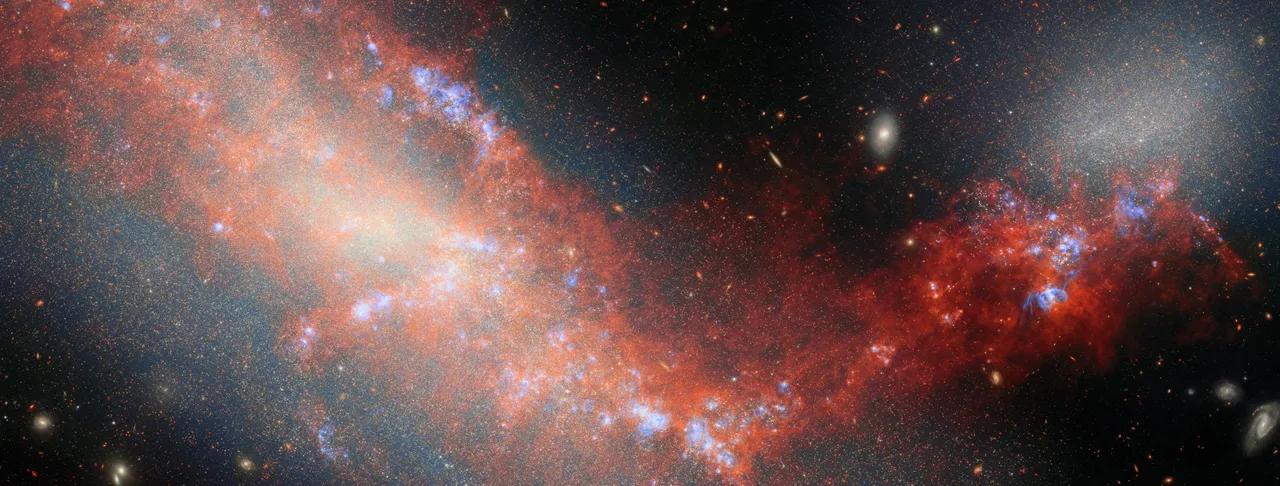
For June, scientists show the most detailed map of the universe — map wey big gan, e cover about 13.5 billion years for time and e feature almost 800,000 galaxies.
Na collaboration between the James Webb Space Telescope and the Cosmic Evolution Survey (COSMOS) gather 255 hours of star-gazing data from "one small region of the sky equivalent to about three times the size of the full moon."
The map na stitching together of thousands of photographs to make that huge map wey span 98 percent of the universe's timeline.
Scientists pick the COSMOS field because e get small interference from stars, gas clouds and the like. That one make researchers fit observe the field across different wavelengths of light.
"Our goal was to construct this deep field of space on a physical scale that far exceeded anything that had been done before," Caitlin Casey, physicist for the University of California and member of the COSMOS team, talk.
Only few days after dem announce the map, the Vera C. Rubin Observatory for Chile — wey get the world's largest digital camera — show small preview of one decade-long astronomical survey wey start later this year.
The results shock people — including views wey dem never see before of group of galaxies wey about 55 million light-years away.
Expect more news — and more sights — of the universe for the new year.
Humans smart! Machines smarter?
As far back as the 1950s, one famous mathematician and computer scientist propose one test to find out whether machine fit think or behave like human.
The test na the Turing Test, named after Alan Turing. The evaluation suppose to tell the difference between artificial and human intelligence through text-based interaction.
Researchers compare four Large Language Models (LLMs) against humans to see whether people wey do five-minute conversation with either human or LLM fit tell who be who.
Because the interaction na only writing, the people wey dey judge no sabi whether dem dey interact with human or machine.
"When prompted to adopt a humanlike persona, GPT-4.5 was judged to be the human 73 percent of the time: significantly more often than interrogators selected the real human participant," researchers Cameron Jones and Benjamin Bergen from the University of California, San Diego, talk.
This one na the first known time wey "any artificial system passes a standard three-party Turing test."
Other AI model, LLaMa-3.1-405B, dem find say e pass for human 56 percent of the time, while the other two models, ELIZA and GPT-4o, be only 23 percent and 21 percent respectively.
Experts talk say the result dey raise deep questions for humanity — both ethical and existential — as people dey fear say AI fit make humans redundant for many sectors.
Jones and Bergen still warn: "Models with this ability to robustly deceive and masquerade as people could be used for social engineering or to spread misinformation."
The question be: the world ready for such smart AI? We go soon know.
Back from extinction
This kain thing fit be Hollywood sci-fi — the kine story wey Jurassic Park dey popularize. But e real, and this time the main characters no be huge dinosaurs but the smaller dire wolf.
Dire wolves na apex predator from the Pleistocene epoch. Dem use roam wide area from where Venezuela dey now reach Canada before dem commot for earth about 13,000 years ago.
Scientists don now revive the predator through genetic engineering — breakthrough wey don raise hopes for other extinct or endangered species, but e don also bring ethical and moral concerns.
For Colossal Biosciences, one Dallas-based startup wey still wan bring back the extinct woolly mammoth, na just science dem dey do.
"We take DNA from a 13,000-year-old tooth and a 72,000-year-old skull and made healthy dire wolf puppies," Ben Lamm, CEO and co-founder of Colossal Biosciences, talk for April after dem show Romulus, Remus and Khaleesi to the world.
But the pups no pure 100 percent dire wolf. Scientists edit grey wolf cell DNA, dem make about 20 changes to 14 different genes for coat colour, body size and skull shape.






The company dey plan to 'de-extinct' the Tasmanian tiger, the dodo and the woolly mammoth next.
If everything go as dem plan, e fit mean say the phrase "dead as a dodo" go become old talk soon.
Contact lenses wey "see" for dark
How e go dey if person fit see for dark? Na question wey humans don dey ask since. Scientists fit don find answer, and e no be only better night-vision goggles.
Researchers design special contact lenses wey dem put nanoparticles inside. Those lenses fit detect near-infrared radiation, so person fit see for dark, even with eye closed.
The lenses fit convert near-infrared wavelength to RGB (red/green/blue) light wey human eye sabi see, so dem act like embedded night-vision goggles without the weight or extra power.
One expert quoted by New Scientist, Peter Rentzepis of Texas A&M University, say the contact lenses "would provide military personnel with discreet, hands-free night-vision capabilities that overcome the limitations of bulky night-vision [goggles or scopes]."
But the new lenses no yet give detailed night vision because dem dey pick only "high-intensity, narrowband LED" light sources, not the lower levels of infrared wey dey the surroundings.
Rentzepis say even though the lenses fit be "safer and more practical approach for human applications" compared to tests for mice, dem still need make people dey use am with caution.
He warn about possible heat exposure from the light-conversion process and the risk say nanoparticles inside the contacts fit leak into the eye.
Another expert, Mikhail Kats at the University of Wisconsin-Madison, praise the boldness of the research but point out say "using just the contact lens, you wouldn’t be able to read a book in the infrared, or navigate down a dark road."
Wearable patch to fight substance abuse
You dey struggle to stop addiction? E fit be say small hope still dey for you.
Researchers for Mass General Brigham and Harvard University for Boston, Massachusetts, collaborate for experiment to help people wey get substance use disorders.
Half of the participants wey wear one smart patch — device wey no be drug — fit handle the stress of abstinence better.
The eight-week study titled 'Heart rate variability biofeedback for substance use disorder' show say 64 percent of participants dem "less likely to use substances" when dem dey wear the Lief HRVB Smart Patch.
The study find say people wey dey within their first year of abstinence fit manage cravings when dem dey wear equipment wey act as heart rate variability biofeedback device.
For people wey just start recovery, the main wahala na to resist cravings and stress. Stress fit trigger cravings, and the fight to resist fit bring more stress. Together, cravings and stress fit lead to relapse.
All participants dem asked to practice scheduled special breathing exercises for at least 10 minutes every day, and for at least five minutes when the biofeedback device prompt dem.
"The latest HRV biofeedback devices can detect when people are stressed or experiencing cravings, and, using AI, prompt them to do a brief burst of biofeedback," David Eddie, Harvard–Mass General psychologist at the Recovery Research Institute at Massachusetts General Hospital, talk.
"This allows people to get out in front of risk."
The authors talk say more research still need to happen, but the study suggest say biofeedback fit help break the cycle of craving and substance use.
Honourable mentions
Scientists don develop one test wey fit help save lives by early detection of pancreatic cancer — disease wey normally dem dey diagnose for advanced stage and get high mortality rate.
Researchers don use artificial intelligence to detect earthquakes — even the small ones — and this one fit help for early-warning systems in future.
And one breakthrough study find say some types of diabetes drugs fit prevent heart problems, reduce risk of hospitalisation or death.